Most homes and workspaces today are quietly juggling far more electronics than they were even five years ago. A single person might be carrying a smartphone, a pair of wireless earbuds, a smartwatch, and a tablet, sometimes all within arm's reach at the same time. Each of those devices has its own battery, its own charging habits, and often its own idea of what "fully charged" actually means. The old model of one cable feeding one device just doesn't hold up anymore, not when the average bag or desk drawer looks more like a small electronics counter than a simple charging spot.
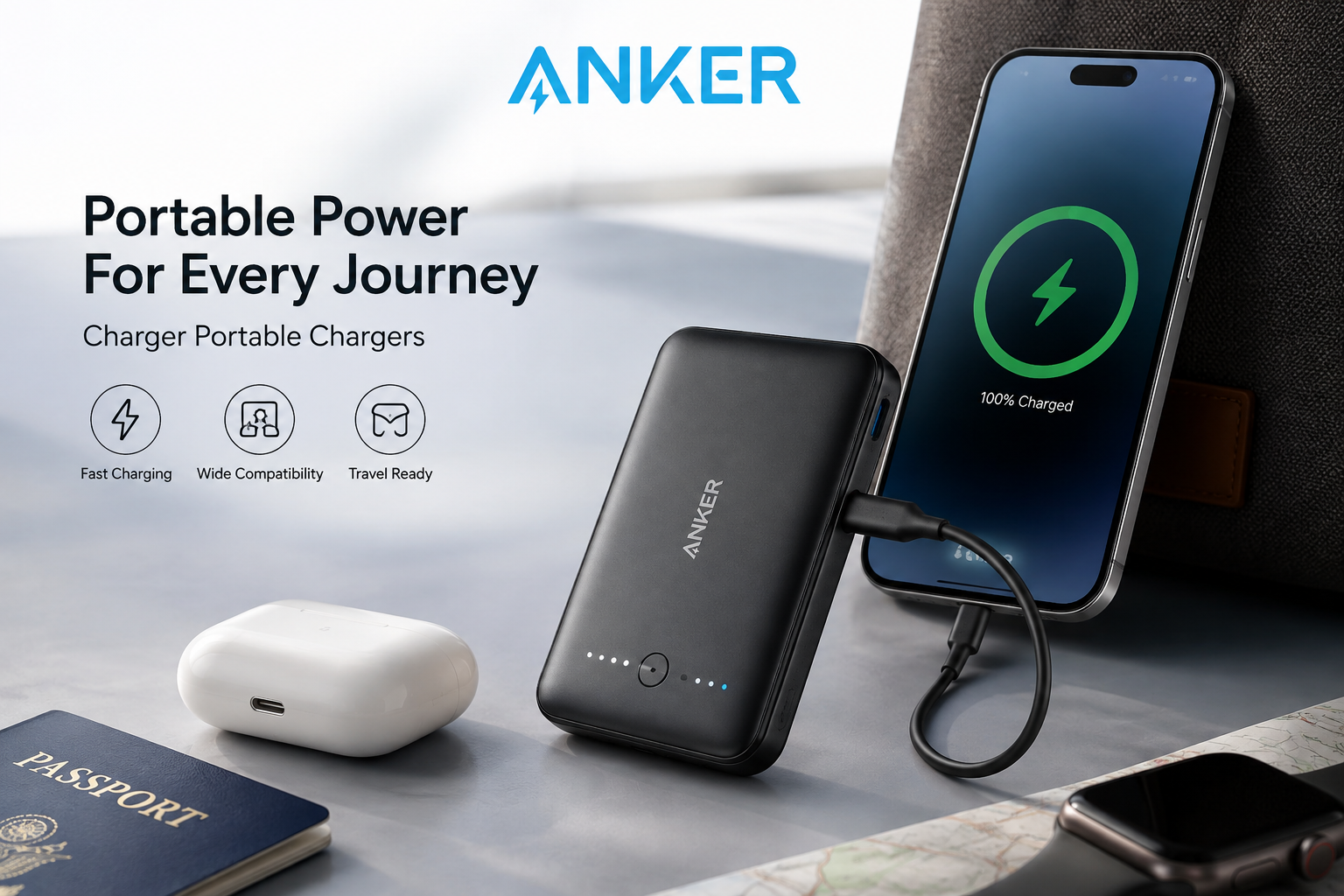
This is where charger portable chargers have quietly changed roles. What used to be a single spare battery kept for emergencies has turned into something closer to a small piece of personal power infrastructure, something people build a routine around rather than reach for only when a screen flashes a low battery warning. Portable charging devices are increasingly expected to support an entire day's worth of device use across several gadgets at once, not just rescue one phone in a pinch.
That shift points to where charging technology is actually headed next, and it isn't simply "more battery." The real story is about how power moves between devices, how well a single charger can serve very different kinds of electronics, and how flexible a charging setup can be across a bedroom, an office, a car, or a hotel room. Capacity still matters, but distribution, compatibility, and adaptability are quickly becoming just as important, if not more so.
The Problem Created by a Multi-Device Lifestyle
Owning several devices sounds simple enough until you actually try to keep all of them charged on the same schedule. A phone might need topping up twice a day, earbuds drain in short, unpredictable bursts, and a tablet or laptop often needs a completely different cable and charging speed altogether. None of these needs line up neatly, which is exactly why a single charger sitting by one outlet stopped being a realistic solution a while ago.
Separate cables and adapters pile up fast as a result, each one tied to a specific device and rarely interchangeable with anything else in the house. Different charging requirements, some devices wanting fast charging, others needing a gentler, sustained trickle, add another layer of complexity on top of that. All of this has created a real appetite for more flexible power arrangements, setups that can actually flex around a person's devices instead of forcing every device to adapt to one rigid charging routine.
Power Is Becoming a Distributed Resource
It's worth asking why so many people now carry more than one source of power at all. Part of the answer is simply reliability. A single battery, whether it's built into a wall charger or a portable pack, can only do so much, and relying on one fixed point for every device creates an obvious bottleneck the moment two things need power at once.
Portable batteries and fixed charging points end up serving different purposes as a result, one offering flexibility, the other offering a steady, uninterrupted supply. What ties them together is that power itself is becoming something that moves with the user rather than staying tied to a single spot in a room. That relationship between battery capacity and mobility has become a real design consideration, since a bulky, high-capacity pack that never leaves a bag isn't actually solving the problem it was bought to solve.
One Charging Standard Does Not Fit Every Device
Wired and wireless charging solve slightly different problems, and neither one has fully replaced the other. Wired charging still tends to be faster and more predictable, while wireless charging trades a bit of that speed for genuine convenience, letting a device charge without needing to be physically plugged in each time.
USB-C has become something close to a universal standard across phones, tablets, and laptops, though older devices and certain accessories still rely on other connection types entirely. Wireless charging protocols add their own layer of nuance, since not every wireless charger supports the same speeds or the same devices. All of this is exactly why compatibility has become such a major part of how charging hardware gets designed now, a fast charger that only works with half of someone's devices isn't nearly as useful as one built to work sensibly across all of them.
The Rise of Modular Charging Setups
Rather than buying a single charger for every individual device, more people are building setups that combine several charging methods into one flexible system. A single fixed charger tied to one outlet is being replaced, in a lot of homes and offices, by a mix of wall power, portable batteries, and wireless pads working together.
Combining these different pieces lets a setup adapt to wherever it's actually needed, a portable battery for travel, a wall charger for the desk, a wireless pad for the nightstand. That kind of adaptability is a big part of why modularity matters so much for how people own devices today. A rigid, single-purpose charging setup simply can't keep pace with how many different devices and environments a typical day now involves.
What Happens When Several Devices Need Power at Once
Charging more than one device from the same source raises a genuinely tricky question: how should limited power actually be divided up. Power allocation between connected devices isn't as simple as splitting output evenly, since a laptop and a pair of earbuds have wildly different power needs.
Charging hardware increasingly has to make judgment calls here, prioritizing a smartphone that needs a meaningful charge over a smaller accessory that barely needs any power at all. Intelligent power management systems handle a lot of this automatically now, detecting what each connected device actually requires and adjusting output accordingly rather than applying a flat, one-size-fits-all approach. The result is charging hardware that avoids wasting energy on inefficient, poorly balanced power distribution, which matters a lot more once three or four devices are plugged into the same source.
The Hardware Behind Smarter Portable Power
None of this intelligent behavior happens by accident, it comes down to a specific set of physical components working together. Battery cells and energy storage form the foundation, determining how much total power a device can actually hold. Power conversion circuitry sits right alongside that, converting stored energy into a form each connected device can actually use safely.
Charging controllers act almost like a traffic system, directing how much power goes where and when. Output ports and wireless coils are the physical points where that power actually leaves the device, and their design has a real effect on both speed and compatibility. Temperature monitoring runs constantly in the background of well-designed portable power systems, tracking heat buildup during active charging sessions. Protection mechanisms tie all of this together, guarding against overcharging, overheating, and short circuits so that faster, smarter charging doesn't come at the cost of safety.
Portability Is Changing the Shape of Charging Hardware
As portable power has become something people rely on daily rather than occasionally, the physical shape of that hardware has changed to match. Compact battery designs have become the norm rather than the exception, trading a bit of raw capacity for something that actually fits comfortably in a bag or pocket.
Foldable and pocket-friendly structures reflect that same priority, folding flat or shrinking down when not in active use. Built-in cables and connectors have started appearing more often too, removing the need to separately track down a matching cable every time a charger gets used. Magnetic attachment systems add another layer of convenience, letting a device snap securely into place rather than needing careful positioning. All of this reflects a simple reality: physical size matters just as much as raw capacity, since a charger too bulky to actually carry doesn't help much no matter how much power it holds.
Charging Is Becoming Part of Device Ecosystems
Charging is no longer something that happens in isolation from the rest of a person's devices. Smartphones increasingly connect, at least conceptually, with the watches and earbuds someone owns alongside them, sharing charging standards and sometimes even the same physical charging accessory.
Shared charging standards across a device family make this kind of integration possible, letting one accessory reasonably serve several products rather than requiring a separate charger for each. Accessories are increasingly designed around specific device families as a result, built with the assumption that a phone, watch, and earbuds will all need to be powered together rather than separately. That's part of a broader movement toward fewer, more capable charging solutions replacing the pile of mismatched cables that used to be standard.
Where Portable Power Meets Everyday Infrastructure
Portable charging doesn't exist in a vacuum, it increasingly overlaps with the fixed infrastructure already built into daily life. Home charging drawers and stations have become a common fixture in a lot of households, consolidating what used to be a tangle of cables into a single, organized spot.
Office environments have adapted similarly, often building charging access directly into desks or shared meeting spaces. Travel bags now routinely include a dedicated slot or pouch for a portable battery, treating it as standard travel gear rather than an optional extra. Vehicles increasingly offer their own built-in charging support, and shared spaces like coworking offices or cafés often provide charging points as a basic amenity now. Temporary work locations, from a hotel room to a client site, round this out, each one requiring its own small adjustment to how someone keeps their devices powered.
The Difference Between Carrying Power and Managing Power
There's a meaningful difference between simply having a battery on hand and actually managing power well across an entire day. Battery capacity alone doesn't determine how useful a charger really is, a huge battery that charges slowly or awkwardly still leaves someone waiting when they need power quickly.
Charging speed and compatibility matter just as much as raw capacity, since a charger that can't quickly power the specific devices someone owns isn't solving the actual problem. Power availability at the right moment is really the goal, having enough charge on hand exactly when it's needed rather than after the fact. Managing several devices without creating additional clutter rounds this out, since a solution that solves charging but adds a mess of extra cables and adapters hasn't actually simplified anything.
How Better Power Management Could Shape Future Accessories
Looking at where this is headed, smarter allocation of available energy is likely to keep improving, with charging hardware getting better at automatically deciding how to split power across multiple connected devices. More efficient charging hardware should follow closely behind, wasting less energy as heat and delivering more of it directly to the device that actually needs it.
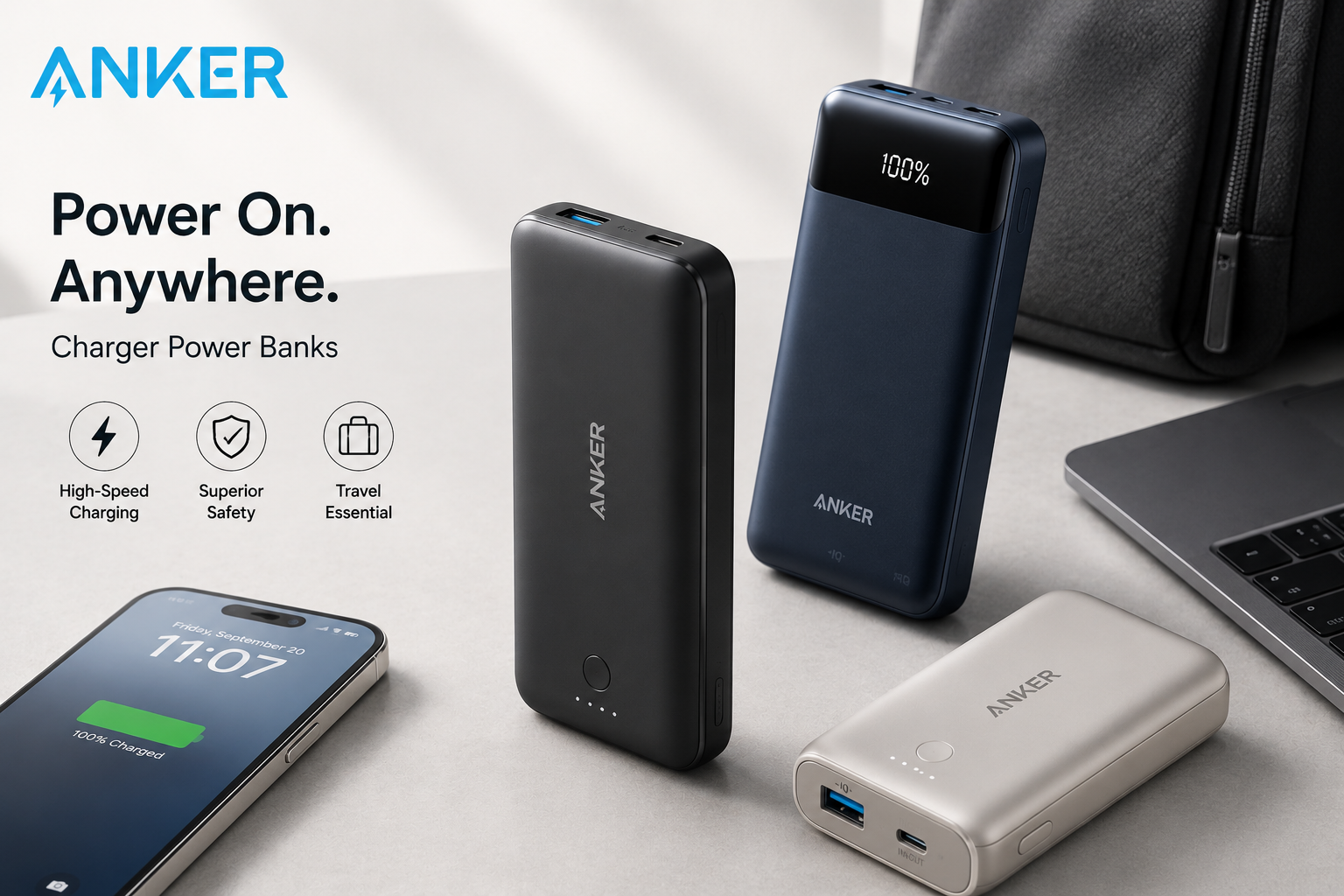
Improved battery health management is another likely direction, with smarter systems working to protect long-term battery life rather than just delivering the fastest possible charge every time. Greater interoperability across brands and device types would remove a lot of the current friction around compatibility, and smaller hardware with broader functionality points toward charger power banks doing more while actually taking up less physical space than today's accessories.
The Next Generation of Personal Charging Systems
The direction all of this points toward is charging accessories becoming genuinely more integrated with each other, rather than functioning as separate, disconnected purchases. More flexible combinations of wired and wireless power are likely to become standard, letting a single setup adapt to whatever situation someone finds themselves in.
Portable systems working alongside fixed charging infrastructure, rather than replacing it outright, seems like the more realistic path forward too, since both approaches solve different problems well. Taken together, these shifts point toward charging becoming something people barely have to think about day to day, a background function rather than a recurring small chore competing for attention.
Final Thoughts
Charging has quietly stopped being a single, simple task and turned into something closer to a small system that has to account for several devices, several environments, and several very different power needs all at once. The one-cable, one-device model that defined charging for years just doesn't match how most people actually live with their electronics anymore.
Traditional charger power banks are a clear example of how far this shift has already gone. What used to be a basic spare battery, useful mainly for emergencies, has grown into a genuinely sophisticated personal power system, capable of managing multiple devices, adjusting output intelligently, and fitting into a much wider range of daily situations than a simple backup ever could.
Portable batteries, evolving charging standards, and the reality of owning several devices at once are all pulling in the same direction. As these pieces continue to mature and work together more smoothly, charging is likely to keep fading further into the background of daily life, less a task to plan around and more a quiet, dependable part of how personal technology simply works.
FAQs
Why are portable charging systems becoming more important? As people carry more devices at once, from phones to earbuds to tablets, a single fixed charging point can no longer reasonably keep everything powered, making flexible portable systems increasingly necessary.
How does multi-device charging affect power management? Charging several devices from one source requires intelligently splitting available power based on each device's actual needs, rather than distributing it evenly regardless of what's connected.
What makes a portable charging system different from a traditional battery pack? A portable charging system typically combines multiple charging methods and smarter power distribution, while a traditional battery pack usually offers a single, fixed way to charge one device at a time.
Why do charging standards matter for device compatibility? Devices built around different charging standards, such as USB-C or specific wireless protocols, won't necessarily work well together, making standard compatibility a key factor in how useful a charger actually is.
Can portable power systems work alongside fixed charging stations? Yes, portable batteries and fixed charging infrastructure generally complement each other, with portable power covering flexibility and mobility while fixed stations provide steady, reliable charging at a set location.
What factors determine the usefulness of a portable charging device? Battery capacity matters, but charging speed, device compatibility, physical size, and how well power is managed across multiple connected devices all play just as large a role in real-world usefulness.