
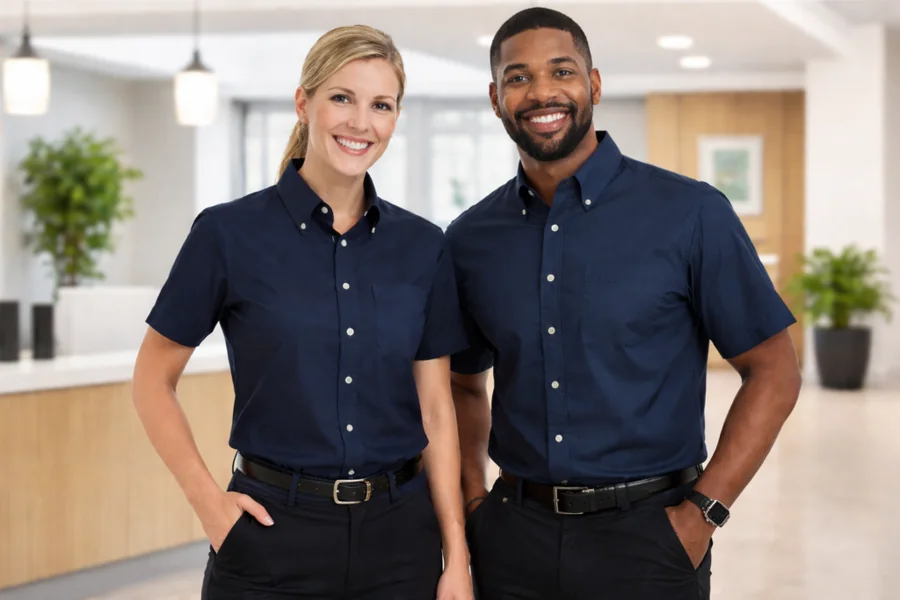
A business can spend months refining its logo, choosing the perfect brand colors, and crafting a consistent voice across every digital channel. Then a customer walks into the office or meets a team member at a trade show and sees staff wearing mismatched polos, faded generic tees, or nothing branded at all. That gap between the polished brand on screen and the people representing it in person is more damaging than most companies realize.
Why Apparel Is a Brand Touchpoint, Not a Perk
Most marketing conversations focus on websites, social media, and advertising. Apparel rarely gets a seat at the table, even though it operates in physical spaces where digital ads cannot reach. Every time a team member walks into a client meeting, staffs a booth at an event, or handles a service call, their appearance communicates something about the company.
Sixty percent of consumers say they trust businesses more when staff wear branded apparel, which makes company clothing one of the most direct trust signals a brand can deploy. That kind of credibility does not come from a banner ad. It comes from a person standing in front of a customer, wearing a shirt that says the company means business.
The effect compounds over time. Once produced, branded items keep promoting a brand without additional investment. Unlike traditional advertising that requires ongoing spend, branded apparel offers long-term visibility for a one-time cost.
The Gap Between Brand Standards and What People Actually Wear
Most companies have brand guidelines for digital and print. Far fewer have applied those same standards to apparel. The result is a patchwork of colors, styles, and logo placements that undercuts the consistency the brand works hard to maintain everywhere else.
Color and Logo Consistency
Brand colors carry meaning. They trigger recognition before a customer reads a single word. When apparel uses the wrong shade of blue, an outdated logo version, or a placement that does not match other brand materials, it creates a subtle but real sense of inconsistency. Customers pick up on it even if they cannot articulate why.
Garment Quality as a Brand Signal
Not all branded apparel delivers the same results. Fabric quality, fit, durability, and decoration methods directly shape how a brand is perceived. A thin, ill-fitting shirt with a cracked screen print tells a different story than a well-constructed garment with a clean embroidered logo. The quality of the shirt gets associated with the quality of the company. Simple as that.
Style Fit for the Industry
A law firm and a landscaping company both benefit from branded apparel, but the garments look completely different. The right style signals professionalism within the context of the industry. Forcing the wrong format, like a stiff button-down for a hands-on trade crew, creates discomfort that shows. Choosing apparel that fits the actual work builds confidence and, crucially, gets worn consistently.
Designing Apparel That Actually Reflects the Brand
Getting apparel right is not just about slapping a logo on a shirt. It requires the same intentional thinking that goes into any other brand asset.
Start with the brand’s visual identity documents. Pull the exact Pantone or hex values for colors, confirm which logo version is approved for embroidery versus screen printing, and establish placement standards. These decisions should not be made at the point of ordering. Settle them in advance so every garment, across every order, looks like it came from the same brand.
From there, think about the range of situations the apparel needs to cover:
- Client-facing roles where polish and professionalism matter most
- Field or trade work where durability and functionality take priority
- Events and trade shows where visibility and energy are the goals
- Casual internal culture where comfort drives whether items actually get worn
When teams working with custom branded apparel like BrokenArrow can order consistent pieces across all these categories, the brand stays cohesive from the boardroom to the job site.
Apparel as an Internal Culture Signal
Branded clothing does not just communicate outward. It shapes how employees feel about the organization they represent. In a study of 2,560 uniform wearers across seven European companies, researchers found that employees with well-fitting uniforms were 22% happier at work. That connection between what people wear and how they feel on the job is easy to overlook but hard to argue with.
When employees are proud of what they wear, they wear it outside of work. A team member who genuinely likes their company hoodie becomes a walking brand impression every time they put it on for a Saturday coffee run. Well-placed logos leave lasting impressions, and employees outfitted in apparel that reflects thoughtful design, they become brand ambassadors who reinforce a company’s identity and values wherever they go.
The inverse is also true. Apparel that feels like an afterthought gets left in the car or stuffed in a drawer.
Getting the Order Right the First Time
Ordering branded apparel for a team involves more variables than most people expect. Size ranges, garment styles, decoration methods, and turnaround times all require planning. Rushing the process almost always produces results that miss the mark, whether that is a logo that looks washed out on dark fabric or a size run that does not accommodate the full team.
Promotional outerwear kept and used for two years or more generates an average of 7,856 brand impressions, according to the ASI Global Ad Impressions Study, making it one of the most effective promotional products available. But that return only materializes when the garment is good enough to keep wearing. Cutting corners on quality to save money per unit often means spending more to replace items sooner.
A few practical steps make the process smoother. Request samples before committing to a full order. Test logo placement on the actual garment, not just a mockup. Confirm that the decoration method suits the fabric. And build lead time into the calendar so the apparel is ready before the event or season it is needed for, not after.
Where to Start
Brand consistency is built through repetition across every touchpoint, and company apparel is one of the most visible and durable touchpoints a business has. Auditing what the team currently wears against the brand’s visual standards is a straightforward place to begin. If the apparel does not match the brand, it is worth fixing before the next client meeting, trade show, or hiring push makes the gap more visible. The investment is modest. The impression it makes is not.