
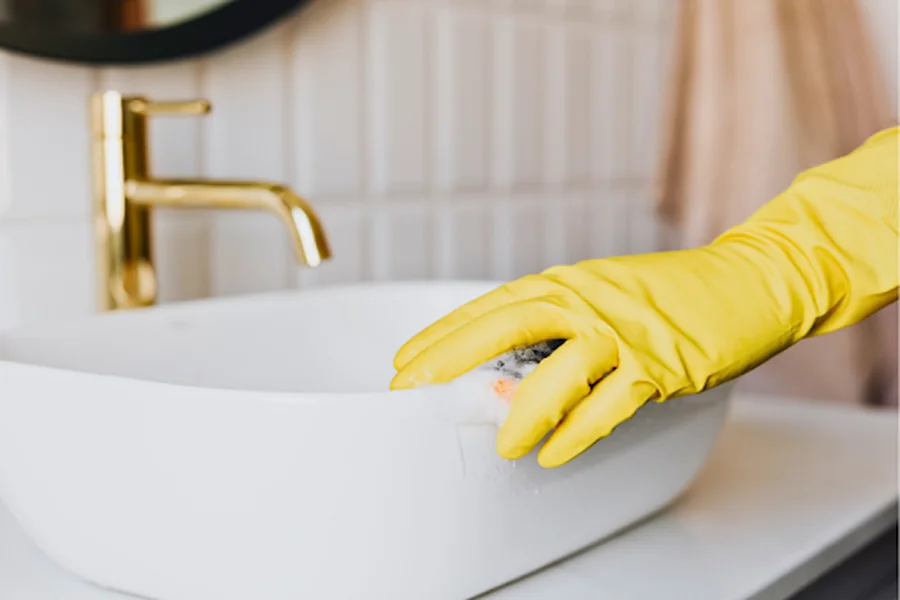
A bathroom can look impressive on the day a renovation is completed and still become frustrating to maintain a few months later. Water spots appear on the glass, soap residue collects around difficult corners, grout needs more attention than expected, and a countertop that looked spacious in photographs gradually fills with everyday products.
This is why maintenance should be considered during bathroom design, not after construction is finished.
Homeowners often choose tile, vanities, shower glass, and plumbing fixtures primarily by appearance. An experienced remodeler looks at those same products differently. How many joints will need cleaning? Can water collect behind the faucet? Are there difficult-to-reach areas around the toilet? Does the shower have enough storage to keep bottles off the floor? Will the ventilation system remove humidity effectively?
These decisions are particularly important for homeowners in Massachusetts and New Hampshire, where bathrooms experience significant seasonal changes in temperature and indoor humidity.
A low-maintenance bathroom does not have to look basic. With thoughtful planning, homeowners can have an attractive, comfortable space that requires considerably less effort to keep clean.
Fewer Grout Lines Usually Mean Less Routine Maintenance
Tile remains one of the most practical bathroom materials because it handles moisture well and is available in an enormous range of styles. The amount and placement of grout, however, can influence how much maintenance the room requires.
Small-format tiles naturally create more grout joints. That may be appropriate for certain designs, particularly shower floors where smaller pieces can accommodate the slope toward the drain and provide additional grout lines underfoot. Covering every bathroom surface with small mosaic tile, on the other hand, creates considerably more grout to maintain.
Larger-format porcelain tile can reduce the number of joints on bathroom floors and shower walls while creating a cleaner visual appearance. Modern porcelain can also reproduce the appearance of stone, concrete, and other materials without necessarily requiring the same maintenance as some natural surfaces.
Tile size should still be selected according to the application. Bigger is not automatically better, and walls or floors may require additional preparation before large-format materials can be installed properly.
The goal is to balance appearance, installation requirements, safety, and future cleaning.
Grout Selection Deserves More Attention Than It Usually Gets
Homeowners may spend weeks selecting tile and only a few minutes choosing the material between the tiles.
That small decision can affect the bathroom for years.
Grout needs to be appropriate for the installation, and manufacturers offer different formulations with different performance and maintenance characteristics. Color also matters. Very light grout on a heavily used floor can show dirt more readily, while an extremely dark grout beside light tile may highlight every variation in the installation.
A good remodeler considers the tile, location, expected use, and manufacturer’s requirements before recommending a grout system.
Installation quality is equally important. Consistent joints and proper application make surfaces easier to maintain while improving the overall appearance of the room.
Shower Design Has a Major Effect on Cleaning
Showers combine water, soap, shampoo, body oils, minerals, and humidity every day, so their design deserves particular attention when low maintenance is a priority.
Complexity generally creates more places requiring cleaning.
Multiple ledges, decorative transitions, unnecessary corners, and elaborate tile patterns can all increase the number of surfaces where residue collects. A simpler shower layout often performs better without looking less sophisticated.
Storage should also be incorporated into the design. When bottles sit on the shower floor or accumulate along a narrow curb, cleaning around them becomes inconvenient. A properly positioned niche or shelf gives everyday products a permanent location and makes surrounding surfaces easier to access.
Even the location of the showerhead can influence maintenance. Water constantly directed toward glass or an opening may create more spotting and splash than necessary.
A good shower design considers where the water goes, not just how the enclosure looks when it is dry.
Shower Glass Should Be Planned Around Real Maintenance Habits
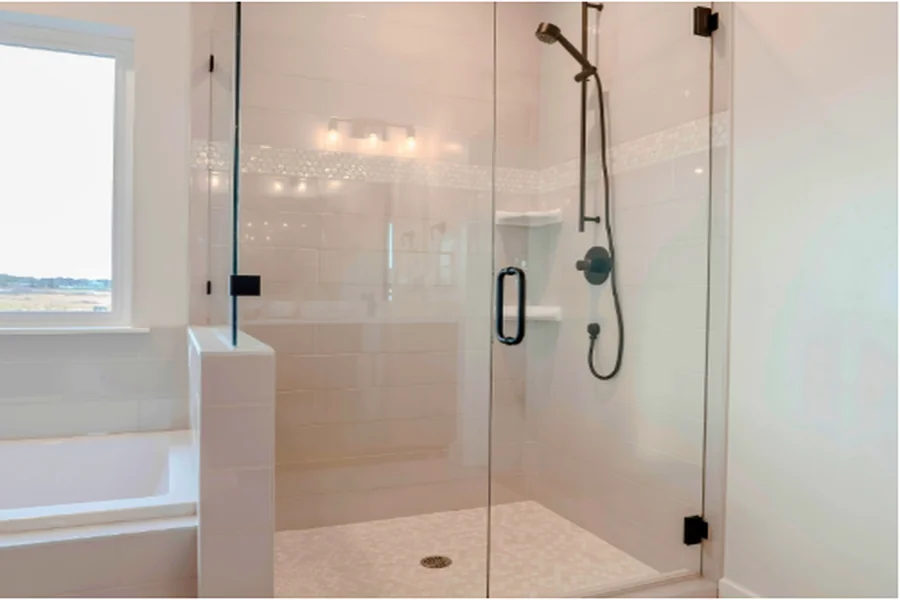
Frameless shower glass can make a bathroom feel more open because it reduces the number of visual barriers around the shower. It can also eliminate some of the tracks and framing found on traditional enclosures.
That does not make glass maintenance-free.
Hard-water deposits and soap residue can still become visible, particularly on clear glass. Homeowners who want the appearance to remain consistently spotless may need to use a squeegee or wipe the surface regularly.
The enclosure itself should be designed so its edges and hardware remain reasonably accessible for cleaning. Overcomplicated configurations can create narrow spaces between glass and surrounding fixtures that are difficult to reach.
There is no single enclosure that works for every bathroom. The practical choice depends on the available space, shower configuration, desired appearance, and how much routine maintenance the homeowner is comfortable performing.
Vanity Design Can Either Reduce or Create Clutter
Countertop clutter makes a bathroom harder to clean because everything must be moved before the surface can be wiped down.
This is fundamentally a storage problem.
A vanity should provide practical places for the products used every day. Drawers can work particularly well for cosmetics, grooming tools, and smaller toiletries because the contents remain visible and accessible. Cabinets may be better for taller items and cleaning supplies.
Electrical planning can improve organization as well. Depending on the design and applicable requirements, charging and storage solutions can be considered for electric toothbrushes and grooming devices so fewer cords and appliances need to remain on the countertop.
The correct configuration depends on the household. A couple sharing a primary bathroom may need very different storage from a guest bathroom that is used only occasionally.
The important part is discussing what actually needs to be stored before cabinetry is selected.
Countertop Material Matters, but So Does the Installation
Bathroom countertops deal with water, toothpaste, cosmetics, cleaning products, and frequent wiping.
Materials with straightforward maintenance requirements are therefore attractive to many homeowners. Engineered quartz is commonly chosen because it offers a broad range of appearances and generally does not require the periodic sealing associated with many natural stones.
However, countertop material is only part of the equation.
The installation should minimize awkward gaps and unnecessary joints where residue can accumulate. The relationship between the countertop, backsplash, faucet, sink, and wall should also leave enough room for normal cleaning.
A beautiful faucet positioned so close to the backsplash that a cloth cannot comfortably pass behind it will become irritating surprisingly quickly.
This is the kind of detail that should be caught during planning.
Undermount Sinks Can Simplify Countertop Cleaning
Sink configuration influences maintenance more than homeowners sometimes expect.
With an undermount sink, there is no raised rim sitting on top of the countertop, allowing water and debris to be wiped directly toward the basin. This can create a clean appearance and simplify routine countertop maintenance.
Other sink styles can work perfectly well when properly installed, and product selection should still reflect the countertop material, vanity design, and homeowner’s preferences.
What matters is understanding the practical differences rather than selecting a sink based entirely on showroom appearance.
The same thinking applies to faucets. Complicated shapes and numerous joints may require more detailed cleaning than simpler designs. A homeowner who values low maintenance should consider that before selecting highly decorative fixtures.
Toilets Create Some of the Bathroom’s Hardest-to-Reach Areas
Cleaning around a toilet is rarely anyone’s favorite task, and the fixture’s shape and placement can make the job considerably easier or harder.
Traditional toilet designs may have exposed contours and plumbing connections around the base that require additional attention. Smoother-sided models can reduce some of those difficult surfaces.
Clearance matters too.
A toilet squeezed tightly between a vanity and wall may technically fit while leaving narrow areas that are difficult to reach with normal cleaning tools. Proper planning should account for required clearances as well as practical access.
Wall-hung toilets can create a very clean floor area, but they involve different installation requirements and are not necessary simply to achieve an easy-to-maintain bathroom.
Often, selecting a well-designed conventional fixture and giving it appropriate space is enough.
Ventilation Is Part of Keeping a Bathroom Clean
Cleaning products cannot solve a moisture-management problem.
When humidity remains in the bathroom for extended periods, surfaces take longer to dry and conditions become more favorable for mildew and deterioration around vulnerable finishes.
An appropriately designed exhaust system helps remove moisture generated by showers and baths. Proper ducting is important because fan performance can suffer when air has difficulty reaching the exterior.
Controls also influence how consistently the system is used. Timers and humidity-sensing options can help the fan continue operating long enough to manage moisture without requiring someone to remember to return and switch it off.
For Massachusetts and New Hampshire homes, where opening a window is not always practical during colder weather, reliable mechanical ventilation becomes particularly valuable.
Open Shelving Looks Different Once the Bathroom Is Being Used
Open shelves can look excellent in photographs when they hold several folded towels and a carefully selected decorative item.
Daily life usually adds more.
Extra toiletries, cleaning products, personal care items, and miscellaneous bathroom supplies can quickly turn exposed storage into visible clutter. Shelves also collect dust and require the objects on them to be moved during cleaning.
That does not mean open storage should be avoided completely. A small shelf can add character and provide convenient access to frequently used items.
For most bathrooms, however, combining limited open shelving with enclosed cabinetry produces a more manageable result.
Products that do not need to remain visible can be stored behind doors or inside drawers, making the room easier to keep organized.
Good Layouts Leave Enough Room to Clean
Bathroom layouts are often evaluated according to whether fixtures fit and required clearances are maintained. Everyday maintenance deserves consideration as well.
A narrow gap between the vanity and bathtub may be technically usable but nearly impossible to clean properly. The same problem can occur between a freestanding tub and a wall or around decorative furniture-style cabinetry.
Homeowners should be particularly careful about creating inaccessible spaces simply to achieve a particular appearance.
A slightly different fixture size or position may make routine maintenance much easier without changing the overall design.
Experienced remodelers think about the finished room in motion: how people walk through it, open drawers, use fixtures, replace towels, and clean around everything after construction is complete.
Low-Maintenance Does Not Mean Low-End
There is sometimes an assumption that practical materials make a bathroom less interesting.
Good design proves otherwise.
A low-maintenance bathroom can include high-quality porcelain tile, frameless glass, attractive cabinetry, modern fixtures, carefully designed lighting, and custom storage. The difference is that these elements are selected and installed with daily use in mind.
At All Work Construction, discussions about bathroom remodeling include more than how materials will look on completion day. Homeowners are encouraged to consider how surfaces will be cleaned, where everyday products will be stored, how effectively the bathroom will manage moisture, and whether the finished layout will remain practical over time.
Readers can learn more about the company’s approach at allworkhome.com and explore bathroom renovations completed throughout Massachusetts and New Hampshire.
The Best Time to Make Cleaning Easier Is Before Construction
Many maintenance problems are difficult to correct after a bathroom has been completed.
Changing grout throughout a shower is disruptive. Adding built-in storage after waterproofing and tile are finished is rarely practical. Increasing space between fixtures may require much more than a minor adjustment once plumbing and cabinetry have been installed.
During planning, those same decisions are comparatively easy.
Homeowners can choose simpler surfaces, reduce unnecessary joints, plan enough storage, evaluate ventilation, and leave practical access around fixtures before anything is permanently installed.
This is one of the less glamorous parts of bathroom design, but it has a direct effect on how homeowners feel about the room several years later.
Final Thoughts
An easy-to-clean bathroom is not created by one special material or fixture. It comes from a collection of practical decisions made throughout the remodeling process.
Tile size and grout selection affect surface maintenance, while shower design determines how easily water and soap residue can be managed. Storage helps keep countertops clear, ventilation controls humidity, and thoughtful fixture placement makes previously awkward areas easier to reach.
For homeowners remodeling bathrooms in Massachusetts and New Hampshire, these details are worth discussing before choosing finishes based entirely on appearance.
A professionally remodeled bathroom should still look impressive years after construction. Making it reasonably easy to clean is one of the best ways to help that happen.