
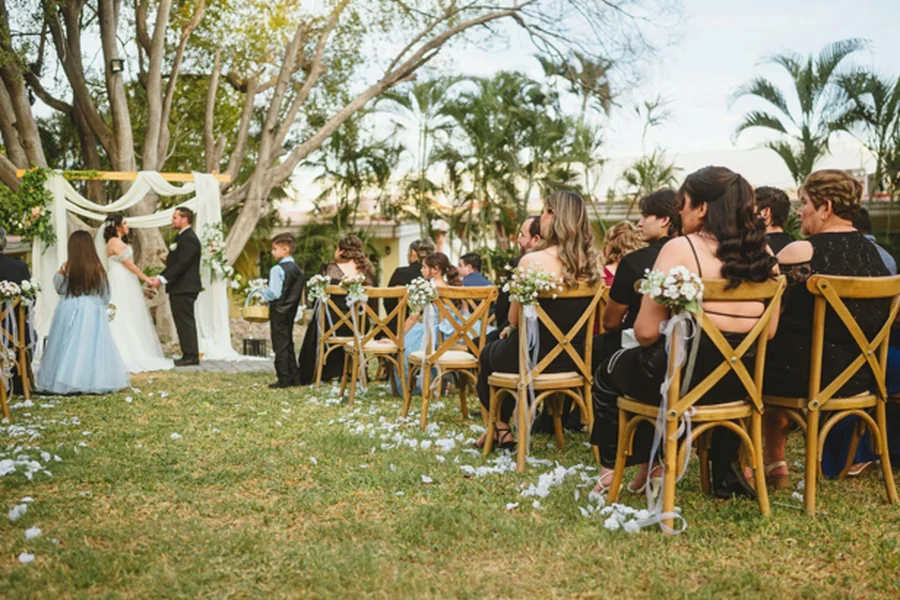
Outdoor weddings already have something indoor celebrations often work hard to recreate: a natural backdrop. Gardens, trees, open lawns, mountain views, and changing evening light can provide much of the atmosphere before a single decoration is added.
That does not mean an outdoor venue automatically feels finished. The most memorable spaces usually have a clear visual direction connecting the entrance, ceremony, dining area, and smaller gathering spaces. Practical details matter too. Guests need to know where to go, feel comfortable in changing weather, and move naturally between different parts of the celebration. When those details are handled well, the venue feels thoughtfully designed rather than simply decorated.
Make the Entrance Feel Like the Beginning of the Celebration
The wedding experience begins before guests reach their seats. The entrance is an opportunity to establish the style of the day while reassuring everyone that they have arrived in the right place.
A welcome display might combine flowers, greenery, fabric, lanterns, or another decorative element with information about the celebration. The design does not need to be elaborate. What matters is that it introduces colors and visual details that guests will encounter again elsewhere.
Signage becomes especially useful at larger outdoor properties where parking, ceremony, reception, and other areas may be separated. Professionally produced Printmoz signs can provide a consistent approach to welcome messages and directions while allowing the practical information to become part of the overall event design.
The entrance should immediately feel connected to everything that follows. When guests see the same typography, colors, and materials repeated later, the entire venue begins to feel intentionally coordinated.
Give the Ceremony a Strong Visual Focal Point
The ceremony is usually the emotional center of the wedding, so its setting deserves a clear focal point.
In some venues, nature provides one automatically. A large tree, distant mountain, lake, historic building, or open countryside view may need very little additional decoration.
Where the landscape is less defined, an arch, floral arrangement, fabric installation, or other structural element can visually establish where attention should be directed.
Scale matters. A tiny arrangement can disappear against a large landscape, while an enormous installation may overwhelm an intimate garden ceremony. The best backdrop works with its surroundings rather than competing with them.
The aisle can reinforce the same visual direction. Flowers, lanterns, greenery, or understated markers can create definition without turning the route into a separate decorative project.
Sometimes the most sophisticated decision is knowing when the landscape already provides enough.
Use Height to Give Open Spaces More Structure
Outdoor venues frequently have one design challenge that indoor rooms do not: there are fewer natural boundaries.
A ballroom already has walls, ceilings, doors, and architectural features defining the space. A large lawn can feel much less structured, particularly when tables and chairs are spread across it.
Vertical elements can help.
Trees, floral installations, lighting suspended above dining areas, banners, pergolas, and other tall features draw the eye upward and establish visual boundaries. Permanent features can contribute too. Something as simple as a well-positioned flagpole can provide height and presence near an entrance, driveway, or expansive venue, and specialists such as https://hdflagpoles.com/ illustrate how these architectural outdoor elements can become part of a property’s broader presentation.
For a wedding, the objective is not to fill every open area. It is to create enough visual structure that important spaces feel defined even without walls around them.
Create Different Areas Without Making Them Feel Disconnected
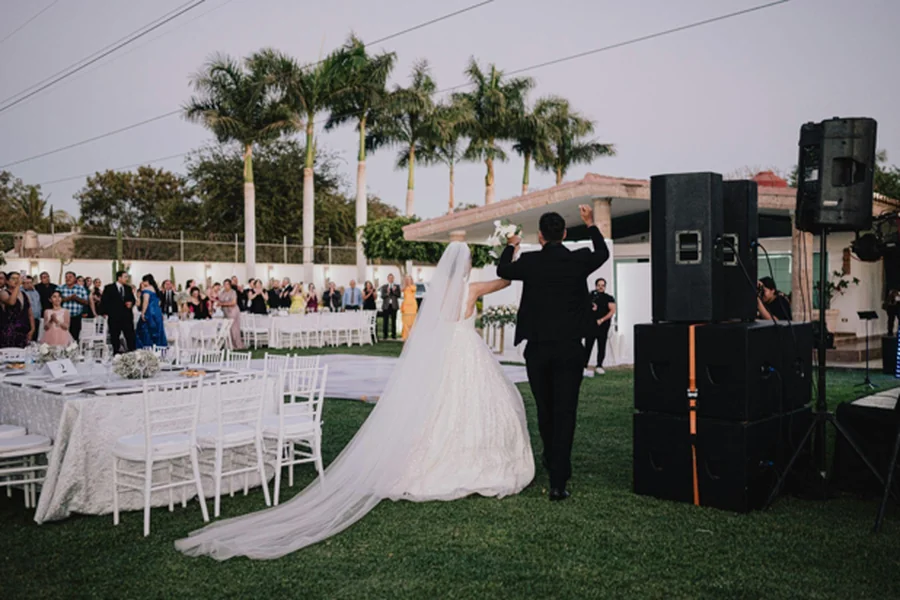
Most outdoor weddings involve several distinct activities.
Guests may arrive through one area, attend the ceremony somewhere else, move to cocktails, sit down for dinner, and eventually gather around a dance floor or evening lounge.
Each space can have its own character, but they should still feel like parts of the same celebration.
Repeating selected elements is one of the easiest ways to create that continuity. If greenery appears around the ceremony backdrop, smaller versions might appear on dining tables. A color introduced on the welcome sign can return in menus, napkins, flowers, or lounge furniture.
Pathways can also connect different areas visually. Lanterns, subtle lighting, flowers, or consistent directional signs can make the journey between spaces feel intentional.
Guests should understand that they are moving into another part of the event without feeling as though they have suddenly arrived at an unrelated venue.
Design for the Way the Space Changes After Dark
An outdoor venue can look beautiful during the ceremony and completely different four hours later.
Lighting should therefore be treated as part of the original design rather than a practical addition installed at the last minute.
String lights can visually define dining areas, particularly across large open spaces. Lanterns can make paths easier to follow, while lighting directed toward trees or architectural details can reveal features that disappear after sunset.
Dining tables need enough illumination for guests to comfortably see one another and their food. Lounge areas can generally use softer lighting, while steps, pathways, parking routes, and changes in terrain require greater practical visibility.
Candles can contribute to an atmosphere where venue rules and conditions allow them, but they should complement rather than provide all necessary lighting.
The transition into evening can actually become one of the venue’s strongest moments. As natural light disappears, carefully planned illumination reveals an entirely new version of the same space.
Treat Guest Comfort as a Design Feature
Beautiful outdoor furniture does not accomplish much if guests are uncomfortable sitting in it.
Daytime weddings need adequate shade, particularly when guests will remain seated outside for an extended ceremony. Trees, umbrellas, canopies, and covered areas can provide relief while becoming attractive features in their own right.
Temperature can change quickly after sunset, making blankets or suitable outdoor heating useful for cooler celebrations. In warm weather, water stations, fans, and shaded lounge spaces can make a significant difference.
Ground conditions deserve consideration too. Grass, gravel, and uneven surfaces can affect footwear and accessibility. Clear, stable routes between major areas make the venue easier for everyone to use.
These practical additions do not need to look utilitarian. Blankets can be arranged in attractive baskets, water stations can match the event styling, and shaded areas can become intentional lounge spaces.
Thoughtful design is ultimately about making beauty and usability support each other.
Let the Venue Have One Unforgettable Feature
A well-designed wedding does not need a dramatic installation in every corner.
In fact, too many competing focal points can make the venue feel cluttered.
Instead, choose one or two elements that guests are likely to remember. It might be the ceremony backdrop beneath an old tree, a long dining table under strings of lights, a beautifully designed bar, a floral installation, or a lounge area positioned to take advantage of a sunset view.
The surrounding décor can then become quieter.
This creates visual hierarchy. Guests instinctively understand which elements are meant to command attention and which simply support the atmosphere.
It also gives photographers stronger compositions because there are clear places where the environment, people, and design come together naturally.
The best outdoor wedding venues rarely look as though someone attempted to decorate every available square meter. They feel considered because each addition has a reason to be there.
A welcoming entrance establishes the visual language, signs make movement effortless, the ceremony has a strong focal point, lighting transforms the venue after sunset, and practical details keep guests comfortable throughout the day.
When all of those decisions work together, people may not notice every individual design choice. They simply experience a venue that feels complete, and that sense of effortless cohesion is usually the clearest sign that a great deal of thought went into creating it.