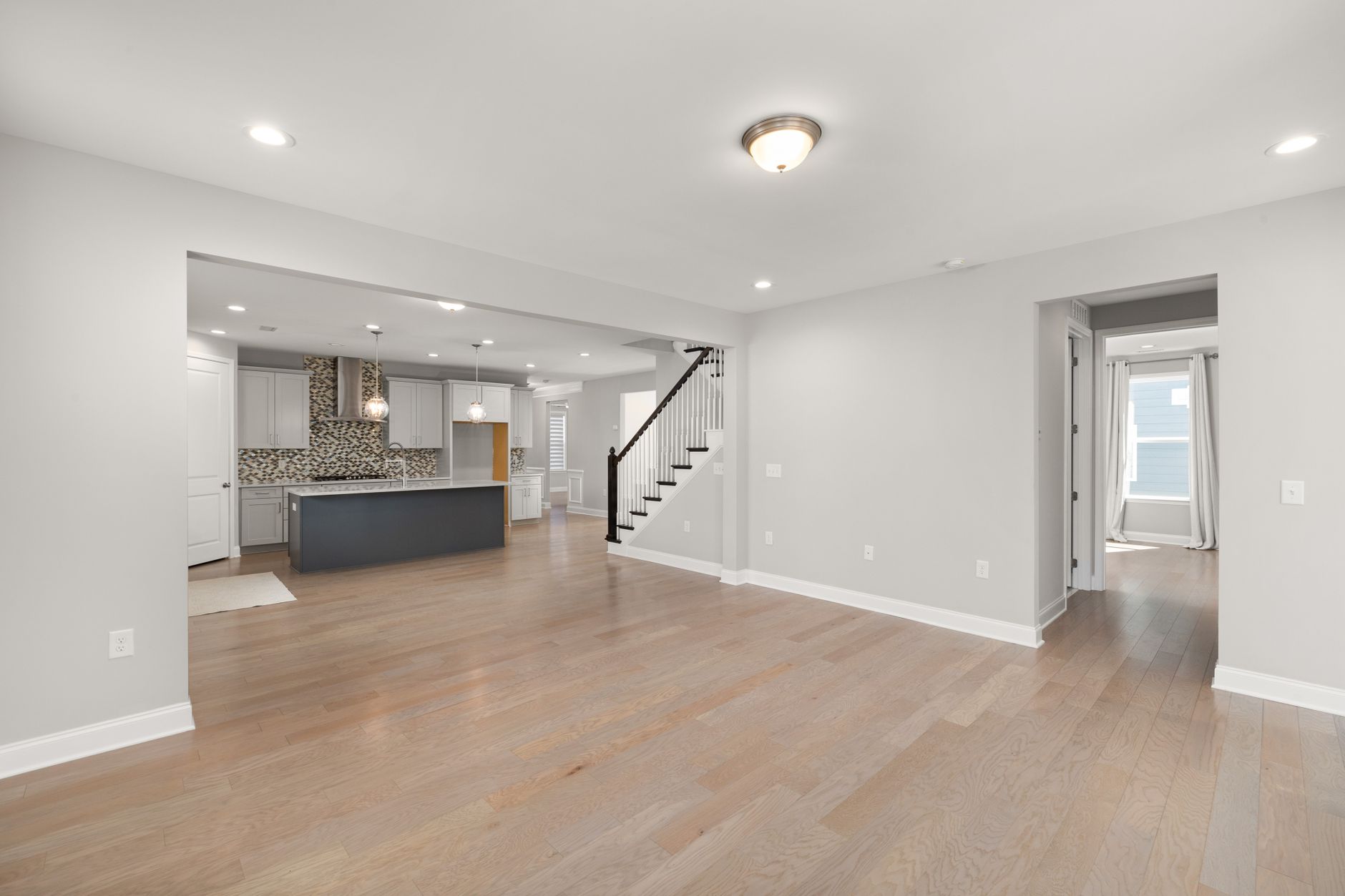
Open-concept rooms make several activities share the same air, furniture paths, and floor. A sofa sheds fibers beside a dining table, cooking sends crumbs toward the island, and pet hair moves easily from a rug into the kitchen walkway.
That means the order of cleaning matters more than it does in rooms separated by doors.
The most useful sequence is based on which tasks are likely to create another mess after they are finished. Dusting shelves can drop particles. Vacuuming upholstery can release crumbs. Kitchen wiping may send food debris to the floor. If the shared floor is cleaned too early, all of those jobs can undo part of the work.
Clear the Entire Shared Space Before Choosing a Starting Point
Begin by removing loose belongings across the whole open area.
Collect dishes, toys, mail, shoes, blankets, chargers, bags, and other items that have spread between the living, dining, and kitchen zones.
Do not stop to organize every drawer or basket.
CJS Cleaning Solutions can work more smoothly across connected rooms when tables, seating, counters, and walking paths are accessible before detailed cleaning begins.
Once the loose items are out of the way, the sequence becomes easier to follow because fewer objects need to be moved repeatedly.
Handle Fabric and Soft Furnishings Before Hard Surfaces Below Them
Sofas, upholstered chairs, pet beds, and area rugs can release hair, crumbs, lint, and dust while they are being cleaned.
That makes them early tasks.
Vacuum seating where needed, including cushion seams and accessible gaps. Deal with pet hair at its main source before moving to nearby hard flooring.
For households using professional cleaning services raleigh nc, this sequencing matters because cleaning upholstered living areas before the final floor pass keeps newly released hair and crumbs from landing on flooring that has already been finished.
The furniture does not need to be moved extensively. Focus on the portions that are safely reachable.
Remove Dry Dust Before Introducing Kitchen Moisture
Open layouts often place decorative shelving, dining furniture, and kitchen cabinetry within a few steps of one another.
Dry dusting should happen before sink work, damp wiping, or mopping.
Handle shelves, lamps, dining furniture, window sills, cabinet tops, and other dusty horizontal surfaces first.
Particles released during this work can fall onto counters or floors that have not yet received their final cleaning.
This also keeps dry dust from sticking to damp sections later.
The point is not simply “top to bottom.” It is keeping dry debris from mixing with moisture before it has been collected.
Finish Dining Furniture Before Cleaning Under It
Dining areas create their own small messes.
Crumbs hide beneath chair seats, dust settles on table supports, and food particles collect around chair legs.
Wipe the table according to its finish, clean chair surfaces as needed, and vacuum upholstered seats before dealing with the floor below.
If a centerpiece, placemat, or booster seat hides debris, move it briefly rather than wiping around it.
Once the dining furniture is complete, any loose material that fell during cleaning can remain on the floor until the shared dry-floor pass.
Leave the Kitchen Until Loose Dust From Nearby Zones Is Finished
The kitchen adds grease, food residue, moisture, and crumbs to an area that may already contain ordinary household dust.
Handle counters, backsplash sections, appliance exteriors, cabinet fronts that need attention, and the sink only after surrounding dry dusting is complete.
This prevents dust from a nearby shelf or light fixture from landing on a freshly wiped counter.
It also gives the kitchen its own cleaning phase without treating it as a completely separate room.
Any crumbs created while wiping the counter or moving small appliances can simply fall to the floor for later removal.
Pay Attention to Places Where Two Activities Meet
The messiest part of an open plan is not always the center of one zone.
It may be where activities overlap.
The floor beside a kitchen island may collect both cooking crumbs and pet hair from the living room. The path between the dining table and sink may show food debris plus ordinary foot traffic. A reading chair near the kitchen can receive both fabric lint and cooking film.
These overlap points deserve more attention than imaginary room borders.
Cleaning them according to what actually lands there is more useful than treating every square foot equally.
Treat Area Rugs as Debris Sources Before Treating Them as Finished Floors
An area rug often sits directly beside hard flooring, so whatever comes out of it can spread immediately.
Vacuum the rug before completing the floor around it.
Pay attention to edges where crumbs and hair collect between the rug and surrounding surface.
If the rug can be lifted safely, check beneath it occasionally.
Do not shake it indoors, since that can scatter the very debris you are trying to remove.
Once the rug is finished, leave the surrounding hard floor for the final shared-floor stage.
Make the Final Dry-Floor Pass Continuous
After furniture, shelves, dining areas, and kitchen surfaces are complete, deal with the floor as one connected system.
Vacuum or sweep from the farthest point toward the main exit.
CJS Cleaning Solutions can treat the shared floor this way even when the open area includes rugs, carpet sections, tile, or other flooring transitions, adjusting tools and methods to the material rather than stopping because the room function changes.
Use attachments around cabinet bases, sofa edges, table legs, and wall lines where debris tends to remain.
A continuous pass reduces the chance of carrying crumbs or hair back into an already cleaned section.
Mop Only the Hard Flooring That Actually Needs It
Damp floor cleaning should happen after dry debris is gone.
If several hard-floor materials meet within the open area, confirm that the cleaning method is suitable for each one.
Do not assume a product safe for tile is appropriate for wood or another finish.
Work toward an exit where possible and avoid walking through freshly cleaned sections.
Once this stage begins, the earlier dusting, furniture work, kitchen wiping, and dry-floor cleaning should already be finished.
That gives the mop a true finish line rather than making it an intermediate step.
Sequence the Space by What Can Undo the Next Task
An open-concept room is easier to clean when the order follows cause and effect.
Soft furnishings can release hair and crumbs. Dry dusting can drop particles. Dining and kitchen work can add more debris to the floor. The shared floor receives all of it, so it should be finished last.
That sequence reduces backtracking without pretending the kitchen, dining room, and living room are isolated spaces.
The room may serve several purposes, but the cleaning works best when each task is completed before it has a chance to undo the one that comes after it.