There's a moment in every engagement where the planning stops being abstract. For most brides, it happens with the dress. You've been saving images for months, maybe years, and then you try something on and the whole day suddenly has a shape to it. You can see the light. You can see how the fabric moves. You know, without being able to explain it, whether the dress belongs in a church, a ballroom, a garden, or somewhere with salt in the air.
That instinct is worth listening to, because it's usually telling you something about the setting before you've consciously chosen one.
If your mood board is full of soft neutrals, bare shoulders, loose hair, chiffon that catches wind, natural light doing most of the work in every photo, you may already be planning a beach wedding. You just haven't booked it yet.
Your dress has an opinion about where you get married
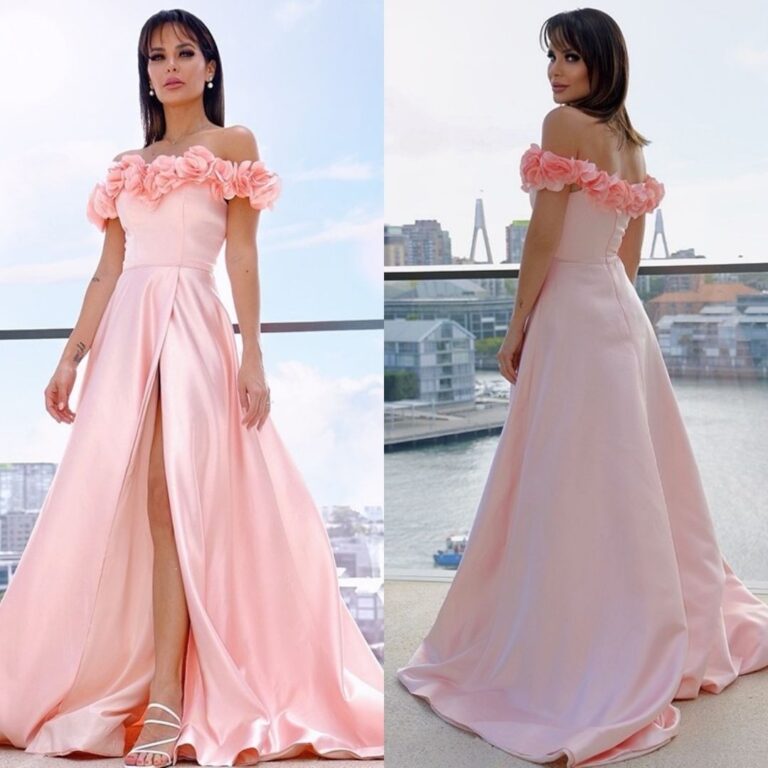
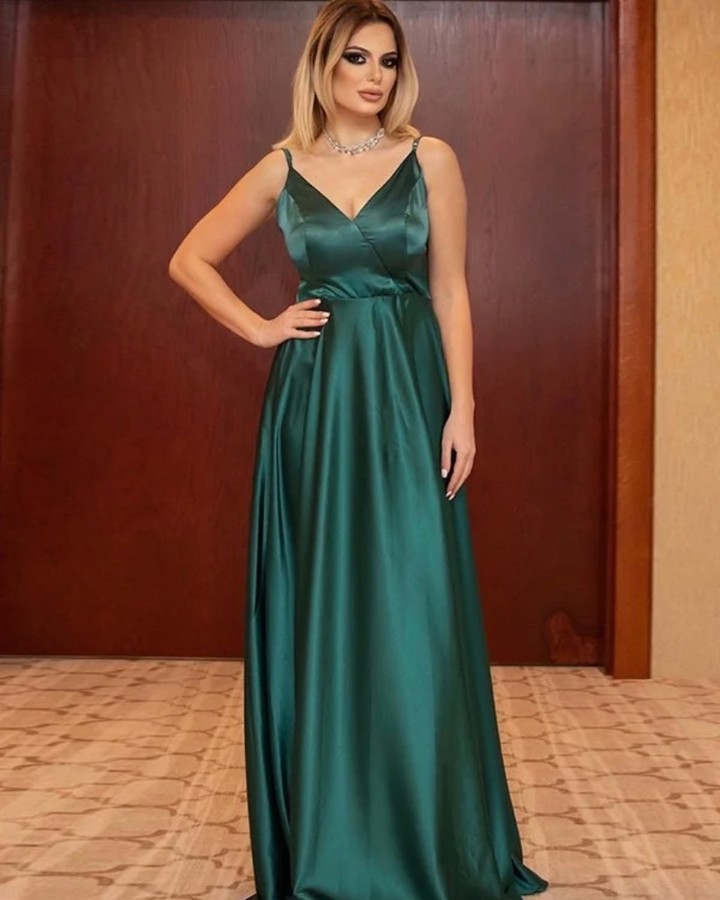
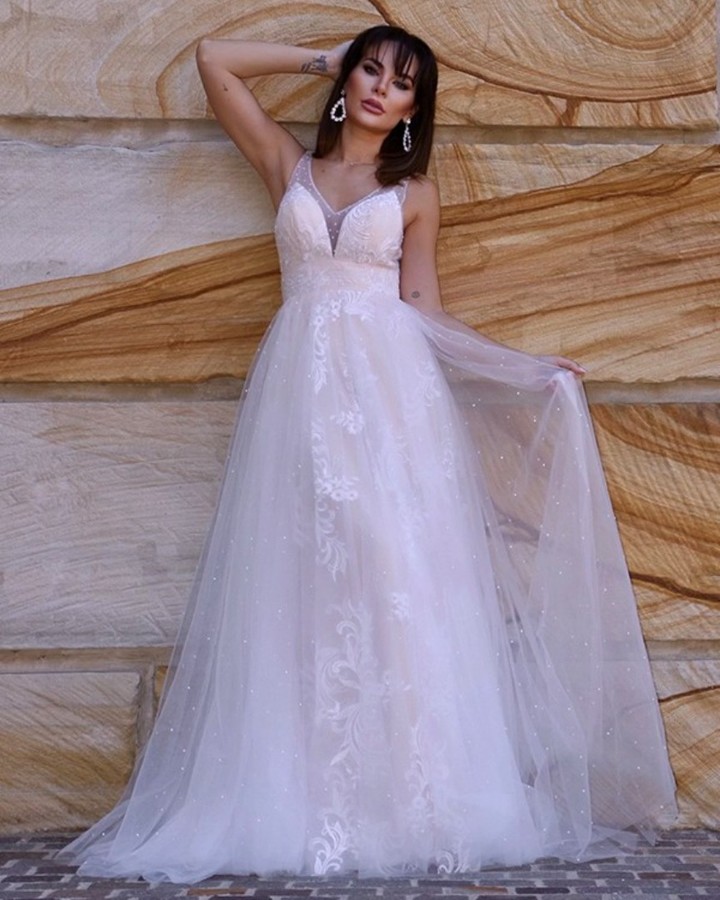
Look at what you've been drawn to. Flowing A-lines and sheath silhouettes, lightweight crepe and chiffon, illusion backs, detachable overskirts, hemlines that skim rather than sweep. These are dresses designed to move. They look their best when there's a breeze, when the light is warm and low, when nothing about the room is competing with them.
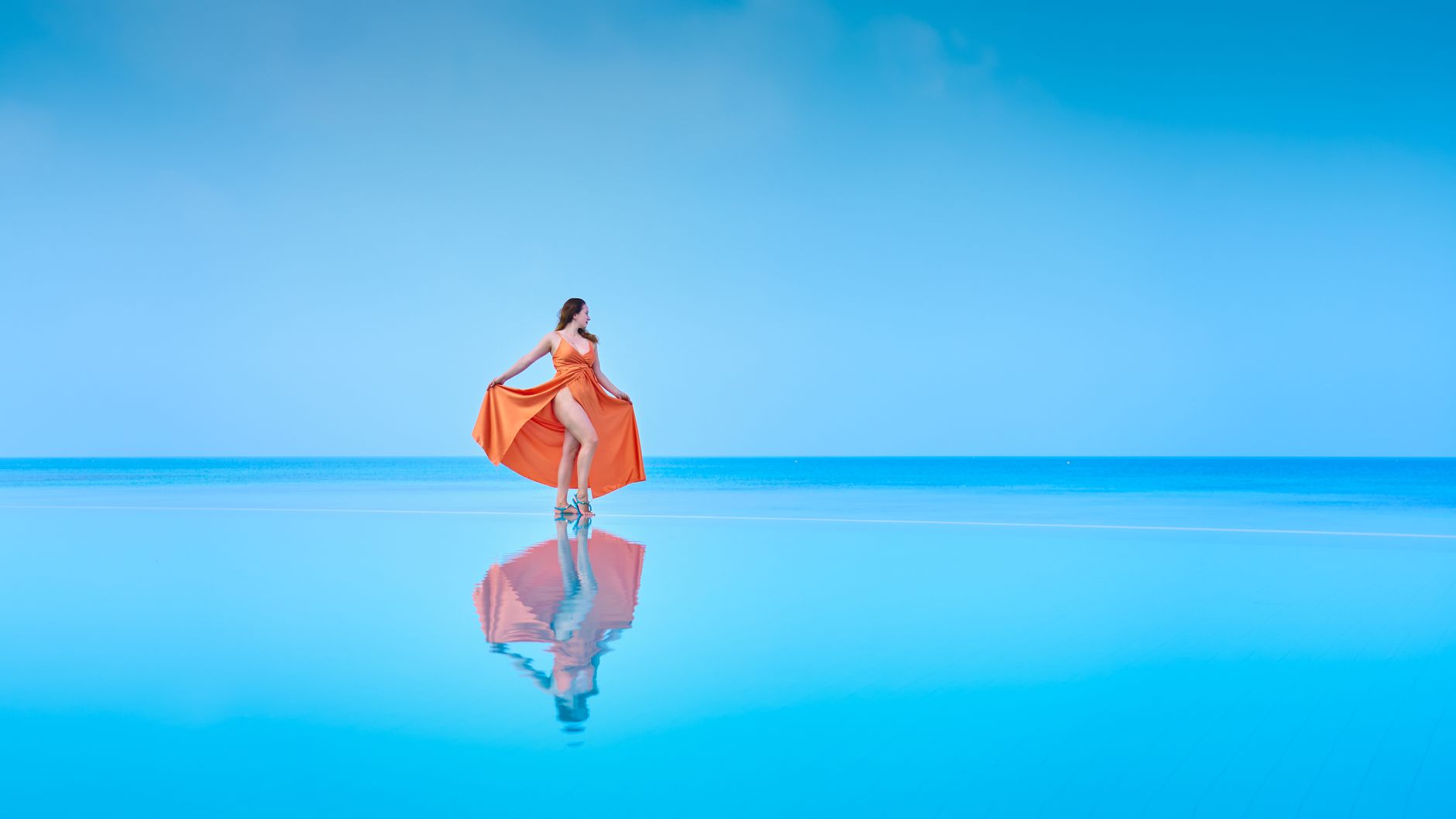
Put that same dress under a hotel chandelier and it still looks beautiful. Put it on a beach at five in the afternoon and it looks inevitable.
The reverse is also true, and worth saying plainly: a heavily structured cathedral-train ballgown with layers of tulle is not a natural fit for sand and humidity. Not impossible, but you'd be working against the venue rather than with it. If you're already in love with a lighter silhouette, the Caribbean isn't a compromise on your vision. It's the version of your vision where everything agrees with everything else.
What "Caribbean style" actually changes
People talk about destination weddings as if the main difference is geography. It isn't. The difference is the quality of the day itself.
The light does the work. Golden hour in the Caribbean is generous. Your photographer isn't fighting fluorescent uplighting or a room with two small windows. Skin looks warm, whites look clean, and the background is the sea. You'll spend less on styling the space because the space is already styled.
The ceremony is outdoors, and that changes how people behave. There's something about an open-air ceremony that loosens everyone. Guests arrive barefoot or in linen. Nobody is checking whether they're allowed to laugh. The formality that makes traditional weddings feel like a performance tends to fall away, and what's left is closer to what you actually wanted, which is the people you love watching you marry someone you love.
It stops being a day and becomes a few days. This is the part couples underestimate. At a hometown wedding, you get maybe four minutes each with the people who flew in. At a destination wedding, you have breakfast with your cousins, you're in the pool with your friends the afternoon before, you have a welcome dinner where nobody is rushing. Everyone is already there. Nobody leaves at ten to catch a train.
The guest list resolves itself. Not everyone can travel, and that's usually fine. Destination weddings tend to run smaller, twenty to sixty guests rather than a hundred and fifty, which means your budget per person goes further and the room is made up of people who really wanted to be there.
The all-inclusive part is the real argument
The aesthetic case for the Caribbean makes itself. The practical case is the one that actually decides it.
A traditional wedding means assembling a team. Venue, caterer, bar service, florist, cake, DJ or band, hair and makeup, rentals, and a coordinator to hold the whole thing together. Every one of those is a separate contract, a separate deposit, a separate person to chase, and a separate opportunity for something to go wrong three weeks out.
A resort wedding package collapses most of that into one point of contact. Ceremony setup, reception space, catering, bar, cake, sound, and a dedicated wedding coordinator are typically arranged together, with a menu of options rather than a blank page. You choose from what's offered, you confirm, and someone whose entire job is weddings handles the execution. For couples planning while working full time, planning from a different time zone, or planning without the family bandwidth to help, this is the difference between a stressful year and a manageable one.
It's simpler for guests too. They book a room, they arrive, and their meals, drinks and activities are covered. There's no group deciding where to have lunch, no splitting bills, no one missing the shuttle. Your guests get a holiday. You get a wedding. Nobody is doing logistics.
What this looks like in practice
Ocean Signature Resorts is a useful reference point here, because their properties across the Caribbean are set up specifically for this kind of celebration rather than accommodating it as an afterthought. Their destination wedding Caribbean offering covers weddings and celebrations packages with dedicated coordination, ceremony and reception settings on-site, and the accommodation and dining for your guests handled under the same roof.
That last point matters more than it sounds. When the ceremony space, the reception, the rooms and the coordinator all belong to the same operation, there's no gap between vendors for something to fall into. It's one team, one timeline, one person you email.
It's worth browsing the properties even at an early stage, before you've committed to anything. Seeing the actual spaces, the beachfront ceremony setups, the terrace and garden options, tends to make the idea concrete in a way that Pinterest never quite does.
A few honest practicalities
If you're seriously considering this, here's what to know before you fall in love with it.
Start earlier than you think. Twelve to eighteen months is comfortable. Your guests need lead time to book flights and take leave, and the best dates go first.
Sort the legal side deliberately. Marriage requirements differ by island, and some have residency periods or document requirements that take planning. Many couples handle the legal paperwork at home and treat the Caribbean ceremony as the real one, which is entirely valid and removes a layer of admin.
Watch the season. Atlantic hurricane season runs roughly June through November, with the highest risk from August to October. Plenty of weddings happen in those months without incident, but if you're risk-averse, aim for the drier stretch and take the travel insurance either way.
Travel your dress properly. Carry it on, never check it. A garment bag in the overhead, or ask the airline about hanging it. Most resort wedding coordinators can arrange steaming on arrival, so ask when you book.
Send a save-the-date almost immediately. For a destination wedding it's not a courtesy, it's a logistics document. The earlier people know, the more of them will come.
The decision underneath the decision
What you're really choosing isn't a location. It's what the week feels like.
One version is a day you spend managing: greeting, thanking, checking timings, wondering whether the flowers arrived, finishing at midnight having barely spoken to your new husband. The other is a few days of being surrounded by the people you chose, in warm light, on a beach, wearing the dress you fell in love with, with someone else holding the timeline.
If the second one sounds like what you've been imagining all along, the Caribbean isn't a leap. It's just where the vision was already pointing.