
The supplement aisle has no shortage of products promising sharper thinking, steadier focus or better everyday performance. Fenix Health Science takes a narrower approach. The Texas-based nutrition company has built its Accentrate® range around specific nutrient forms, weight-based formulations and at-home genetic reports intended to make brain-health nutrition easier to understand.
The company’s story began with founder Brett Bartel, a molecular biologist and patent attorney whose search for practical nutritional support for his son eventually led to Accentrate. Fenix later expanded from an all-in-one formula into separate Omega, Neuro and Minerals collections, alongside a probiotic and genetic testing options. The company publishes blogs and videos intended to explain the science behind its product choices. That change reflects a broader consumer trend toward personalized wellness, but it also raises an important question: how much personalization can supplements and genetic data realistically provide?
A Modular System Replaces the One-Size-Fits-All Formula
Fenix’s current product structure is built around separate nutritional “building blocks.” Its Omega line supplies omega-3 fatty acids, the Neuro range contains vitamins in active forms, and the Minerals products use chelated magnesium, zinc and iron. Many formulas are split by body weight, with “110” products intended for people over 110 pounds.
That modular setup gives customers more choice than a single fixed formula. It also makes the company’s positioning more specific. Instead of presenting one capsule as an answer for every nutritional need, Fenix groups nutrients by function and allows products to be combined in bundles. The model is paired with recurring-order and multi-product discounts, which can lower the effective monthly price for customers who use several parts of the system. At the same time, the added choice means shoppers have more decisions to make, so clear labeling and straightforward explanations are central to whether the personalized approach feels useful rather than complicated.
The company’s website currently lists an Omega 110, Neuro 110 and Minerals 110 bundle at $119.99 for a one-month supply before subscription savings. The under-110-pound bundle is listed separately, illustrating how weight is built into the product architecture rather than left solely to customer interpretation. The same product page identifies magnesium glycinate chelate, zinc glycinate chelate and ferrous bisglycinate chelate in the Minerals formula. This ingredient-level detail is useful in a category where labels can otherwise make comparison difficult.
Lysoveta Gives the Omega Line Its Most Distinctive Feature
The main differentiator in the Omega collection is Lysoveta®, an LPC-rich krill-derived ingredient from Aker BioMarine. LPC, or lysophosphatidylcholine, matters because research has identified the MFSD2A transporter at the blood-brain barrier as an important route for DHA carried in LPC form.
A landmark Nature paper by Nguyen and colleagues in 2014 found that MFSD2A transports DHA in LPC form and is required for normal uptake of LPC-DHA into the brain (Nguyen et al., 2014). That finding supports the biological rationale for developing LPC-bound omega-3 ingredients. It doesn’t, by itself, establish that every LPC supplement produces a specific cognitive outcome in people.
FDA records show that Aker BioMarine submitted a New Dietary Ingredient notification for Lysoveta-LP19, described as an LPC-rich oil extract of Antarctic krill, in May 2023, with an FDA response dated July 24, 2023 (U.S. Food and Drug Administration [FDA], 2026). An NDI notification concerns the regulatory framework for marketing a new dietary ingredient; it shouldn’t be interpreted as FDA approval of cognitive or clinical outcomes.
Fenix has promoted its LPC omega-3 format as providing higher brain uptake than conventional fish oil. The company has cited a sixfold advantage in some materials, but published studies vary by model, formulation and outcome. For consumers, the more defensible takeaway is that LPC-bound omega-3 delivery has a distinct transport mechanism with an emerging evidence base, rather than a guaranteed multiplier of benefit.
Genetic Testing Extends the Personalization Strategy
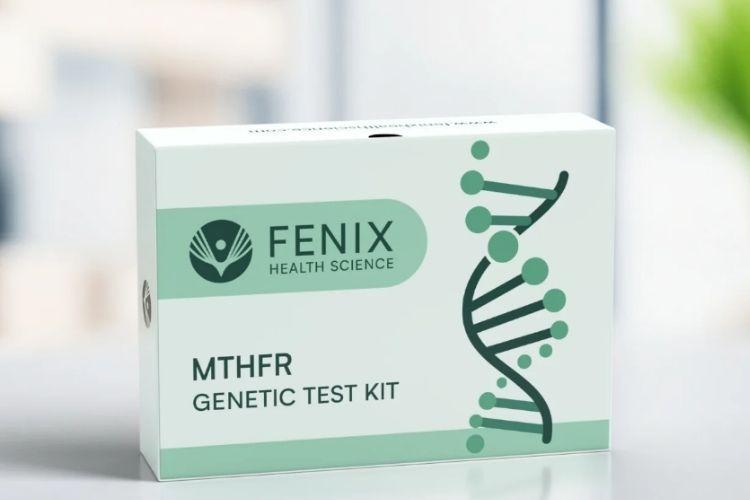
Fenix has also moved beyond supplements by offering at-home APOE and MTHFR testing. The tests use cheek-swab samples processed through a CLIA- and CAP-certified laboratory partner. Fenix says its broader panels analyze more than 800,000 genetic variants, while its basic reports focus on defined genes and pathways.
The MTHFR test examines common variants, including C677T and A1298C and reports estimated enzyme activity related to folate metabolism. Consumers can view the test at www.fenixhealthscience.com, where Fenix also states that reports are informational and are not a diagnosis or substitute for clinical genetic consultation.
That distinction matters. MTHFR variants are common, and professional genetics guidance has cautioned against routine MTHFR polymorphism testing as a broad diagnostic shortcut. The American College of Medical Genetics and Genomics concluded that common MTHFR polymorphism testing has minimal clinical utility in routine thrombophilia evaluation, a position later reaffirmed in an addendum (Hickey et al., 2013; Bashford et al., 2020).
The APOE report follows a similar principle. APOE ε4 is an important genetic risk factor in Alzheimer’s disease research, but it is a risk modifier rather than a deterministic diagnosis. Contemporary reviews emphasize that APOE influences disease trajectories and may have a growing role in precision-medicine pathways, while individual outcomes still depend on considerably more than genotype alone (Narasimhan et al., 2024).
The Brand’s Strongest Position Is Precision Without Overclaiming
Fenix Health Science occupies an unusual space between mainstream supplements and consumer genomics. Its advantage isn’t that it can predict outcomes from a capsule or a gene result. Rather, it organizes products around nutrient forms, body weight and biological pathways, then adds educational material intended to explain why those differences may matter.
That approach is most credible when the boundaries remain clear. Nutrition can be one part of a broader wellness plan. Genetic information can provide useful context. Neither should be presented as a replacement for individualized healthcare, and emerging ingredient science should be separated from outcomes that haven’t yet been established in large human trials.
For a company that began with a family looking for clearer nutritional options, Fenix’s evolution has moved in the direction of more choice rather than simpler packaging. Its Omega, Neuro and Minerals system, LPC-focused formulations and genetic reports give customers more information with which to make decisions. The next stage for the brand will depend on how successfully it continues to translate complex science into practical guidance without turning promising research into certainty.
References
Bashford, M. T., Hickey, S. E., Curry, C. J., & Toriello, H. V. (2020). Addendum: ACMG practice guideline: Lack of evidence for MTHFR polymorphism testing. Genetics in Medicine, 22(12), 2125. https://doi.org/10.1038/s41436-020-0843-0
Hickey, S. E., Curry, C. J., & Toriello, H. V. (2013). ACMG practice guideline: Lack of evidence for MTHFR polymorphism testing. Genetics in Medicine, 15(2), 153–156. https://doi.org/10.1038/gim.2012.165
Narasimhan, S., Holtzman, D. M., Apostolova, L. G., Cruchaga, C., Masters, C. L., Hardy, J., Villemagne, V. L., Bell, J., Cho, M., & Hampel, H. (2024). Apolipoprotein E in Alzheimer’s disease trajectories and the next-generation clinical care pathway. Nature Neuroscience, 27(7), 1236–1252. https://doi.org/10.1038/s41593-024-01669-5
Nguyen, L. N., Ma, D., Shui, G., Wong, P., Cazenave-Gassiot, A., Zhang, X., Wenk, M. R., Goh, E. L. K., & Silver, D. L. (2014). Mfsd2a is a transporter for the essential omega-3 fatty acid docosahexaenoic acid. Nature, 509, 503–506. https://doi.org/10.1038/nature13241
U.S. Food and Drug Administration. (2026). 75-day premarket new dietary ingredient notifications: 1995 to present.