An attic can become one of the hottest parts of a house during warm weather. Heat collects under the roof and can remain trapped when there is not enough air movement. A properly selected gable mount attic fan can help move that hot air outside through the end wall of the attic. But the fan works best when the rest of the ventilation system is set up correctly.
The way an attic releases heat depends on more than having an exhaust opening. Fresh outdoor air needs a clear path into the space while hot air moves toward the exhaust point. When that airflow is limited, a fan may have to work harder without addressing the main ventilation problem. Understanding how the system works makes it easier to choose the right fan and avoid common installation mistakes.
Why Attic Heat Builds Up
Sunlight heats the roof surface throughout the day, and some of that heat transfers into the attic space. Without enough ventilation, the warm air has fewer paths to escape and can remain trapped near the roof deck. This raises the temperature around insulation, framing, and stored items. The insulation still helps slow heat transfer into the rooms below, but it does not remove heat from the attic itself.
Natural ventilation can move air through soffit, ridge, and gable vents without a powered fan. ENERGY STAR explains that good attic ventilation allows outdoor air to enter through lower vents and helps move heated air toward higher vents. When passive airflow is limited, mechanical ventilation may provide another way to move air. The important part is creating a complete path for air to enter and leave the attic.
How a Gable Fan Moves Hot Air
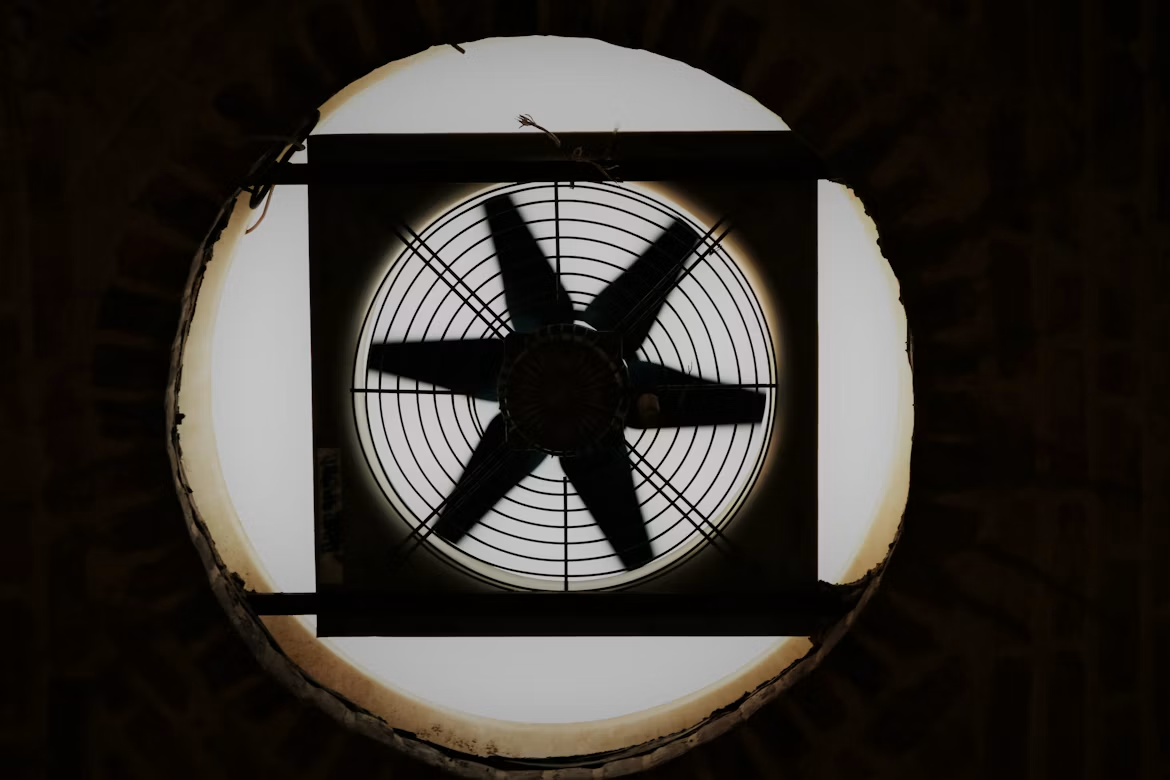
A gable mounted fan sits in or near an existing gable opening at the end of the attic. Instead of exhausting air through the roof, it pushes warm attic air horizontally through the gable wall. Cooler replacement air should then enter through properly placed intake vents. This creates a steady airflow pattern that can help reduce heat buildup.
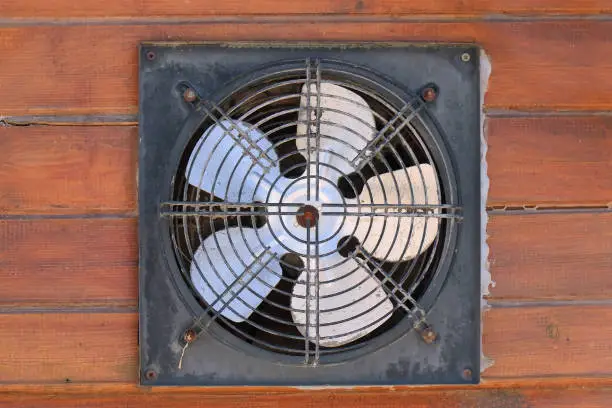
A gable mount attic ventilator fan usually uses an electric motor, blades, a protective housing, and an exhaust opening or shutter. Some models include thermostatic controls that switch the fan on when the attic reaches a selected temperature. Others offer multiple speeds or electronic controls. These features can make it easier to operate the fan only when ventilation is needed.
Why Intake Ventilation Matters
An exhaust fan cannot work efficiently if there is no suitable path for replacement air. Soffit vents are commonly used to bring outdoor air into the lower part of a vented attic. That air can travel upward as warmer air is exhausted through the gable opening. If insulation blocks the soffits, the airflow path becomes restricted.
This is why installing a powerful fan is not always the first step. ENERGY STAR specifically warns homeowners not to cover soffit vents with insulation and recommends using rafter vents where needed to keep airflow channels open. A fan with high advertised airflow can still perform poorly when the intake side of the system is restricted. Good ventilation depends on the whole system, not just the motor.
Choosing the Right Airflow Capacity
CFM, or cubic feet per minute, indicates how much air a fan can move. It is one of the main specifications to check when comparing attic fans. Larger attic spaces generally need more airflow, but the attic's shape, height, intake ventilation, and resistance also affect performance. A higher CFM rating alone does not guarantee better results.
Manufacturer sizing guidance can vary, so use the fan maker's specifications along with the actual attic dimensions. QuietCool, for example, bases its sizing approach on attic square footage and peak attic height rather than the total floor area of the home. This distinction matters in larger houses where the attic footprint may be much smaller than the living area. Measure the attic space before selecting the fan.
Thermostat Control Can Improve Operation
A thermostat allows the fan to respond to attic temperature instead of running continuously. When the attic becomes warmer than the selected setting, the control can activate the fan. As the temperature falls, the fan can switch off. This gives the system a simple way to respond to changing conditions.
Some gable mount attic fans include adjustable thermostats, while others use separate controls. Adjustable settings can be useful because different attics and climates do not behave the same way. Homeowners should follow the manufacturer's installation and control instructions rather than choosing a setting based only on another home's setup. Proper control also avoids unnecessary fan operation.
Noise and Motor Design Matter
Noise can become noticeable when a fan is installed near a living space. Motor quality, blade balance, housing construction, mounting, and vibration all affect the sound level. A poorly secured fan may transfer vibration into the surrounding wall even when the motor itself is reasonably quiet. This makes construction and installation quality important.
When comparing a gable mount attic fan, look beyond the airflow number. Check the manufacturer's sound information when it is available and consider whether the fan includes vibration reducing features. ENERGY STAR also uses sound and efficiency criteria for certified residential ventilation fans, showing why airflow should not be the only consideration.
Gable Mount Versus Roof Mount
The main difference is where the fan is installed. A gable fan exhausts through the side wall, while a roof mounted unit sits closer to the roof surface and requires a roof opening. If a house already has suitable gable vents, a gable installation may avoid creating a new roof penetration. That can make the installation approach simpler in the right attic.
A gable mount attic ventilator fan also keeps the fan away from the roof surface itself. This can be useful for homeowners who prefer not to add another roof opening. However, the existing gable structure must have enough space for the selected fan and airflow path. The best mounting position depends on the home's construction and existing ventilation layout.
Check the Attic Before Installation
Start by looking at the existing vents, insulation, wiring, and gable opening. Check whether soffit vents are open and whether insulation is blocking the intended airflow path. Look for signs of moisture, damaged insulation, or areas where outside air may already be entering through the ceiling. These conditions can affect how well a powered fan performs.
The attic ceiling should also be properly air sealed. ENERGY STAR warns that an attic fan can pull conditioned air from the living space when the attic is not properly sealed and intake ventilation is inadequate. That can increase the cooling load instead of solving the underlying problem. Sealing ceiling penetrations and maintaining proper insulation should therefore be part of the overall plan.
Installation Details That Should Not Be Ignored
The fan should be securely attached to the gable framing and installed according to its manufacturer's instructions. The opening must match the required dimensions, and the surrounding area should be properly supported. Electrical connections should also follow applicable safety requirements. If the installation requires new wiring or circuit work, a qualified electrician may be the appropriate choice.
The exterior opening should also have suitable protection against weather and pests. Many gable systems use shutters or louvers to control the opening when the fan is not operating. The fan should have enough clearance for the blades and motor to operate without obstruction. A careful installation reduces vibration and helps maintain consistent airflow.
Common Mistakes to Avoid
One common mistake is selecting a fan based only on its maximum CFM rating. Another is installing an exhaust fan without checking whether enough intake ventilation exists. A third is ignoring air leaks between the living space and attic. Each problem can reduce the value of the ventilation system.
It is also a mistake to assume that a powered fan replaces every other form of attic ventilation. Passive vents still play an important role in creating an airflow path. The U.S. Department of Energy notes that properly sized and placed soffit, ridge, and gable vents can help reduce attic heat, while powered fans may create problems when the ceiling is not airtight. The goal should be balanced ventilation rather than simply moving as much air as possible.
Maintenance Keeps Airflow Consistent
An attic fan has moving parts that need periodic inspection. Dust, debris, and insects can collect around the fan and restrict airflow. The housing, blades, shutters, and electrical connections should be checked according to the manufacturer's maintenance instructions. Any unusual vibration or noise is worth investigating.
Keep the gable opening clear so exhausted air can leave the attic freely. Also inspect the intake vents because blocked soffits can limit the amount of replacement air entering the space. Rafter baffles can help maintain an open channel between soffit vents and the attic area when insulation is present. A clean and unobstructed airflow path helps the fan do its intended job.
When a Gable Fan Makes Sense
A gable fan can be a practical option when a home already has a suitable gable opening and the attic needs additional mechanical airflow. It can also make sense when a homeowner wants to avoid adding another opening through the roof. The design is relatively direct because the fan exhausts through the existing end wall. Still, the attic must have adequate intake ventilation for the system to work properly.
A gable mount attic fan is best viewed as one part of an attic ventilation strategy. Insulation, air sealing, intake vents, exhaust vents, and fan controls all affect the result. If one part is poorly designed, adding a stronger fan may not solve the real problem. A complete inspection is often more useful than choosing a fan by CFM alone.
What to Check Before Choosing One
Begin with the attic's square footage and height. Then identify the existing soffit, gable, ridge, or other ventilation openings. Check the required opening size and compare it with the available gable space. Finally, review airflow capacity, thermostat options, motor efficiency, noise, construction, and installation requirements.
Also consider how the fan will be controlled and maintained. A thermostat can automate operation, while a multi speed model can offer more control over airflow and noise. Some modern fans add electronic or smart controls, but those features are not necessary for every attic. The right choice is the one that matches the physical ventilation system and the home's needs.
Frequently Asked Questions
Does a gable mount fan reduce attic heat?
It can help remove hot attic air when the attic has adequate intake ventilation and the system is correctly sized. Its effectiveness depends on the complete ventilation setup.
Does a gable fan need soffit vents?
A suitable intake path is important. Soffit vents are one common way to supply replacement air, although the exact ventilation arrangement depends on the attic design.
Is a thermostat useful on an attic fan?
Yes. A thermostat can turn the fan on when attic temperatures rise and stop it when temperatures fall. This can make automatic operation easier.
How do I choose the right fan size?
Start with the attic's actual square footage and peak height, then compare those measurements with the manufacturer's CFM guidance. Do not size the fan from the home's total living area alone.
Can an attic fan pull conditioned air from the house?
Yes, if the ceiling between the living space and attic has significant air leaks and the attic lacks adequate intake ventilation. Proper air sealing and ventilation should be addressed before relying on a powered fan.
Zalven Koraxis is a U.S.-based SEO strategist and digital marketing expert known for helping businesses grow through search optimization, online visibility, and smart content strategies. With deep experience in technical SEO and local search, he simplifies complex marketing concepts into clear, actionable insights for brands of all sizes.