Corporate events have long been associated with conference rooms, slide decks and carefully timed agendas. While meetings and presentations still have an important role, they are no longer enough to create a genuinely valuable event experience.
Employees, clients and partners now expect more from the time they spend together. They want opportunities to connect, contribute and leave with a clearer sense of purpose. That does not mean every event needs elaborate entertainment or an extravagant budget. It means the event should be designed around people, not simply information.
Information is only one part of the experience
A presentation can communicate facts efficiently. It can introduce a strategy, explain a change or share financial results with a large audience. The problem is that information alone rarely creates lasting engagement.
Most people remember how an event made them feel more vividly than they remember every point on a slide. A useful insight may be forgotten within days, while a meaningful conversation or shared experience can influence behaviour long afterwards.
This is particularly important for internal corporate events. If an organisation wants employees to understand a new direction, for example, a leadership presentation may explain the strategy, but it cannot create commitment by itself. People need a chance to ask questions, discuss implications and see how their own work contributes to the wider objective.
The best events therefore combine communication with participation. A keynote might establish the context, followed by workshops, facilitated discussions or practical challenges that allow attendees to explore the subject for themselves. Instead of passively receiving information, they become part of the process.
Design the event around a clear purpose
Before choosing a venue, booking entertainment or building an agenda, ask a more fundamental question: what should be different because this event happened?
The answer might be increased collaboration between departments, stronger relationships with clients, improved understanding of a new brand direction or renewed morale after a difficult period. A clear purpose provides a useful test for every decision that follows.
For instance, an event intended to encourage collaboration should not consist entirely of separate departmental presentations. It might include mixed-team problem-solving sessions, informal networking and a project that requires people to draw on different skills. Similarly, a product launch should offer more than a polished demonstration. Attendees could test the product, speak directly with the people behind it and explore real-world applications.
Purpose also helps prevent unnecessary complexity. When every activity supports a defined outcome, the event feels coherent rather than crowded.
Create space for genuine interaction
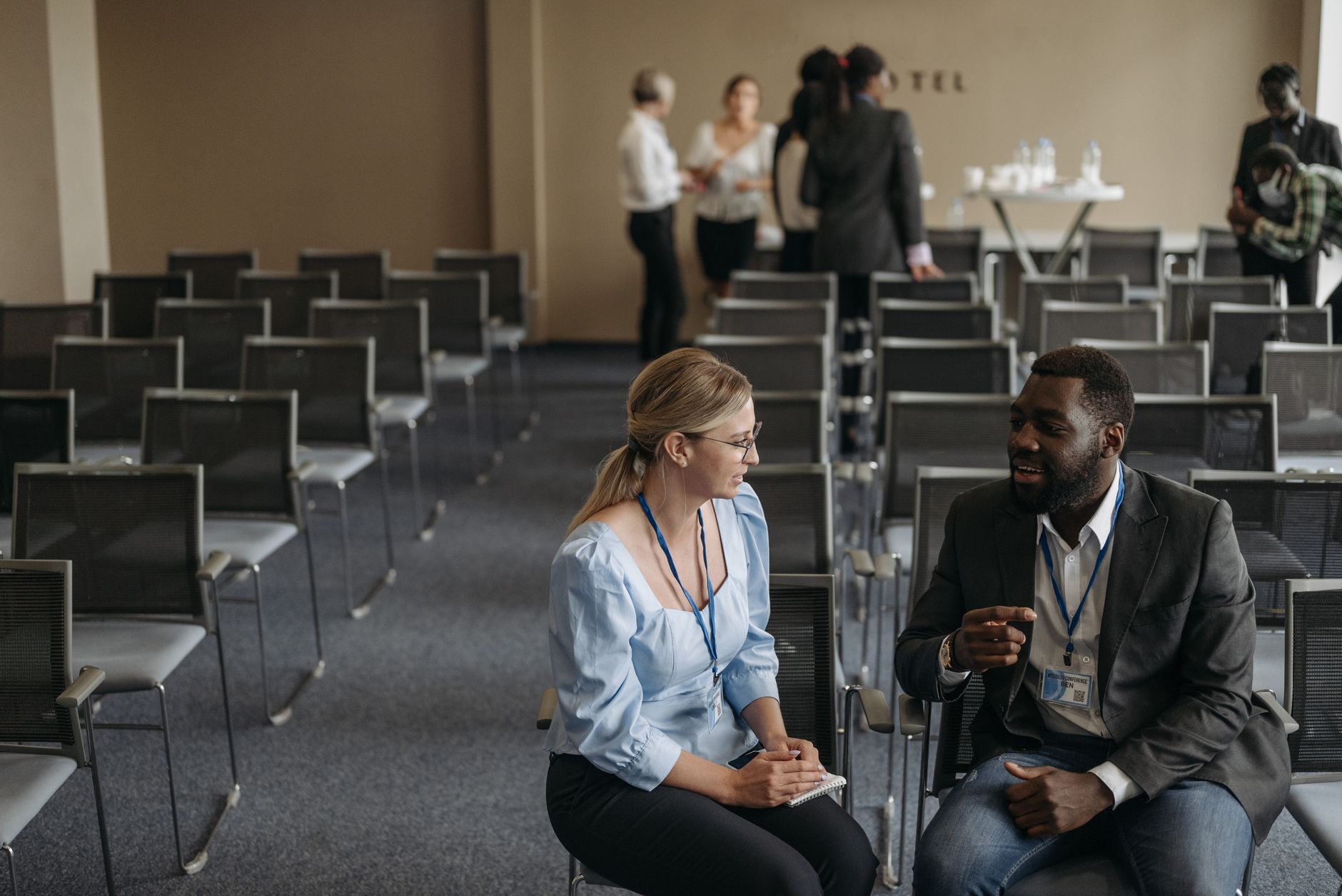
Networking is often included in event schedules as though it happens automatically. It does not. Telling people that there will be “plenty of networking opportunities” is very different from creating conditions in which meaningful conversations can take place.
Large rooms, loud music and tightly packed schedules can make interaction difficult. If networking matters, the format needs to support it. Smaller discussion groups, hosted introductions, shared activities and thoughtfully arranged spaces can all help people move beyond small talk.
The same principle applies to clients and external stakeholders. A corporate event is an opportunity to listen, not merely to broadcast. Round-table discussions, feedback sessions and informal conversations can reveal concerns or ideas that would never appear in a formal survey.
Even simple choices can make a difference. Allow enough time between sessions. Avoid filling every pause with announcements. Provide comfortable areas where people can talk without competing with background noise. A productive conversation may be less visible than a stage presentation, but it can be far more valuable.
Make sustainability part of the event experience
Sustainability should not be treated as a paragraph in the event brief or a token recycling station near the entrance. It should influence the entire production process, from travel and catering to materials, energy use and waste management.
This is increasingly relevant as businesses face greater scrutiny from employees, customers and investors. An event that communicates ambitious environmental goals while relying on excessive single-use materials sends a confusing message.
Planning a more responsible event does not require compromising on quality. It means making deliberate decisions: selecting a venue with credible environmental policies, reducing printed materials, prioritising seasonal or plant-forward catering, and considering hybrid participation where travel is unnecessary. It also means measuring what can reasonably be measured, rather than making vague claims.
For organisations planning an event with sustainability at its core, specialist guidance on corporate sustainability event production UK can help connect environmental objectives with practical delivery. The strongest approach is one where sustainability is visible in the choices attendees experience, rather than presented as a separate marketing message.
Use technology to improve participation, not add spectacle
Technology can make an event more inclusive and interactive, but it should solve a real problem. Immersive screens, event apps and live polling may be useful when they support the purpose of the gathering. They are less effective when included simply because they look impressive.
Live questions can give quieter attendees a voice. Digital agendas can reduce printed waste and make information easier to access. Audience polling can help speakers understand the room and adapt their content. Remote participation can allow people to join key sessions when full attendance is impractical.
However, technology should never become a substitute for human connection. A flawless production with little opportunity for conversation may leave attendees less engaged than a simpler event with thoughtful facilitation.
Think beyond the final applause
An event’s impact should not end when the last presentation finishes. Without follow-up, even an energising day can quickly become a pleasant memory rather than a catalyst for action.
Send attendees a concise summary of key decisions, insights or commitments. Give teams practical next steps while the conversations are still fresh. Share relevant resources, gather feedback and, where appropriate, report back on what changed as a result of the event.
Evaluation should go beyond asking whether people enjoyed themselves. Enjoyment matters, but so do learning, connection and behaviour. Did attendees understand the message? Did new relationships form? Are people applying what they discussed? The answers can improve future events and demonstrate their wider business value.
The most memorable events feel purposeful
Corporate events do not need to abandon structure, professionalism or presentations. They simply need to put those elements in context.
A strong event informs people, but it also gives them a reason to care. It creates room for conversation, turns ideas into shared experiences and reflects the values an organisation claims to hold. When the agenda is shaped around purpose and participation, attendees are more likely to remember the experience—and act on what they have learned.
That is the real opportunity. A corporate event should not be measured only by how smoothly it ran. It should be judged by what it helped people understand, build or change.