By a medical industry contributor. Chronic pelvic pain can be a frustrating and lonely experience. You might spend months or even years going from one specialist to another, like a gynecologist, urologist, or gastroenterologist, searching for a cause. When test after test comes back normal, it’s easy to feel like your concerns are being ignored, or that the pain is just something you have to live with. This is a common story, but it often misses a key part of your body: your network of veins.
The complex network of veins in your pelvis can be a source of chronic pain, much like varicose veins in the legs. When the tiny valves inside these veins get weak, they can’t close the right way. This lets blood flow backward and collect, which makes the veins stretch and get bigger. This condition, known as pelvic venous insufficiency, puts pressure on nearby organs and nerves. A major vein involved in this process is the gonadal vein, which drains the ovaries in women and the testes in men.
Understanding this link to your veins is the first step to finding a real solution, not just covering up the symptoms. It changes the focus from a problem with your reproductive or urinary system to a vein-related condition that needs a different way of being diagnosed and treated.
Quick answer: Chronic pelvic pain that gets worse when you stand for a long time and doesn’t have a clear cause may be related to pelvic venous insufficiency. This is a treatable condition where veins in the pelvis get bigger. Diagnosis uses special imaging tests, and treatment often involves simple procedures to close off the problem veins. This sends the blood flow to healthier veins instead.
What’s inside
· What Goes Wrong with Pelvic Veins?
· How Are Venous Issues in the Pelvis Diagnosed?
· What Are the Modern Treatment Options?
· Frequently Asked Questions
What Goes Wrong with Pelvic Veins?
Veins are designed to carry blood back to the heart. To do this, especially from the lower body, they have tiny one-way valves that stop gravity from pulling the blood back down. When these valves in the pelvic veins weaken or get damaged, they don’t close properly.
This failure allows blood to flow backward and pool in the pelvis, particularly when you are standing or sitting. The veins swell and become enlarged, similar to varicose veins in the legs. This condition, called pelvic venous insufficiency, creates pressure on the uterus, ovaries, and bladder. This constant pressure and swelling can lead to a dull, aching pain that is often the main symptom of the problem.
How Are Venous Issues in the Pelvis Diagnosed?
Diagnosis needs two things: a close look at your symptoms and special imaging tests to see the blood flow and veins in your pelvis. The process is step-by-step. It’s designed to rule out other problems and confirm that veins are the cause of the pain. It starts not with a machine, but with a conversation.
A specialist will want to understand the details of your pain. Does it feel like a dull ache or heaviness? Does it get worse as the day goes on, or with long periods of standing or sitting? Is it worse during or after your period? This history is important because pain from weak veins has a pattern that depends on gravity. This is different from many other female or digestive health problems.
If the symptoms point to a vein problem, the next step is imaging that doesn’t require any cuts. A pelvic ultrasound with Doppler is often the first test. It uses sound waves to see the veins and measure the direction of blood flow. For a more complete picture, a specialist may use a CT or MR scan of the veins. A CT scan, for instance, uses a series of X-ray images to create detailed pictures of your blood vessels and tissues, according to the National Institute of Biomedical Imaging and Bioengineering. These scans create a detailed “map” of your pelvic area.
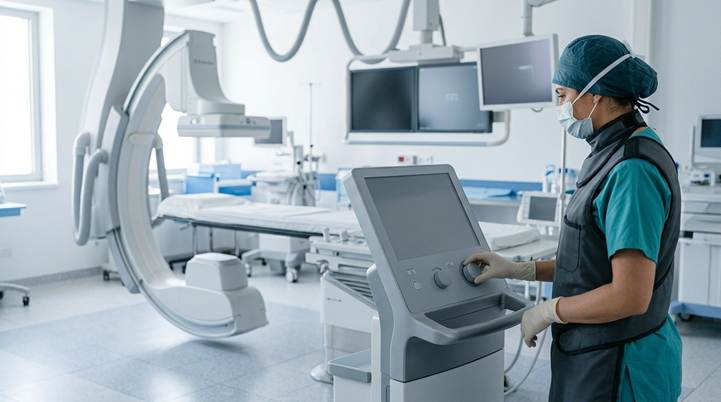
The most certain test is a venogram, which uses a thin tube called a catheter. This procedure is seen as the most accurate way to diagnose the problem because it lets the doctor see the blood flow as it’s happening, as explained by the Radiological Society of North America. During this simple procedure, a thin tube is guided into the veins, and a special dye is used that makes the blood vessels show up on an X-ray. This allows a specialist to directly see any backward blood flow (called reflux), which confirms the problem.
❝ A key detail in diagnosis is seeing how the veins act when you change your position. Blood flow can look normal when you are lying flat on a table. A complete check-up might use a special table that tilts or other movements to see if gravity makes blood pool in the pelvic veins, which is the key sign of the condition.
Finally, reading these images correctly takes special skill. The images are just one piece of the puzzle; the diagnosis is made by linking the images to the symptoms you describe. An experienced specialist, often an interventional radiologist, will look for key signs, like an ovarian vein that is clearly wider than normal and the visible backward flow of dye during a venogram. A correct diagnosis depends on both high-quality imaging and a skilled doctor to read it.
What Are the Modern Treatment Options?
The main treatment for this condition is a simple procedure called pelvic vein embolization. The goal isn’t to remove the bad veins, but to close them off for good. This stops the painful pooling of blood and takes pressure off the organs in your pelvis.
This procedure is typically done by an interventional radiologist, and you can usually go home the same day. Using a live X-ray for guidance, a specialist puts a very thin tube (a catheter) into a vein in your groin, wrist, or neck. This tube is carefully guided to the enlarged gonadal and other pelvic veins. Once it’s in the right place, the specialist places tiny, soft metal coils inside the vein. These coils block the vein so blood can’t flow backward.
In many cases, the coils are used with a special medical solution called a sclerosant. This solution is injected through the catheter and makes the vein walls scar and close up. Using both gives a more complete and lasting fix, especially for the smaller veins connected to the main one. Once the problem veins are blocked, your body automatically sends the blood through other healthy veins in the pelvis.
❝ A key difference in the quality of treatment is how thorough it is. Just blocking the main left gonadal vein might help, but it may not fix the whole problem. The pelvic vein system is a complex network. A complete treatment involves checking all the connected veins that have backward flow to make sure the entire source of the problem is fixed. This helps stop symptoms from coming back or moving to another area.
This embolization technique is a big improvement over older surgeries that were more invasive. Older surgeries often meant tying off the vein or even removing the uterus (a hysterectomy). These required you to be fully asleep, stay in the hospital, and take longer to recover. Embolization is done with numbing medicine and light sedation, and you can typically go home the same day. Recovery is faster, with most people getting back to their normal routine within a week.
Frequently Asked Questions
What exactly is the gonadal vein? The gonadal vein is the main vein that carries blood away from the reproductive organs: the ovaries in women and the testes in men. The left and right gonadal veins follow different paths in the body. The right vein usually drains right into a large vein called the inferior vena cava, while the left one drains into the left kidney vein. This path can sometimes create higher pressure and make it more likely for the valves to fail.
What causes the valves in pelvic veins to weaken? The most common reason is pregnancy. Hormone changes, especially higher levels of progesterone, can make vein walls weaker. The weight of a growing uterus also puts a lot of pressure on the pelvic veins, which can damage the small valves inside. Having a family history of weak vein walls, similar to what causes varicose veins in the legs, can also be a factor.
Are pelvic venous insufficiency and gonadal vein thrombosis the same thing? No, they are different problems. Venous insufficiency, which causes Pelvic Congestion Syndrome, is a long-term problem where bad valves let blood collect. It causes a dull, aching pain that gets worse with standing. Gonadal vein thrombosis is a sudden problem where a blood clot forms inside the vein, causing sharp pain. While both involve the same vein, thrombosis is a clot that blocks the vein, while insufficiency is a problem with the direction of blood flow.
Besides embolization, are there other ways to manage the symptoms? While embolization fixes the root mechanical problem, some people may use other methods for short-term relief. Over-the-counter pain relievers can help with the discomfort. Hormone-based medicines are sometimes used to reduce the work of the ovaries. This can lower blood flow in the veins and help with symptoms, but it is not a long-term solution. These methods manage symptoms but don’t fix the problem veins.
Is the embolization procedure itself painful? The procedure is done with numbing medicine and light sedation so you stay comfortable. You may feel a small pinch where the tube goes in, but the area is numb. Most people do not feel the tube moving inside their blood vessels. Some report a feeling of light pressure or cramping in their lower belly when the coils are put in, but sharp pain is not common.
What happens to the tiny coils placed in the veins? The coils are made from materials that are safe for the body, often platinum, and are designed to stay in your body forever. They are inactive, which means they don’t cause a reaction or break down over time. Once placed, they become a permanent part of the vein, making sure it stays closed. They generally won’t set off airport metal detectors, and most modern coils are considered safe for future MRI scans, though you should always mention them to the MRI team.
The Key to Effective Relief: A Precise Diagnosis
Chronic pelvic pain can be a long and frustrating journey. It can involve seeing many specialists and getting unclear test results. The main point is that for many people, this pain isn’t a mystery. It’s a mechanical problem within the pelvic vein system. Weak vein valves that let blood pool and create pressure give a clear, physical reason for the pain. This can explain symptoms that may have been ignored or blamed on something else. This knowledge changes the focus from just managing pain to fixing a specific, treatable problem.
The most important part of getting relief is getting the right diagnosis. A scan that shows a widened vein is not enough for a diagnosis on its own. A correct diagnosis links what the scan shows with your specific symptoms, especially pain that gets worse when you stand for a long time. A complete evaluation will map out the entire network of problem veins. This makes sure the treatment plan is complete. This is the difference between temporary relief and a lasting solution.
Ultimately, being informed helps you speak up for yourself. You can now ask specific questions about whether a vein problem has been considered for your pelvic pain. By understanding how this vein problem works, you can work better with your doctors to find the real source of your pain and the best way to fix it.
About the author
The California Pelvic Pain Institute is a specialty medical center dedicated to diagnosing and treating the vascular causes of chronic pelvic pain. Its physicians focus on minimally invasive, image-guided procedures, including pelvic vein embolization for Pelvic Congestion Syndrome and Uterine Fibroid Embolization (UFE). The institute provides coordinated care for patients seeking effective, non-surgical solutions to complex conditions that impact their quality of life. More information is available from the California Pelvic Pain Institute.