
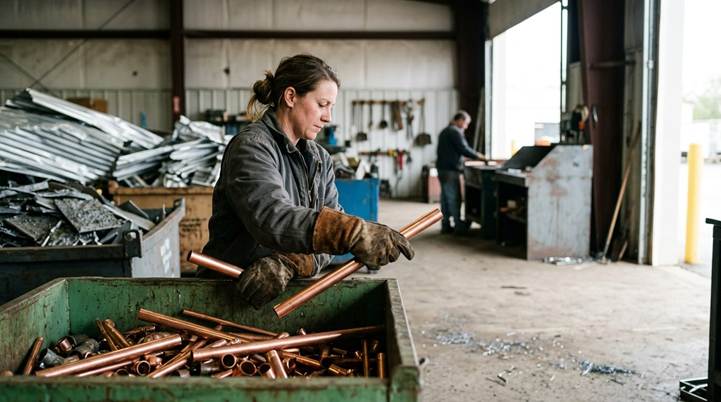
By a scrap metal recycling industry contributor. You just finished a big project. The old water heater, leftover copper piping, aluminum siding, and steel studs are piled up. Your first instinct might be to find someone who will haul it away for free. It feels like a quick, zero-cost solution to get your space back. This is often a costly mistake.
That pile contains metals with vastly different values. The heavy steel from an appliance is a ferrous metal, meaning it’s magnetic and generally fetches a lower price. But the copper pipes and electrical wiring are non-ferrous. They are not magnetic and can be worth significantly more per pound. Lumping them all together for a single “free” haul means you are likely giving away the most valuable part of your scrap for nothing.
The goal is not just to get rid of the material, but to recover its value. This requires a different approach than simply calling the first person with a truck. Using a roll off dumpster for metal ensures that your materials are properly weighed and graded. It turns a pile of debris into a legitimate revenue stream for your home or business, but only if you avoid the common pitfalls.
Quick answer: The most common and expensive mistake is treating all scrap metal as generic junk. By failing to separate valuable non-ferrous metals like copper and aluminum from cheaper ferrous metals like steel, you forfeit most of the potential payout. A reputable recycling partner will help you understand this difference, not exploit it.
What’s inside
· How Much Money Is Actually in That Scrap Pile?
· How Do I Choose a Reputable Service?
· Why Does Sorting and Contamination Matter So Much?
· Frequently Asked Questions
· The Real Bottom Line: It’s a Commodity, Not Trash
How Much Money Is Actually in That Scrap Pile?
The honest answer is that it depends on what is in the pile, and the gap between the best and worst outcome is wider than most people expect. Scrap prices move every day with commodity markets, so no one can promise a fixed number. What stays constant is the ranking. Clean copper sits at the top, followed by brass and clean aluminum, while light steel from appliances and studs sits near the bottom.
That ranking is why a mixed pile is so easy to undervalue. A few dozen pounds of copper pipe and wire can be worth more than several hundred pounds of steel. If both go out in the same load, the buyer has to price the whole thing around the labor it takes to pull them apart. The copper does not raise the value of the steel; the steel drags down the value of the copper.
❝ Before you call anyone, take ten minutes with a magnet and a couple of buckets. Pull out anything non-magnetic, keep copper and brass separate from aluminum, and you will know which part of the pile carries most of its value.
How Do I Choose a Reputable Service?
Choosing a reputable service comes down to verifying their transparency, particularly regarding weighing procedures, payment terms, and environmental compliance. A professional operation will be able to answer specific questions about their process and provide clear documentation for every transaction. Anything less should be a major red flag.
The most critical part of the process is weighing. Your payment is based entirely on the weight of the materials you provide, so the accuracy of the scales is non-negotiable. Ask any potential service provider if their scales are state-certified. Commercial scales used for trade must be tested and certified for accuracy by a state agency, often the Department of Agriculture or a similar weights and measures bureau. The truck or the scale at the yard should have a visible certification sticker with a recent date.
❝ When your material is weighed, you should receive a “scale ticket.” This is your receipt. It must clearly list the gross weight (the truck full), the tare weight (the truck empty), and the net weight of your material. It should also itemize the different types of metal, the price per pound for each, and the final total. Vague tickets or a refusal to provide one is a sign to walk away.
Beyond the scales, look for signs of professionalism and a commitment to industry standards. Ask if they are a member of the Recycled Materials Association (ReMA, formerly ISRI), the trade association for the recycling industry. ReMA members are expected to adhere to a code of conduct that promotes safe, economically sustainable, and environmentally responsible recycling. While not a guarantee, it shows a level of commitment to professional operations.
Use this table to quickly assess a potential partner:
| Signs of a Reputable Recycler | Potential Red Flags |
| Provides clear, itemized scale tickets. | Offers only a flat cash price without weighing. |
| Can show proof of state-certified scales. | Vague answers about scale certification or location. |
| Explains deductions for contamination clearly. | Significant, unexplained differences in payout. |
| Has a professional online presence and physical yard. | Operates only with a cell phone and a truck. |
| Discusses environmental and safety compliance. | No mention of safety or proper material handling. |
Ultimately, a trustworthy partner operates with transparency. They should be able to explain their entire process, from pickup and sorting to weighing and payment, in a way that makes sense and can be verified with documentation.
Why Does Sorting and Contamination Matter So Much?
It matters because your scrap is not the final product; it is a raw material for industrial furnaces. Mills and foundries have extremely strict chemical specifications for the materials they buy. Even a small amount of the wrong substance can ruin a multi-ton batch of new metal, forcing them to reject the entire load from the recycler. This risk is priced directly into what you get paid.
Think of it like baking. If a recipe calls for sugar, you cannot just throw in a cup of a sugar and salt mixture and hope for the best. The salt, the “contaminant,” ruins the final product. In recycling, a load of aluminum siding destined for a smelter might be contaminated with steel screws. Since steel has a much higher melting point than aluminum, those screws will not melt properly. They can damage the furnace or create weak spots in the new aluminum sheets, making them useless.
This is why scrap yards grade material so carefully. “Clean” metal is just that: pure, unadulterated, and ready for the furnace. Common contaminants that will downgrade your material and lower your payout include:
· Other Metals: Brass fittings left on copper pipes, steel brackets on aluminum posts.
· Insulation: Plastic or rubber coating on copper and aluminum wire.
· Fluids and Coatings: Oil, grease, excessive paint, or tar on any metal surface.
· Non-metallics: Wood, plastic, glass, rubber, or concrete attached to the metal.
❝ A perfect example is insulated copper wire. You might bring in 100 pounds of it. The yard knows that only a percentage of that weight is actual copper. They will pay you based on an estimated recovery rate, which might be anywhere from 30% to 85%, depending on the wire’s thickness. If you take the time to strip that wire down to the bare, “bright and shiny” copper, you will be paid for 100% of the weight at a much higher price per pound.
The single most useful tool you can have is a simple magnet. Go through your pile and separate anything the magnet sticks to (ferrous metals like steel and iron) from what it does not (non-ferrous metals like copper, aluminum, and brass). This one step alone can significantly increase the value of your load because you have done the first, most basic level of sorting for the yard. The less labor they have to put into cleaning and sorting your material, the more they can afford to pay you for it.
Frequently Asked Questions
Do people really pick up scrap metal for free? Yes, but it is rarely a good deal for you. Individuals known as “scrappers” often offer free hauling as their business model. They collect mixed, unsorted material, perform the labor of sorting it themselves, and then sell it to a recycling yard, keeping 100% of the profit. You get convenience, but you give away the entire cash value of your most valuable non-ferrous metals.
How much scrap metal do I need to make $100? This depends entirely on the type of metal, as prices fluctuate daily. To illustrate the difference, you might need over 2,000 pounds of light steel (like from appliances) to reach that amount. In contrast, you might only need 30 to 40 pounds of clean, bare copper pipe or wire. This is why separating your high-value non-ferrous metals is the single most important step you can take.
What common household items are surprisingly valuable as scrap? Many people overlook valuable items. Old extension cords and appliance cords contain copper. Brass plumbing fixtures, faucets, and door hardware are worth saving. Aluminum is found in old window frames, screen doors, and some cookware. Even old Christmas light strands contain a small amount of copper that adds up in large quantities.
Do I need a special license to haul my own scrap metal? For a homeowner hauling scrap from their own property, a special license is not typically required. However, businesses that generate or transport scrap as part of their operations may face local or state regulations. More importantly, all reputable yards are required by law to document transactions to prevent metal theft, which is why you must present a valid state-issued ID and be over 18. Some states, like Georgia, even mandate that payments be made by check rather than cash.
Can I get paid more if I bring the metal to the yard myself? Yes, you can often negotiate a slightly better price if you transport the material yourself. A pickup service involves labor, fuel, and vehicle costs for the recycling company, which is factored into the price they offer. By delivering it directly to their yard, you eliminate those costs for them, giving you more leverage, especially with well-sorted, clean material.
The Real Bottom Line: It’s a Commodity, Not Trash
The most expensive mistake in scrap recycling is a mental one: treating valuable material like a disposal problem. The moment you see a pile of old pipes, wires, and siding as “junk,” you have already given away most of its value. The difference between a disappointing payout and a profitable one is determined long before a truck arrives at your site or you arrive at a yard. It is decided by the time you invest in a magnet and a pair of wire cutters.
Ultimately, your goal is not just to get rid of scrap, but to sell a raw material. This shift in perspective changes everything. You are no longer looking for the most convenient disposal service, but for a transparent business partner who can verify the weight and grade of your commodity. The scale ticket is not just a receipt; it is the final accounting for the inventory you prepared. By focusing on sorting and cleaning, you are doing the work that creates value, ensuring you are paid for a finished product, not just for raw, messy potential.
About the author
This article is based on insights from the team at Olympus Recycling, a scrap metal processor serving industrial, commercial, and individual clients. Operating from facilities in Atlanta and Gainesville, Georgia, the company provides roll-off dumpster services and manages the collection, sorting, and preparation of ferrous and non-ferrous metals for industrial reuse. Their work centers on creating a transparent and efficient process for converting scrap into certified raw materials for manufacturing. Find more at Olympus Recycling.