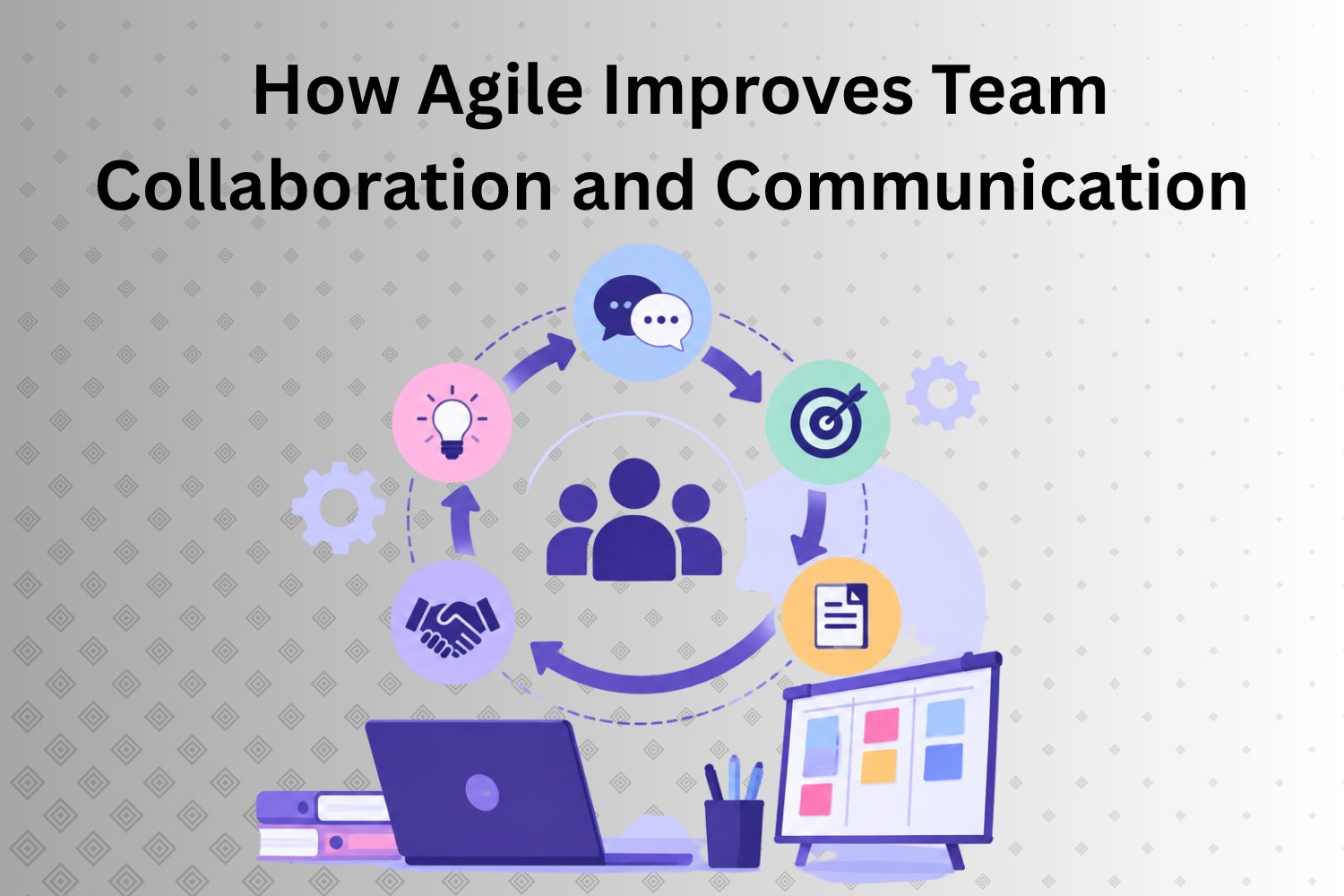
Whether a project team performs effectively depends on how well people communicate and work together. Poor communication can create misunderstandings and unclear responsibilities. Agile Courses can help professionals understand flexible working practices that encourage regular interaction, shared responsibility and faster feedback. Agile also creates opportunities for team members to exchange ideas and solve problems together throughout delivery.
In this blog, we explore how Agile improves Team Collaboration and Communication, helping project teams stay connected, informed and focused on common goals.
Table of Contents
- Key Ways Agile Improves Team Collaboration and Communication
- Conclusion
Key Ways Agile Improves Team Collaboration and Communication
Below are the key ways Agile improves Team Collaboration and Communication by encouraging shared responsibility and stronger teamwork:
Supports Collaborative Problem Solving
Project challenges can be harder to resolve when people work on them separately. Agile encourages team members to discuss problems and contribute different perspectives.
Collaborative Problem Solving brings together different skills and experiences. Teams can consider possible solutions, identify concerns and agree on an appropriate way forward.
Creates Open Communication
Team members are better able to understand what is going on during a project when there is clear communication. Agile promotes frequent sharing of important information and progress.
Clear communication within the team helps minimise miscommunication and keep important information from being missed. It empowers team members to voice concerns when they require assistance.
Supports Faster Decision Making
Project teams typically have to make decisions rapidly as requirements, priorities, or challenges evolve. Delayed communication can slow these decisions and affect progress.
It promotes regular communication and virtual interaction with the team members. This makes it easier to get at key information and to talk about concerns earlier. Better decisions help teams respond to changing situations while keeping project work moving forward.
Increases the Trust Within the Team
When individuals talk openly and regularly promote shared goals, trust eventually builds between them. The Agile methodology provides members of the team with several options to collaborate and share their thoughts.
Trust among the team can be strengthened through these exchanges over time. When people are aware that their contributions are recognised, they may feel more at ease expressing their concerns and making suggestions.
Encourages Regular Feedback
An essential component of Agile functioning is feedback. Teams evaluate their work on a regular basis and talk about areas for improvement.
Frequent feedback enables people to know various viewpoints and learn from finished tasks. It assists teams in identifying issues early on rather than waiting until the projects conclusion to address them.
Keeps Everyone Updated on Priorities
Project priorities may shift when requirements, company demands, or consumer expectations evolve. Members of the team must rapidly comprehend these changes.
It promotes frequent conversations about forthcoming tasks and priorities. Professionals can learn how to manage shifting priorities while preserving efficient communication and teamwork by taking Agile Courses.
Creates Better Visibility Across Work
Team members need to understand what others are working on to collaborate. Limited visibility can lead to duplicated activities or missed dependencies.
Agile practices make work and progress more visible. This helps team members understand current activities, identify where support is required and coordinate their responsibilities more effectively.
Encourages Knowledge Sharing
Throughout the course of a project, Agile encourages team members to exchange ideas and experiences. People have greater opportunity to learn from each other when they interact regularly.
Teams can become less dependent on individual members and gain a better understanding of various project components through knowledge sharing. It facilitates improved teamwork when problems call for knowledge from several specialties or skill sets.
Reduces Communication Gaps
Information can become unclear when it passes through several people or departments. Agile encourages direct conversations between those involved in project work.
More direct communication helps reduce unnecessary delays and misunderstandings. Team members can receive relevant information sooner and discuss questions directly with the people involved.
Strengthens Stakeholder Collaboration
Collaboration is not limited to the immediate project team. Stakeholders can provide useful information about expectations and changing needs.
Agile encourages regular Stakeholder Communication throughout project delivery. Frequent interaction gives stakeholders better visibility into progress while helping teams receive useful feedback. This keeps project activities connected to relevant expectations.
Conclusion
Agile improves Team Collaboration and Communication through shared responsibility, regular interaction, open feedback and better visibility. These practices help teams solve problems together, understand changing priorities and maintain stronger working relationships. Regular stakeholder communication can also keep project work aligned with changing expectations.
The Knowledge Academy, a trusted global training provider for Agile Courses, helps professionals build practical skills for stronger teamwork and effective communication.