A garage door that won’t open or close all the way is more than an inconvenience. The door is the heaviest moving object in most homes, and when it hesitates, reverses unexpectedly, or stalls midway along the track, it signals a mechanical or safety issue that deserves attention. This guide explains early clues that point to the likely fault, safe checks you can do without tools, and problems that warrant a professional visit. You will learn how components like torsion springs, rollers, photo eye sensors, and opener limits interact so you can respond quickly and safely.
Early Clues That Point to the Problem
The noises and movements you notice are valuable diagnostic clues. Grinding near hinges or squeals at the track often point to dry or worn rollers binding in the vertical track. A door that jerks and hangs unevenly can indicate a frayed lift cable slipping on the drum, or a weakening torsion spring that no longer counterbalances the door’s weight. Flashing opener lights usually signal safety sensor trouble. If the door starts down then pops right back up, the photo eyes may be misaligned or blocked. Inconsistent remote response can point to weak batteries or interference, but if the wall control has power while the motor strains, expect a mechanical bind rather than an electrical glitch.
Visuals also help. A door that sits crooked in the opening, with one bottom corner higher, often has a cable off the drum or a seized end bearing plate. A door that touches the floor then reverses can indicate incorrectly set downward travel limits or a crushed bottom seal that confuses the force calibration. If you need in-person help, look for a qualified garage door company in your area, such as Welborn Garage Door Repair.
Safe Checks You Can Do Without Tools
Start with the photo eyes near the bottom of the vertical tracks. Gently wipe the lenses with a soft cloth, confirm both indicator lights show normal operation per the manufacturer, and make sure the brackets are aligned and at the same height. Sun glare at certain times of day can trip sensors, so watch for the problem when sunlight hits a lens. Next, try the wall control. If the lock function is engaged, the opener won’t respond to remotes, even though the wall button still works. Reset the lock if necessary.
Use the emergency release only when the door is fully closed, and there are no signs of damaged springs, cables, or tracks. If the door appears damaged or unstable, leave it alone and arrange professional service. A trained technician can disconnect the opener and check the door’s balance by carefully lifting it to the middle of its travel. A properly tensioned spring system should hold the door near that point. A door that drops or rises unexpectedly indicates a counterbalance problem. You can also confirm power to the opener by checking the GFCI outlet and the circuit breaker, and replace remote batteries if operation is inconsistent.
Common Causes When a Door Will Not Travel Fully
Limit and force settings on the opener are frequent culprits. If the downward travel is set too short, the door will stop above the floor and think it has finished. If the closing force is too low, minor resistance from a stiff bottom seal or rough spot on the track can trigger a reversal. On chain-belt-drive units, a loose chain or worn carriage can cause jerky motion and early stops. Bent tracks or loose track bolts also create pinch points where rollers bind. Avoid spraying lubricant on the tracks, which collects grit. Instead, clean accessible track surfaces and lubricate roller stems, hinges, and torsion spring coils according to the manufacturer’s instructions, without touching or adjusting tensioned components. If the manufacturer allows it, apply white lithium grease to the opener’s rail where the trolley slides.
Temperature and light can create intermittent faults. On a cold morning, thickened grease and a hardened vinyl bottom seal increase drag. The opener senses the extra resistance and stops midway through its travel to protect itself. You may need to adjust the downward force setting, but if the door fails a balance test, you’ll need to adjust the spring. In the afternoon, low-angle sunlight can hit a photo eye directly, mimicking a blocked beam. A properly designed sensor shield or professional alignment adjustment can resolve it. Another scenario: after installing tall items in the garage, a broom handle sticks past the sensor plane, causing each close attempt to reverse right away.
Problems That Require a Professional
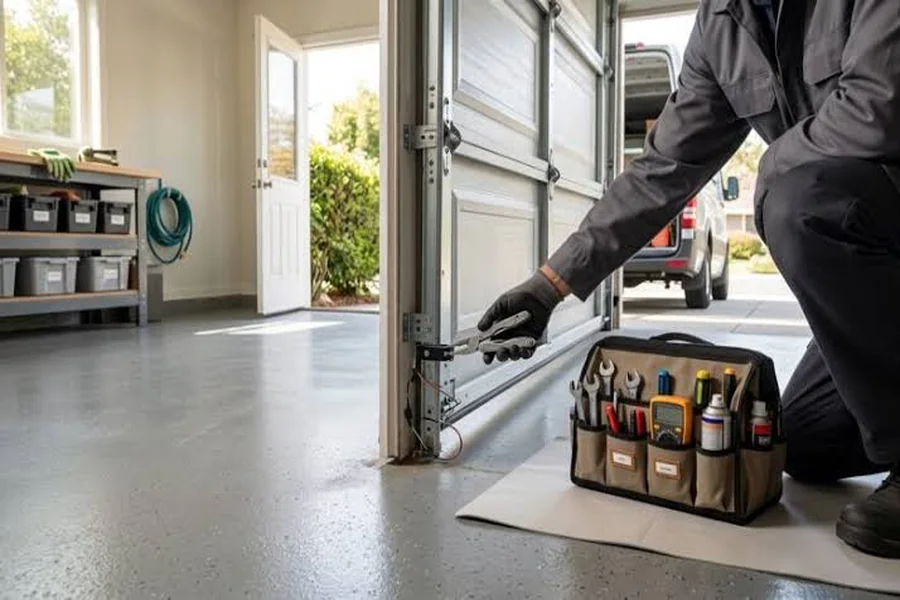
Spring and cable work isn’t a DIY job. Torsion springs are wound under heavy torque on a shaft above the door, and extension springs stretch along the horizontal track. Both store significant energy. Trying to loosen set screws, remove winding cones, or reseat a lift cable on the drum without proper bars and training can cause severe injury and door damage. If your door is off balance, a cable is off a drum, the end bearing plates are noisy, or the door will not budge when released from the opener, stop and call a technician. The tradeoff is clear: attempting a quick fix risks a fallen door and bent panels, while a scheduled service restores safe counterbalance and prevents collateral damage to the opener’s gears.
Another line not to cross is structural repair. Cracked top sections need a strut to prevent flexing, and a torn hinge area can tear further under load. Correct misaligned tracks with the door supported, not by cranking bracket bolts until the track bows. Overtightening a curved arm on the header bracket can also pull the door out of square. A professional will square the tracks, set the correct roller spacing, align the opener rail, and recalibrate travel limits after removing the mechanical bind.
When Repair Stops Making Sense
Opener adjustments can’t fix every problem. If the opener frequently stalls despite proper balance and clean tracks, worn internal gears or a failing motor could be to blame. Repeated cracked rollers, dented tracks from vehicle bumps, or panel damage at the stile can keep causing binds. An opener without a modern safety reversal system, or one that uses fixed-code remotes, may also need replacement. A technician can evaluate whether replacing rollers with quiet nylon types, adding a reinforcement strut, or upgrading to a belt-drive opener with gradual starting and stopping will resolve chronic mid-travel stops more reliably than chasing recurring repairs.
When a door hesitates or reverses, the symptoms usually point to a few parts: photo eyes, tracks and rollers, opener settings, or the spring and cable system. Start by cleaning and inspecting, then fix simple issues like sensor alignment or a wall-control lock. If the door is heavy, crooked, or will not hold its position during a professional balance check, let a technician restore safe counterbalance before more damage occurs. Regular care goes a long way: wipe accessible track surfaces, lubricate hinges and roller stems, replace the bottom seal when it hardens, and test automatic reversal monthly using a 2 by 4 board lying flat under the door, following manufacturer instructions. These habits help keep the heaviest door in your home moving smoothly.