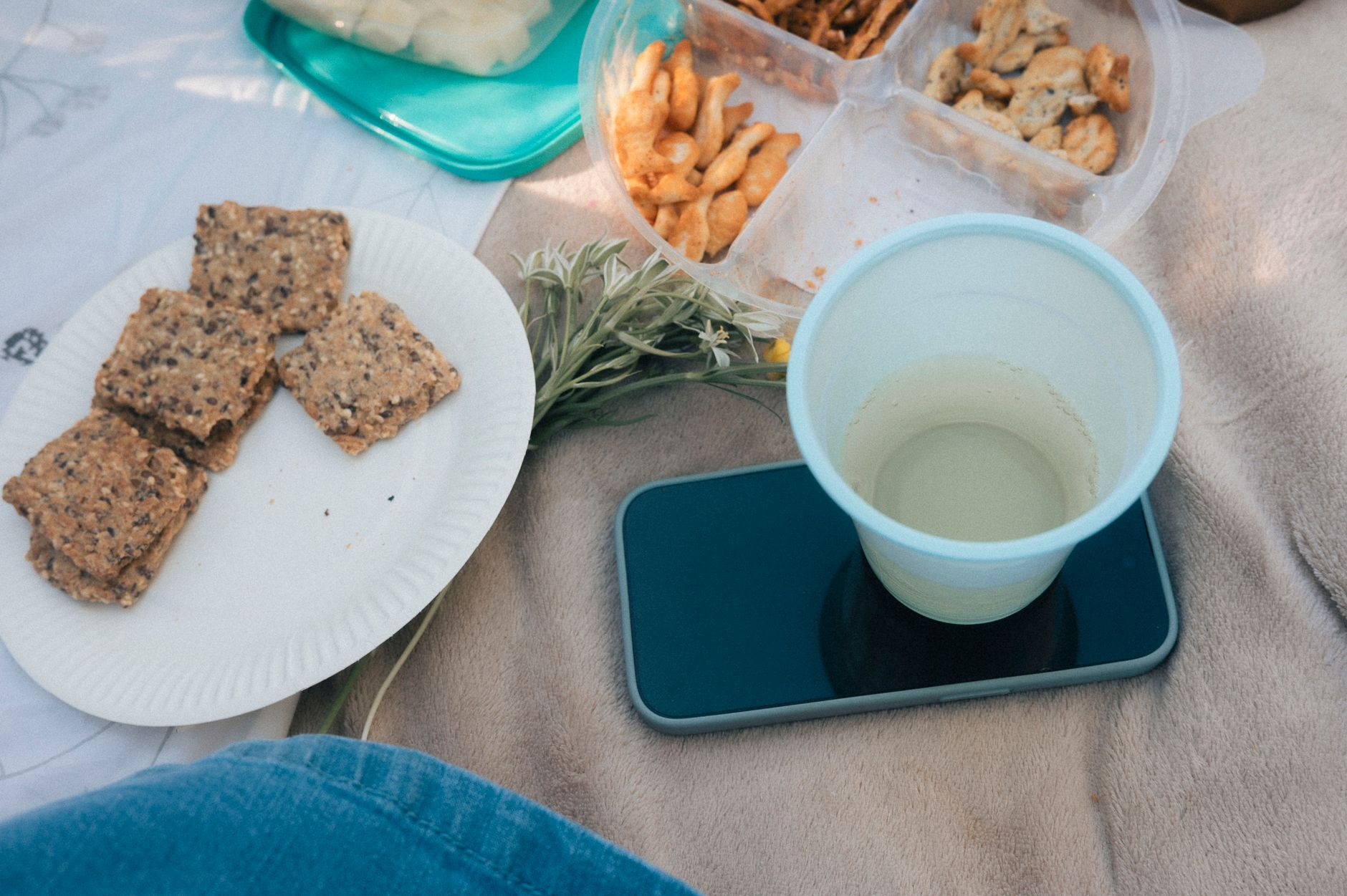
Four o'clock hits, and you reach for the crackers. Then a handful of pretzels an hour later. Maybe a piece of dried fruit while you answer one more email. That grazing pattern is the part of your day your dentist notices most, and it has almost nothing to do with how healthy the snack looks on the label.
I used to think dental damage came down to a simple ledger: sugar in, cavities out. The real mechanism is closer to a stopwatch. Every time you eat, the bacteria in your mouth throw a party, and the acid they leave behind lingers for a while after the food is gone. Snack six times a day and you have poured six drinks on that party. Eat three meals and you gave your saliva room to clean up.
What surprised me while putting this together is how much control you actually have without changing a single meal. The fix lives in the spaces between them. A bag of sugar-free chewing gum with xylitol in your desk drawer, a few small habit shifts, and your teeth spend far less time marinating in acid than they do now. Here is the reasoning, plus a routine you can start tomorrow.
What snacking actually does to your mouth
Your mouth hosts hundreds of species of bacteria, and some of them love fermentable carbohydrates. When those bacteria break down sugar and starches, they produce acid. That acid pulls minerals out of your enamel in a process called demineralization. Saliva puts them back, but saliva needs time to work, and it cannot do much while you keep feeding the bacteria every hour.
The World Health Organization's guidance on sugars makes the point that how often you eat sugar matters as much as how much of it you eat. That distinction is the whole ballgame for a grazer. One cookie after dinner is a single acid event. The same cookie crumbled into four snacks across an afternoon is four separate acid events, four recovery cycles, four chances for enamel to lose ground. Your teeth do not average it out.
So yes, the granola bar is still better for you than a candy bar in every other sense. Nutritionally it wins. Orally, both keep the acid party going. If that sounds inconvenient, good. The inconvenient version of this truth is the one you will actually remember at 4 p.m.
My "snack window" rule
Here is the framework I use now, and it is embarrassingly simple. Pick two snack windows in your day. Mine are right after lunch and around four. Inside those windows, eat whatever you like, sugar included. Outside them, nothing goes in your mouth except water and, eventually, a stick of gum. Two acid events instead of six.
I call it the snack window because the word "diet" makes me do the opposite of what it says. A window is a permission slip. It says: yes, you get a treat, no, it is not a continuous drip feed from desk to couch. Friends who have tried it report the same thing I found, which is that most of the grazing was boredom, not hunger. The window rule exposes that faster than any willpower talk.
Two constraints keep it honest. First, drink water during the gaps, because water rinses and saliva needs you hydrated. Second, do not sip anything acidic for hours. A soda or a lemon water nursed over an afternoon is a grazing problem wearing a healthier label.
Where chewing gum fits in, and where it does not
Chewing gum has one real dental trick: it makes you produce more saliva, and more saliva means more minerals going back into your enamel. Chewing sugar-free gum after a meal is a well known shortcut to that rinse. So the gum question becomes a sweetener question.
Xylitol is a sugar alcohol that oral bacteria cannot use the way they use glucose, so they do not get the same acid payoff. The food safety arm of the World Health Organization reviewed xylitol decades ago and accepted it as a safe food sweetener. That review is about safety, not about magic. Nobody should read it as a promise of perfect teeth.
Here is where I will be blunt: gum is not a toothbrush. It cannot scrub plaque off the surface, and it is no substitute for flossing. What it can do is flip your mouth from acid mode back toward neutral in the two hours between lunch and your next meal. That is a modest job, but it is a job load-bearing enough that I would rather have gum in my bag than not.
One more thing you might not expect. If you chew gum all afternoon, you would be grazing again. Use it after meals and inside your snack windows, not as a constant pacifier.
Check the label before the claims
Head to the candy aisle and you will find gums advertising whitening, oral care, or "xylitol" in big letters while the first ingredient is something entirely different. The Nutrition Facts panel is the only honest witness. Check the sugar line, then the ingredients list. Be wary of gum that is sugar-free but sweetened mostly with sorbitol or maltitol: fine as a sweetener, but the xylitol story is not what you are getting.
Flavor matters less than you might think. Peppermint may feel fresher in the moment, but your mouth is not grading you on mintiness. Pick the flavor you will actually chew, and you will use it more often. I keep cinnamon at the office because spearmint tastes like toothpaste to me. Small preferences like that decide whether a habit survives.
You can verify any ingredient claim against the U.S. Food and Drug Administration label rules if a packaged claim reads oddly. The label is the ground truth; marketing copy on the front of the pack is not. Read the back, where the boring accuracy lives. Your future dental bill will thank you for the thirty seconds.
Your first week: a short checklist
You do not need to overhaul your pantry. Try this for seven days.
- Write down every time something other than water goes into your mouth. Just time and snack. Most people are shocked by the count.
- Circle two windows you can live with. Not the ones you "should" pick. The ones you will actually keep.
- Move anything snack-shaped off your desk and into a cabinet. The friction of standing up does more for your teeth than any poster ever will.
- Stock water. Keep it visible. Boredom plus visible water equals fewer empty-gum-wrapper afternoons.
- Book the dental cleaning you have been postponing. It is the one step a label cannot do for you.
The U.S. Department of Agriculture runs dietary guidance on snacking patterns that pairs well with this routine if you want a wider view of how meals and snacks fit together. The short version: structure beats willpower, and meals beat munching.
What changed, and what did not
After a month of the snack window, my teeth feel cleaner between cleanings, and my afternoon energy is steadier, which makes sense when the blood sugar roller coaster gets gentler. What did not change is my love of a good treat. I just eat it inside a window now, so it is a treat and not a background hum.
The part that genuinely surprised me is how much the acid narrative explained. Whole grains, dried fruit, crackers, and even some yogurt drinks leave acid behind. "Healthy" and "tooth-friendly" are related but not the same word. Once you see snacking as a timed event rather than a calorie count, the rest of the decisions get simpler.
So the next time 4 p.m. comes knocking, ask yourself one question: is this inside a window, or am I just acting on autopilot? If it is the second, close the kitchen and pour a glass of water. If it is the first, enjoy it. Your teeth can handle a party. They just cannot handle six.