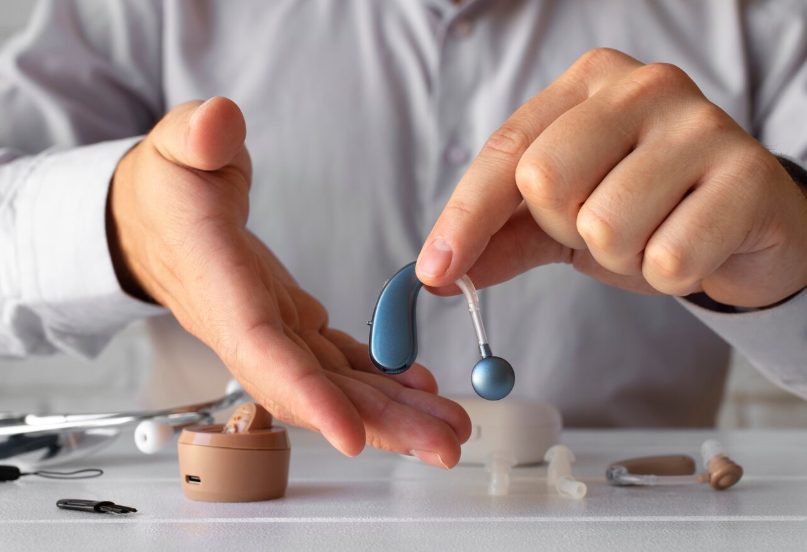
In the realm of auditory health, modern technology offers promising solutions for individuals with hearing loss. Among these innovations, cochlear implants stand out as a transformative approach, especially for those who do not benefit from conventional hearing aids. These implants are sophisticated devices that can bypass damaged parts of the ear and directly stimulate the auditory nerve, offering a new avenue for sound perception and enhancing communication abilities.
Understanding Cochlear Implants
Cochlear implants are small, complex electronic devices that serve as a substitute for the function of a damaged inner ear. Unlike hearing aids, which amplify sound, cochlear implants convert sound into electrical signals. These signals directly stimulate the auditory nerve, allowing individuals to perceive sound. The device comprises two main components: an external portion that sits behind the ear and an internal portion that is surgically placed under the skin.
The external component picks up sound through a microphone and sends it to a speech processor. This processor then translates sound into digital signals. These processed signals are sent via a transmitter to the internal implant, which converts them into electrical impulses that stimulate the cochlea, a spiral-shaped bone in the inner ear. This stimulation is interpreted as sound by the brain.
Candidate Evaluation and Suitability
Identifying suitable candidates for cochlear implants involves a comprehensive evaluation process. Audiologists and medical professionals assess the severity of hearing loss and the degree of benefit received from traditional hearing aids. Candidates typically include individuals with severe to profound sensorineural hearing loss in both ears. For children, early intervention is crucial. The auditory pathways in the brain develop rapidly in early childhood, and timely implantation can lead to significant developments in speech and social skills.
Adults who have lost hearing later in life might also be candidates, as they often have established language skills that can help manage the new auditory input from an implant. Successful outcomes often depend on factors such as the duration of hearing loss, the patient's commitment to rehabilitation, and ongoing auditory training.
The Surgical Procedure
The cochlear implant procedure is considered safe and is generally performed under general anaesthesia. It typically involves three key steps: making an incision behind the ear, creating an opening in the mastoid bone, and delicately inserting the electrode array into the cochlea. The surgery usually lasts a few hours, with most patients returning home the same day.
Post-operative care involves several follow-up visits to monitor healing and to optimise the external processor. The device is activated several weeks after surgery, and initial auditory experiences can vary widely among recipients. The audiologist customises the settings of the speech processor according to the specific needs and responses of each patient.
Rehabilitation and Outcomes
Rehabilitation is a critical component of the cochlear implant experience. Post-surgical intervention involves auditory training to help recipients make sense of the new electrical input being received. This training focuses on helping individuals recognise speech sounds and develop listening and communication skills. Speech therapists play a vital role in guiding patients through this process.
The outcomes of cochlear implantation can be life-changing. Many recipients experience an improvement in speech recognition and can engage more fully in conversations. For children, early cochlear implantation often supports the development of oral language and improves academic performance.
Technological Advancements and Future Directions
The field of cochlear implants continues to advance, with ongoing research aimed at enhancing sound quality, expanding the range of hearing sensations, and improving the device's compatibility with wireless technology. Some of the latest innovations include multi-channel systems that allow for more precise sound frequency discernment and designs that minimise the risk of infection or physical discomfort.
Efforts are also being directed towards bilateral cochlear implants—where implants are placed in both ears—enhancing the ability to locate the direction of sound and improving hearing in noisy environments. As technology progresses, researchers are optimistic about the potential for even greater improvements in sound perception and overall quality of life for users.
Integration of Cochlear Implants in the Hearing Community
Cochlear implants have sparked discussions within the deaf community regarding identity and the perception of hearing loss. While some view these devices as a bridge to the hearing world and a means to expand opportunities, others advocate for embracing deaf culture and sign language as a valuable part of their identity.
It is essential that patients and their families carefully weigh these perspectives, considering personal values, cultural beliefs, and individual hearing goals. Health professionals also have a responsibility to provide balanced information that respects both the technological possibilities of cochlear implants and the cultural dimensions of hearing loss.
The Impact of Cochlear Implants on Society
Cochlear implants represent not only a medical breakthrough but also a symbol of human endeavour to overcome physical limitations through technology. They enable thousands to navigate the world with auditory input and contribute socially, educationally, and professionally in ways that might otherwise have been challenging due to hearing impairment.
Social integration, improved educational outcomes for implanted children, and enhanced employment opportunities for adults signify just some of the societal benefits resulting from widespread access to this technology. Consequently, healthcare systems and policymakers continue to explore strategies to ensure wider access and affordability, recognising the profound impact cochlear implants have on individuals and communities alike.
By transforming the capacity to hear and communicate, cochlear implants underscore the potential for technological advancements to not only restore essential senses but also build bridges within diverse human experiences.