
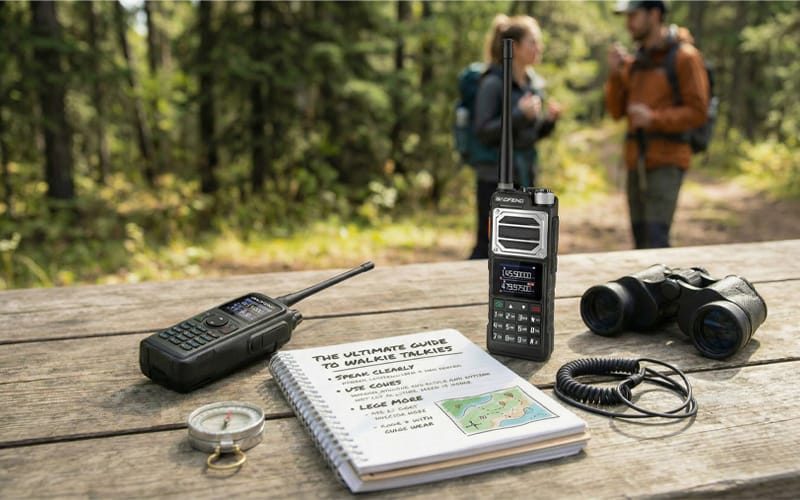
A radio can look deceptively simple. Press a button, talk, release the button. Done.
Except real-world communication has a funny habit of becoming complicated at exactly the wrong moment. Batteries run low. People talk over each other. Someone stands behind a concrete wall and suddenly the signal seems to have vanished.
Getting the most out of a walkie-talkie is less about mastering complicated technology and more about developing a few good habits.
Start by Learning the Basic Controls
Before relying on a radio, spend a few minutes becoming familiar with its controls.
Know which button activates transmission, how to adjust the volume, how to change channels, and how to check the battery. If the device has additional features, learn what they do before you actually need them.
This sounds obvious, but an emergency is a terrible time to discover that you aren't sure which button to press.
Use Clear, Concise Messages
Radio communication works best when messages are short and specific.
Instead of giving a long explanation, identify yourself, state where you are, and explain what you need. For example:
“Team two at the north entrance. We need another volunteer at the gate.”
That's much easier to understand than a long conversation filled with unnecessary details.
A good rule is to think before pressing the transmit button. Know what you want to say, then say it.
Listen Before You Speak
One of the easiest ways to create radio confusion is transmitting while someone else is already talking.
Listen for a moment before pressing the button. If another person is communicating, wait until the channel is clear unless your message is urgent.
This becomes particularly important when several people share the same channel. Multiple transmissions at once can result in neither message being understood.
Think About Your Location
Radio performance depends heavily on the environment.
Open outdoor areas generally provide better conditions than locations surrounded by thick walls, large buildings, hills, or other obstacles. If communication becomes difficult, changing your position may help.
Moving closer to an open area, stepping away from large obstructions, or finding a higher position can sometimes improve communication without changing the equipment.
Don't assume a published maximum range will always reflect what you experience in practice. Real environments are rarely as cooperative as test conditions.
Take Battery Management Seriously
A radio is not particularly useful when its battery is dead.
Charge your equipment before an event, work shift, trip, or outdoor activity. If you expect to use the device for an extended period, consider having an appropriate backup power option available.
It's also worth making battery checks part of your routine. A quick check before leaving can prevent an unnecessary problem later.
Establish Communication Procedures
If several people are using radios, agree on basic procedures beforehand.
Decide which channel everyone should use, who is responsible for specific areas, and what type of information needs to be reported. For organized activities, assigning simple names or identifiers can make communication easier.
For example, calling someone “Aid Station Two” is usually more useful than trying to remember who happens to be carrying which radio.
The goal isn't to make communication formal for the sake of it. It's to reduce ambiguity when several people are talking at once.
Practice Before You Need It
The best way to become comfortable with a walkie-talkie is to actually use it.
Test communication around the locations where you'll be working. Try different positions and distances. Practice sending short messages and confirming that the other person heard them correctly.
A few minutes of preparation can reveal weak spots before they become inconvenient.
Make the Radio Part of the Routine
Getting more value from a radio isn't about talking constantly. In fact, effective radio users often communicate less because they communicate better.
Keep the device accessible, maintain its battery, understand its controls, listen before transmitting, and keep messages focused. Those simple habits make radio communication faster and less frustrating.
Whether you're coordinating an event, working across a property, traveling outdoors, or keeping a backup communication method available, a walkie-talkie becomes far more useful when you treat it as part of a communication system rather than simply another piece of equipment.