
A power tool can make a weekend repair considerably easier, but only when the tool matches the material and the job. A drill that works well for assembling furniture may struggle with masonry, while a circular saw that handles lumber efficiently is not designed for cutting metal without the correct blade and setup.
For homeowners and DIY enthusiasts, the challenge is rarely finding a tool. There are dozens of options. The harder question is deciding which tool is appropriate for the material, task, frequency of use, and working environment.
A practical approach is to understand what each major power tool is designed to do, then build a collection around the projects you actually perform.
What Is a Power Tool?
A power tool is a mechanically or electrically powered device designed to perform tasks such as cutting, drilling, sanding, grinding, fastening, or shaping materials. Corded and battery-powered models are available, with each offering different advantages depending on runtime, portability, power requirements, and access to electricity.
The right choice depends less on having the most powerful machine and more on selecting the correct tool, accessory, and operating speed for the job.
Start With the Material
Before choosing a tool, identify what you are working with. Wood, metal, plastic, and composite materials respond differently to cutting and drilling.
Wood Projects
Wood is common in home repairs, furniture projects, shelving, framing, and outdoor construction.
A drill/driver handles most routine holes and screw installation. A circular saw is useful for straight cuts through boards and sheet materials, while a jigsaw is better for curves, cutouts, and irregular shapes.
For larger woodworking projects, a reciprocating saw can be useful for demolition and rough cuts, although it generally produces less controlled cuts than a circular saw.
The accessory matters just as much as the tool. Drill bits and saw blades should be selected specifically for the type and thickness of wood being cut or drilled.
Metal Projects
Metal requires more attention to cutting speed, heat, accessories, and workholding.
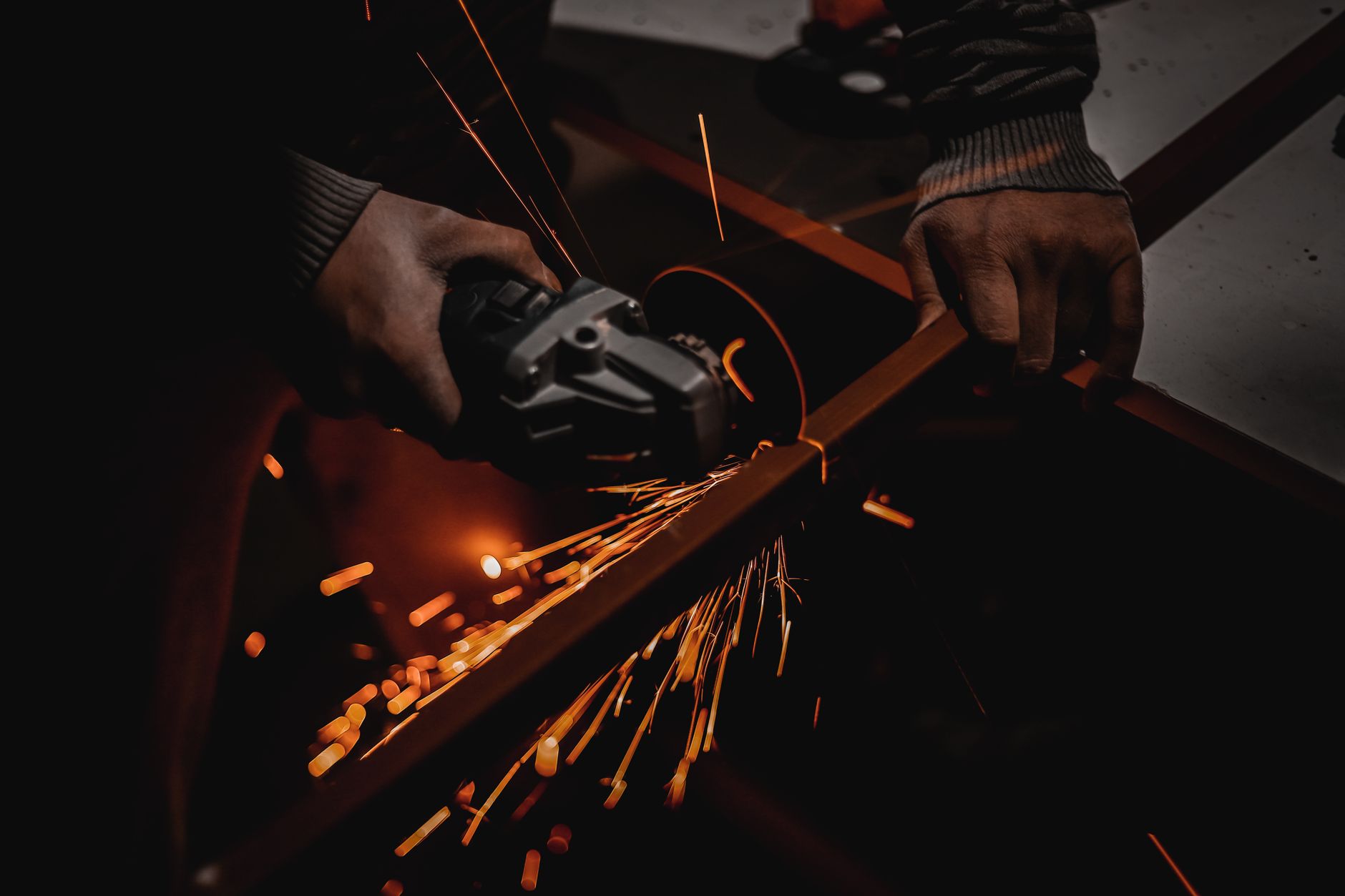
A drill with a suitable metal-cutting bit can handle many household drilling jobs. For cutting or shaping metal, an angle grinder with the appropriate disc may be more appropriate.
Thin sheet metal and heavier steel also require different approaches. The tool should never be selected solely based on whether it can physically cut the material. Blade or disc compatibility, material thickness, operating speed, and safe positioning all matter.
Drills and Drivers: The DIY Workhorses
For many homeowners, a drill/driver is the first power tool worth owning.
It can drill holes and drive screws, making it useful for furniture assembly, shelving, cabinets, hardware installation, and many repair jobs.
Drill/Driver vs. Impact Driver
These tools perform different functions.
A drill/driver provides variable speed and a clutch, making it useful when controlling how deeply a screw is driven. An impact driver produces high rotational force through rapid impacts and is particularly useful for longer screws and larger fasteners.
For occasional household work, a drill/driver may cover most needs. Someone who regularly builds decks, repairs structures, or drives many long fasteners may benefit from adding an impact driver.
When comparing cordless systems, homeowners may encounter greenworks power tools alongside other battery-powered options. Availability and compatibility are worth checking carefully, particularly when several tools are expected to share batteries.
Choosing the Right Saw
Different saws solve different cutting problems.
Circular Saw
A circular saw is well suited to straight cuts in lumber, plywood, and similar sheet materials. It is useful for construction and larger DIY projects where speed and portability matter.
Jigsaw
A jigsaw is the better choice when the project involves curved cuts, openings, or more detailed shapes. It is commonly used for countertops, shelving, craft projects, and irregular cutouts.
Reciprocating Saw
A reciprocating saw is primarily a rough-cutting and demolition tool. It can cut wood, certain metals, plastic, and other materials when equipped with the correct blade.
It is useful for removing old framing, cutting through fasteners, pruning certain branches with an appropriate blade, or dismantling materials during renovation.
Oscillating Multi-Tool
An oscillating tool fills a different niche. Its compact blade can make controlled cuts in confined spaces, remove grout, scrape materials, and perform detail work that is awkward with larger saws.
Sanders and Grinders
Sanding equipment becomes useful when surface preparation or finishing is part of the project.
A random-orbit sander is versatile for smoothing wood surfaces, removing old finishes, and preparing material for paint or stain. A detail sander is better suited to corners and smaller surfaces.
An angle grinder is considerably more aggressive. With the correct accessory, it can grind, polish, remove rust, and cut certain materials. Because the tool operates at high speed, it requires careful handling and appropriate protective equipment.
Fastening and Assembly Tools
Not every fastening task requires the same amount of power.
A standard drill/driver is appropriate for many screws. An impact driver is useful for high-torque fastening. A powered screwdriver can be convenient for repetitive light-duty assembly.
For projects involving nuts and bolts, a wrench or impact wrench may be more appropriate than an impact driver. Automotive work, for example, often involves fasteners that require a different tool and socket system.
Choosing the correct tool prevents unnecessary strain on both the operator and the fastener.
Corded vs. Cordless Power Tools
Both systems have legitimate uses.
|
Factor |
Corded tools |
Cordless tools |
|
Power supply |
Continuous electricity |
Battery |
|
Portability |
Limited by cord |
High |
|
Runtime |
Essentially continuous |
Limited by battery capacity |
|
Setup |
Requires outlet and cord management |
Quick setup |
|
Heavy-duty use |
Often convenient |
Depends on battery and tool |
|
Outdoor work |
Requires suitable power access |
Particularly convenient |
|
Storage |
Cord management needed |
Batteries require proper storage |
For occasional indoor work near an outlet, corded equipment can be perfectly practical. Cordless equipment becomes more attractive for outdoor maintenance, remote work areas, and projects where moving around frequently is important.
Battery capacity also matters. A compact battery may be adequate for assembling furniture or making a few cuts, while a larger project may require multiple batteries or planned charging breaks.
Match the Tool to the Project
Consider a few common situations.
A homeowner assembling cabinets may need only a drill/driver, bits, and appropriate screw-driving accessories.
Someone building a backyard planter box might add a circular saw, drill/driver, clamps, and a sander.
A homeowner repairing a wooden fence could benefit from a drill/driver, impact driver, circular saw, and possibly a reciprocating saw for removing damaged sections.
For seasonal outdoor maintenance, power tools may complement traditional lawn care tools and yard tools. However, equipment intended for woodworking or construction should not automatically be substituted for tools specifically designed for landscaping.
Think About Accessories Before Buying
A tool is only as useful as the accessories compatible with it.
Before purchasing, check:
- Chuck size and bit compatibility
- Blade diameter and mounting system
- Maximum material thickness
- Available cutting and sanding accessories
- Battery compatibility
- Charger requirements
- Replacement accessory availability
Buying an unusual tool with difficult-to-find accessories can create problems later, especially if the tool becomes part of a larger collection.
Safety Is Part of Tool Selection
Protective equipment should be considered before starting the project, not after something goes wrong.
Eye protection is important when cutting, grinding, drilling, or sanding. Hearing protection can be appropriate when working with loud equipment. Gloves, footwear, respiratory protection, and other equipment depend on the material and task.
OSHA's hand and power tools safety guidance covers common hazards and safe-use considerations for powered equipment. (OSHA)
Workpieces should also be secured whenever practical. Holding a board or piece of metal by hand while cutting or drilling can create unnecessary risk.
Best Practices & Pro Tips
- Choose the tool based on the material and task, not simply its advertised power.
- Use the accessory specifically designed for the material.
- Secure workpieces before cutting, drilling, or grinding.
- Check blades and bits for damage or excessive wear.
- Keep batteries charged, but store them according to the manufacturer's instructions.
- Avoid forcing a tool when the motor or blade begins to struggle.
- Use the correct speed for the material and accessory.
- Keep cords away from cutting paths when using corded tools.
- Allow hot bits, blades, and workpieces to cool when necessary.
- Wear eye protection whenever debris could be generated.
- Follow the manufacturer's operating and maintenance instructions.
Build a Tool Collection Gradually
A homeowner does not need every power tool at once. Start with a quality drill/driver and a useful selection of bits and drivers. Add a circular saw, jigsaw, sander, impact driver, or other equipment as specific projects justify them.
Think about the work you perform most often. If most projects involve furniture and basic repairs, compact tools may be sufficient. If you regularly build outdoor structures, renovate rooms, or work with metal, specialized equipment becomes more useful.
The same principle applies to outdoor maintenance. Buy landscaping equipment for landscaping tasks and construction tools for construction work rather than expecting one machine to handle everything.
Over time, a carefully selected collection of compatible tools can cover a wide range of household projects without filling the workshop with equipment that rarely gets used. The best long-term setup is one that matches your materials, projects, workspace, and skill level—and that is maintained well enough to remain dependable when the next repair or DIY project arrives.