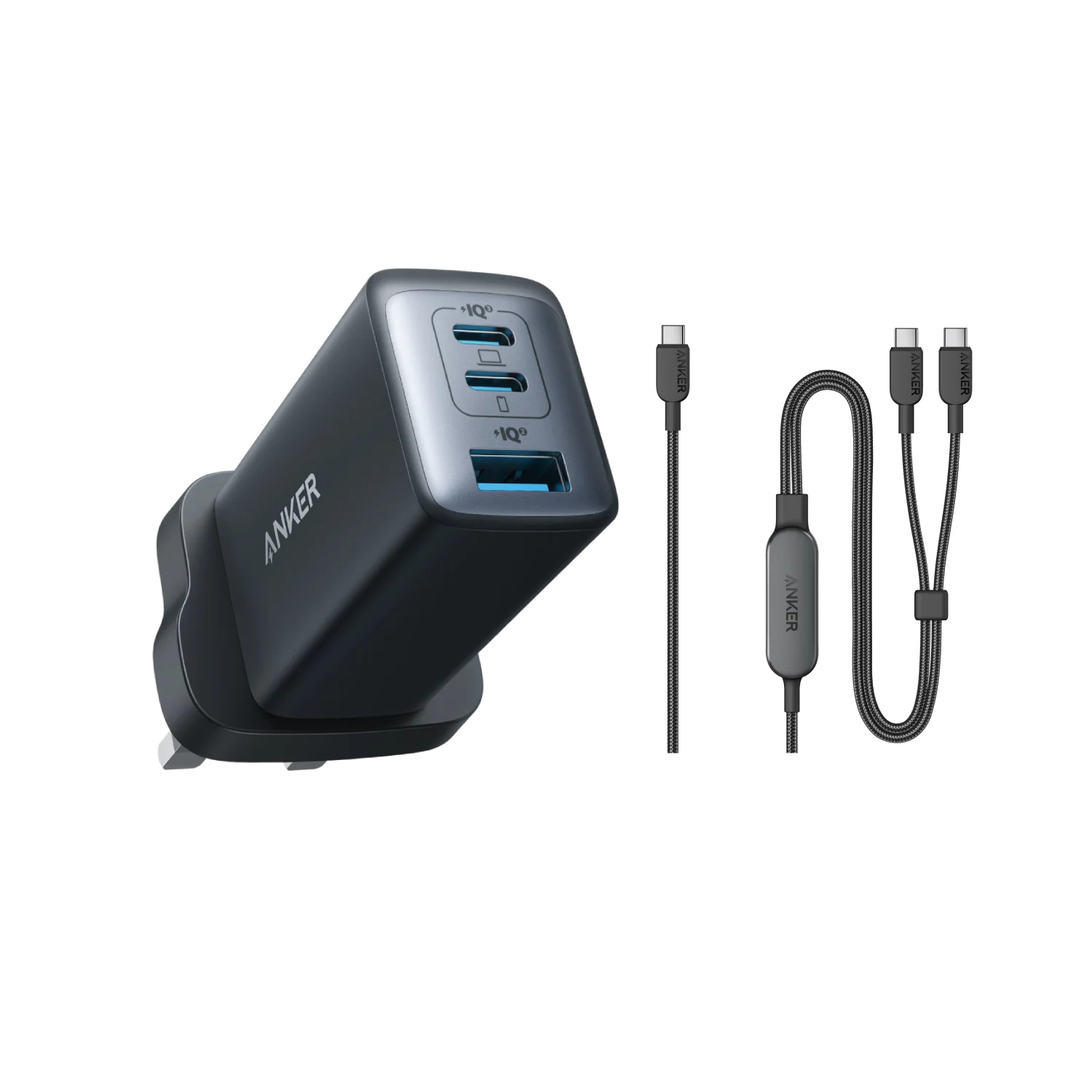
A charger box reads more like advertising than engineering. It lists watts in large type and everything that would qualify those watts in a font nobody reads at the shelf. The numbers are not meaningless, but most of them describe a best case that occurs with one cable, one device and one port in use. A label is written for the buyer who reads the first line, and the rest exists to answer complaints. Reading the label properly means knowing which figure applies to your phone, which applies to the whole charger, and which applies to nothing at all.
The Numbers on the Box
Watts, Volts and Amps
Power is volts multiplied by amps, and the three are always quoted together because a charger negotiates a specific pair rather than a single figure. A label that says 65W might mean 20V at 3.25A, which suits a laptop, or 9V at 3A, which suits a phone. That distinction matters: a phone that accepts 9V will take nothing from a 20V-only profile, however large the wattage on the front of an iphone charger box. Look for the profile, not the headline. Profiles are printed in small type near the bottom, usually as a short list of volts and amps, and a profile the phone does not recognise is simply unused.
Total Output Versus Per-Port Output
Multi-port chargers add a second layer of ambiguity. The number on the box is the total the charger can supply, and it is shared between ports rather than multiplied by them. Plug a laptop and two phones into a 65W unit and the laptop may drop to 45W while the phones take a trickle each. Manufacturers publish a small table showing how power is divided, and that table is the most useful thing on the entire package. Without it, the headline figure is only a ceiling. A three-port unit with one dominant port behaves quite differently from one that shares evenly, so read the row for the combination you actually plug in. If that table is missing from the listing, assume the ports share and plan for the worst case rather than the best.
The Standards Behind the Numbers
Power Delivery and What It Negotiates
USB Power Delivery is the protocol that lets a charger and a device agree on a voltage and current, and it is why the same plug can charge a phone, a tablet and a laptop. The charger advertises a menu of profiles; the device picks one it recognises, and the pair settle on the safest common option. Older or cheaper devices may only understand fixed profiles, which is why a modern charger sometimes charges an old handset no faster than the plug that came with it. When the phone shows a charging symbol but the percentage barely moves, the two have agreed on the lowest common option.
GaN, Heat and Efficiency
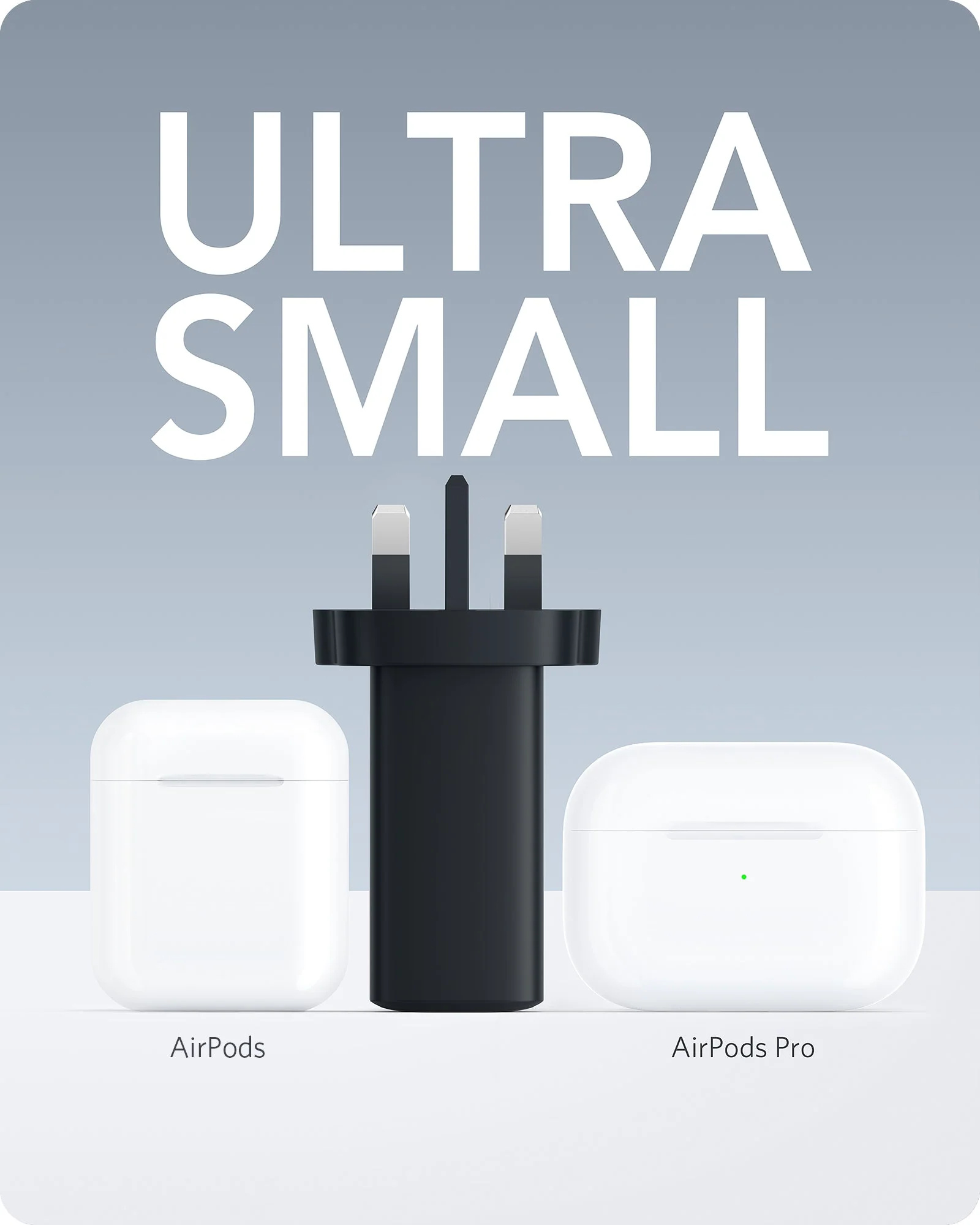
Gallium nitride replaced silicon in many chargers because it switches at higher frequencies and loses less energy as heat, which allows the same output from a smaller body. GaN II takes that further with a redesigned circuit and a stacked layout. The practical result is not a higher number but a smaller object that stays cooler, which is what the Anker 735 Charger (Nano II 65W) demonstrates by fitting three ports and 65W into a case the size of an earbuds box. Efficiency also means less heat in a bag, which matters when the charger travels beside a battery all day, and cooler running extends the life of the parts inside.
What the Spec Sheet Leaves Out
Cable Ratings and Real-World Speed
The cable is the specification nobody prints. A charger rated at 65W attached to a cable rated at 18W will deliver 18W, and the phone will report a slow charge with no explanation offered anywhere. Look for the current rating on the cable, usually moulded into the connector, and prefer a lead rated at 5A for high-wattage work. Length also costs power on thin cables, which is why the long cheap lead in the drawer underperforms the short one in the bag. A cable that came free in a box is often the weakest link in a fast-charging setup, so test with a known good lead before concluding the charger is slow. A cable rated above what the charger can deliver costs little and removes the doubt from the set-up for good.
Certification, Warranty and Safety Marks
Safety marks are the quietest numbers on the box and the ones worth checking. A recognised mark means the charger has been tested for insulation, temperature rise and short-circuit behaviour, and it is the difference between a device that fails safely and one that simply fails. The warranty is a reasonable proxy: a company offering eighteen or twenty-four months expects the product to survive them. Anything with no mark, no brand and no paperwork is being sold on price alone. Certification covers the transformer as well as the output, and that is exactly where a cheap unit saves its money. A missing mark is a missing test, and no amount of print on the box changes that.
Conclusion
Specifications are a conversation rather than a scoreboard. Watts tell you the ceiling, the profile table tells you what each port actually receives, and the cable decides how much of it arrives. Read those three in order and the marketing collapses into a few useful facts. Much of the label is there to sell, and a useful part is there to inform; the skill is telling which part is which. The three figures that matter are the profile table, the per-port split and the rating printed on the cable; the rest is decoration.