Choosing a water heater for an HDB flat sounds simple until you discover that “enough hot water” is not really a number. It depends on how many people shower, when they shower, how much space you have, and whether your idea of a relaxing evening includes waiting ten minutes for the tank to recover.
A storage heater makes those trade-offs especially clear. If you are comparing options forwater heater hdb, it helps to think beyond tank capacity. The useful question is not simply how large a heater you can fit, but what your household actually asks the heater to do.
Start With Your Shower Pattern
Two households can have four people and need very different heaters. One family might have everyone shower between 7 and 8 in the morning. Another might have two people shower at dawn, one after work and one late at night.
That timing matters because a storage heater is essentially managing a small reservoir of hot water. If several people empty that reservoir one after another, the heater has less time to recover between showers.
Think about your busiest hour rather than your total daily usage. If three people regularly shower within forty-five minutes, size your system around that little burst of demand. Your quiet Tuesday afternoon is not the problem. Monday morning is.
Bigger Is Not Always Better
The obvious solution is to buy the largest tank that fits. But this creates another trade-off: a larger tank needs more physical space and can take longer to heat, while a smaller tank may recover faster but offer less stored hot water at once.
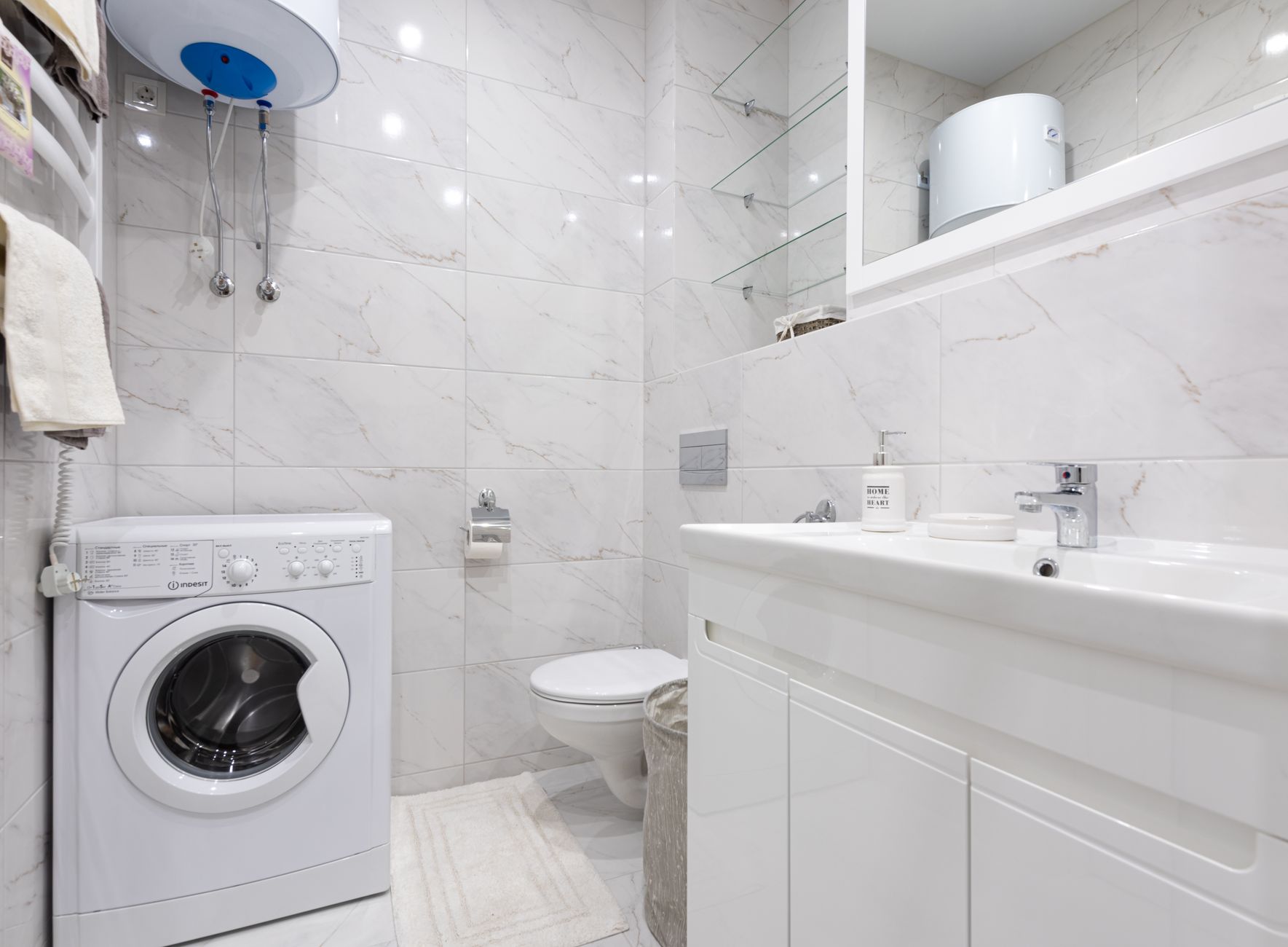
There is also the peculiar reality of an HDB bathroom. Space that looks available on a floor plan can become awkward once you account for doors, pipes, shower fittings and the space needed to move around comfortably.
A useful rule is simple: size the heater around peak consecutive use, then check the physical installation space. Do not reverse those steps merely because a particular tank happens to fit.
Capacity Needs A Real Example
Imagine a household of three where two adults shower for about ten minutes each and a child takes a shorter shower. If all three showers happen within an hour, a modest tank may feel perfectly adequate on ordinary days but noticeably less comfortable when everyone uses more water than usual.
Now change the routine. Suppose the adults shower back-to-back, but the child showers two hours later. The same storage heater suddenly has recovery time between demand periods.
This is why capacity charts can be misleading when viewed in isolation. The number of people in your home is useful information, but the sequence in which those people use hot water can matter just as much.
Watch The Installation Constraints
The tank itself is only one part of the decision. The location determines how practical the installation will be.
Before settling on a model, check:
- Available wall or ceiling space
- Position of existing water and electrical connections
- Clearance around the heater
- Access for future servicing
- Whether the proposed location interferes with bathroom use
The expensive mistake is choosing equipment first and discovering the installation problem afterwards. A heater can be technically suitable while being an irritating piece of furniture in the wrong place.
This is particularly easy to overlook when renovating, because a bathroom can look wonderfully spacious before the fittings, cabinets and heater are installed.
Think About Recovery Time
Storage heaters do not simply contain a fixed quantity of usable hot water forever. After hot water is used, the system needs time to heat more water.
That makes recovery time an important part of the decision, especially if several people shower consecutively. A household that uses hot water in several small bursts may have a different experience from one that creates a single large morning rush.
The practical question is therefore: how long can your household comfortably wait between heavy periods of use?
If the answer is “not long at all”, capacity alone should not be the only specification you consider.
Leave Room For Real Life
People rarely use their homes exactly as they predicted during renovation. Guests stay over. Someone starts working from home. A teenager develops a remarkable talent for taking extremely long showers. Suddenly, the usage pattern you planned around has changed.
This is where a little headroom can be useful. You do not necessarily need an enormous tank, but choosing a system that only works under perfect conditions can become frustrating surprisingly quickly.
There is another consideration: future maintenance. The heater should remain accessible enough that routine inspection or replacement does not turn into a minor construction project.
A sensible choice therefore balances capacity, recovery, installation space and future access, rather than treating tank size as the entire decision.
For a broader look at storage water heaters and the practical questions worth asking before choosing one, you can also browseChamps. The useful mindset is to start with the way your household actually lives, then work backwards towards the equipment. A good water heater should quietly fit into that routine rather than forcing everyone to organise their day around it.