My neighbor's corgi bit me once, and the whole thing took four seconds. I had reached over the fence to pet him, and he had already told me no three separate times. Ears flat. Weight shifted back. A tail held lower than usual. I missed every signal because I was looking at his face instead of his whole body.
Dogs are constantly broadcasting. The problem is that we watch for the wrong cues, usually the tail, and we read them through a human lens. A wagging tail feels friendly to us. To a dog, it can mean anything from "let's play" to "back up slowly." Learning to read the full picture changes how your walks, greetings, and vet visits go. And it takes less time than you'd think, because most of the work is simply knowing where to look.
The same principle applies when you're figuring out how to introduce something new into a dog's routine, including supplements. Owners researching options often search for guidance on cbd dosage for dogs and quickly realize the answer depends on reading the individual animal, not a label. That's body language in a nutshell: the specifics matter more than the general rule.
Why the Tail Is the Least Useful Signal You've Got
Here's the uncomfortable truth I had to learn the hard way: the tail tells you a dog is aroused, not what they're feeling. A loose, sweeping wag that carries the whole rear end usually signals a relaxed dog. A stiff, fast, high-held wag signals arousal, and arousal can tip toward excitement or aggression depending on everything else happening in the moment.
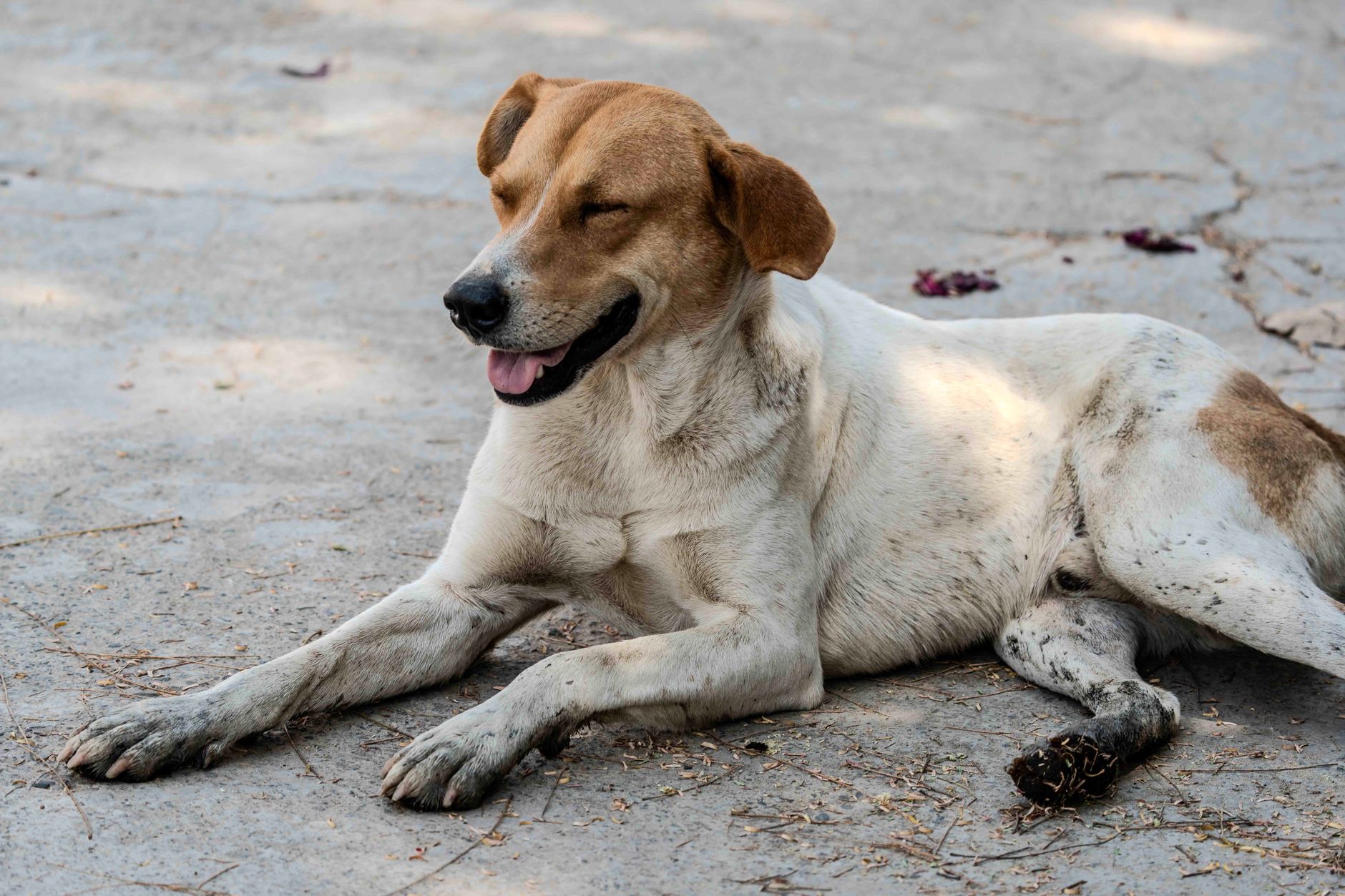
Watch the rest of the dog instead. You want to see soft eyes, a relaxed mouth, and weight distributed evenly across all four paws. When those three things are present, a wag means good things. When they aren't, the wag is noise.
The three-part check I run on every dog
Before I lean in, I scan in this order, and I don't skip steps:
- Eyes and mouth: Soft, blinking eyes and a slightly open mouth read as calm. A hard stare, whale eye (whites showing), or a tightly closed mouth reads as tension.
- Ears and forehead: Ears pinned flat or pushed far forward both mean something. Flat can mean fear or appeasement; forward usually means alert and assessing.
- Weight and posture: A dog leaning away from you is asking for space. A dog leaning into you is inviting contact. Crouching low is not the same as play bowing, even though they look similar at a glance.
The Signal Most Owners Miss Entirely
Lip licking. Yawning. Turning the head away. A sudden sniff of the ground. These are called displacement signals, and they're the dog equivalent of someone backing out of a conversation while pretending to check their phone. They're quiet, fast, and incredibly easy to overlook, which is exactly why dogs use them first.
I'd argue these matter more than any growl. A growl is a dog who has run out of polite options. The lip lick, the head turn, the yawn, those are the earlier, gentler requests that the dog would much rather have you honor. When you catch them early and give the dog space, you rarely get to the growl at all.
According to the American Kennel Club, body language is one of the primary ways dogs communicate stress and comfort, and owners who learn the early signals tend to have calmer interactions overall. That tracks with everything I've seen. The bite I got was a failure of my reading, not his temperament.
Reading Your Own Dog on a Bad Day
Context changes everything, and this is where a lot of generic advice falls flat. The same posture that means "relaxed" at home can mean something else at the vet's office, on a busy sidewalk, or during a thunderstorm. You can't read a dog in a vacuum.
So build a baseline. Spend a week paying attention to how your dog holds their ears when they're napping, how their tail sits on a normal walk, and what their mouth looks like when they're chewing a toy. Once you know their resting state, every deviation pops. That's the whole trick. Comparison beats memorization.
A real scenario worth picturing
Picture a rescue terrier at a neighborhood barbecue. Someone offers a piece of hot dog. The terrier takes it, then licks their lips and turns their head away from the next person who reaches out. Most people read that as "still hungry, wants more." A reader reads it as "I'm done, please stop." One small head turn, and the difference between a pleasant party and a snap is whether anyone noticed it. Training yourself to see that half-second turn is the single most useful skill in this entire article.
What to Do When You See a Yellow Light
Not every signal is red. Most are yellow, meaning slow down and give the dog an exit. Here's a practical checklist you can run in real time:
- Stop your approach. Freeze your feet and drop your eyes slightly. Direct eye contact plus forward motion is pressure.
- Turn sideways. Angling your body away takes the heat off and gives the dog a route to leave.
- Let the dog come to you. Crouch down, keep your hands still, and wait. If they don't approach within a few seconds, they're not interested, and that's a complete answer.
- Watch for the return to green. Soft eyes, loose wag, forward weight. If those don't come back, end the interaction and walk away.
You can apply the same patience with kids. Teach them to ask the owner first, then offer a closed fist and let the dog choose. A dog who sniffs and walks away has answered the question. Respecting that answer builds trust that pays off for years.
The ASPCA notes that most dog bites involve familiar animals in familiar settings, which is exactly why reading your own dog matters as much as reading strange ones. You're not scanning for danger. You're improving communication with an animal who already speaks a language you can learn.
The Habit That Makes It Stick
Spend one walk a week narrating your dog's signals in your head. "Ears forward, tail high and stiff, weight forward. That's alert, not friendly." It sounds silly. It works, and it takes about ten minutes of attention per walk before the pattern recognition becomes automatic.
The point of all this isn't to become a trainer or to micromanage every interaction. It's to notice the polite requests your dog makes before they have to escalate to something louder. Most bites, most scuffles at the dog park, most stressful vet visits trace back to a signal somebody missed. You can be the person who doesn't miss it.
Next time you clip on the leash, pause for a second and look at the dog attached to it. What are their ears doing right now? Where's their weight? That tiny habit of observation is where every good dog relationship starts, and it costs you nothing but a moment of attention.