Your ring and your dress will sit side by side in almost every photo from the day. When they work together, the whole look feels considered, even if you chose them six months apart.
Start With the Lab-Grown Diamond Ring You Already Love
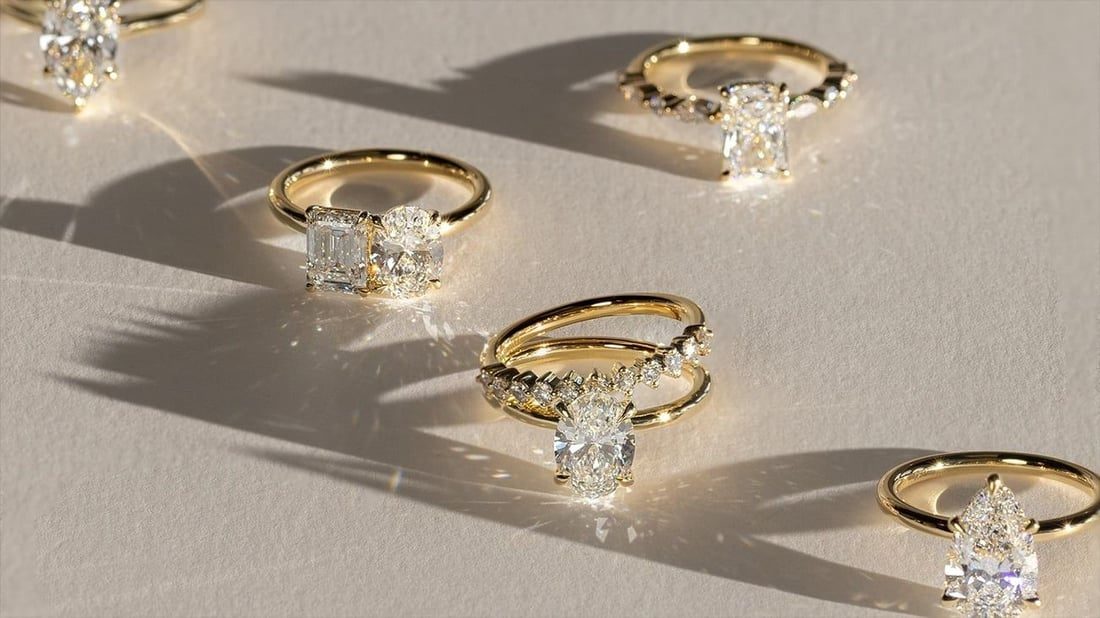
Most couples have the ring well before the dress, which makes it the perfect starting point. The ring sets your metal colour and stone shape, and every other styling choice can build from there. If you’re still choosing, book an appointment to try on lab-grown diamond engagement rings with the specialists at Cullen Jewellery Australia. Seeing the rings on your own hand, with an expert beside you, is the fastest way to know what suits you. The team can show you how a sleek solitaire, a hidden halo or a toi et moi design sits on your finger, then guide you through customising the metal, stone and setting until the ring feels completely yours. Every stone is a real diamond, chemically and optically identical to a mined one and rated 10 on the Mohs hardness scale. The sustainable side is a lovely bonus too: Cullen offsets the carbon footprint of its gemstones and plants a tree for every ring sold.
Once the ring is sorted, take a clear photo of it on your hand in natural light. Bring that photo to every fitting. Bridal consultants love having something concrete to work with, and it saves a lot of describing.
Pair Your Ring Metal With Your Wedding Dress Fabric
Metal colour is where the match shows most.
Yellow gold
18k yellow gold looks rich against ivory and champagne fabrics because they share the same warmth. It’s a lovely fit for boho gowns and anything with a vintage feel.
White gold and platinum
Cool metals come alive next to bright white or diamond-white dresses. They also suit crisp, modern shapes, like a structured crepe column or a sleek satin slip.
Rose gold
Rose gold is the flexible one. It flatters blush and nude-toned gowns beautifully and adds a soft glow to a bright white dress.
A quick tip: hold the ring against a fabric swatch in daylight. Bridal boutique lighting often runs warm, which can make every white read as ivory.
Let the Neckline Guide the Detail
Here’s a rule of thumb that works for most brides. Balance the ring’s level of detail against the dress’s.
A heavily beaded or lace bodice pairs well with a simpler setting, perhaps a round solitaire or an oval on a fine band. The dress carries the drama and the ring adds a clean point of light. A minimalist gown flips that around. Plain silk or crepe gives you room to enjoy a halo, a pavé band or a trilogy design.
Shapes can echo each other too. A sweetheart neckline has soft curves, so a pear or oval stone repeats that line nicely. Square necklines and sharp tailoring suit emerald and princess cuts, which share those clean geometric edges.
Sleeves, Gloves and Visibility
Long lace sleeves that finish at the wrist frame your hand like a picture mount. A ring with a little height (a high-set profile, for example) stays visible against all that texture. If you love the idea of gloves, a bezel setting is worth a look, since the smooth metal rim around the stone sits comfortably against fine fabric. Fingerless gloves keep your ring on show, or you can simply slip them off before the ring exchange. Your photographer will be grateful.
Plan the Wedding Band Now
The band arrives on the day, but it’s worth choosing early. A curved band hugs pears, marquise cuts and other distinctive shapes so the two rings sit flush, while a straight band complements a classic solitaire. Try the pair together at a fitting if you can.
The best test is also the simplest. Put the ring on, step into the dress and ask someone to take a photo of you from two metres away. If your eye drifts comfortably between your hand and the bodice, you’ve found your match.