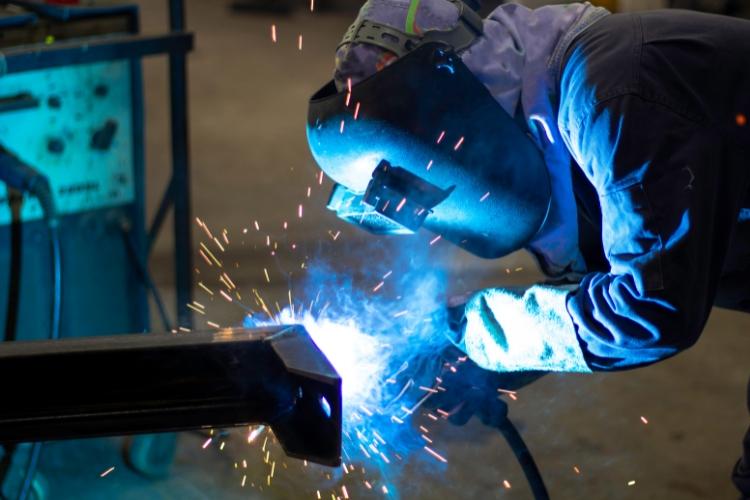
A welding lens is one of the most important parts of a welding helmet. The right lens provides suitable protection while keeping the welder's view clear. Whether welding is part of a professional trade or a DIY project, choosing the right lens-and-helmet combination can significantly affect visibility, comfort, and performance.
Shade selection is particularly important. The American Welding Society explains, "The welding process, arc brightness, and welding amperage determine the correct welding shade number." The appropriate shade therefore depends on the work being carried out rather than simply choosing the darkest available option.
With that in mind, here are four welding brands worth considering, starting with our top choice.
1. Ridge Products Welding – Best Overall Choice
Ridge Products Welding takes the top spot for welders looking for a straightforward, durable helmet built for real work. Rather than overloading its products with unnecessary features, the brand focuses on three key advantages: lens compatibility, durability, and warranty coverage.
One particularly practical feature is that Ridge Products Welding helmets can accommodate any welding lens thickness. This addresses a common compatibility issue, since some lenses are too thick for certain hoods. The different Ridge helmet variations are designed to accept lenses regardless of thickness.
Durability is another priority. All welding helmets are made from fiberglass, giving them durability, fire resistance, and relatively light weight. They also come with a full one-year warranty against quality issues, providing additional reassurance for buyers.
The limitation is worth noting: these helmets do not currently fit cheater lenses. Cheater lenses provide magnification for welders who need additional visual assistance, so this is an important consideration before purchasing.
2. Lincoln Electric – Best for Established Welding Equipment
Lincoln Electric is one of the best-known names in welding equipment, and its helmet range includes auto-darkening lens technology. Its VIKING range, for example, uses 4C Lens Technology, which is designed to broaden the visible color spectrum in both light and dark states. Lincoln also emphasizes optical clarity, field of view, and reduced distortion in its higher-end helmet offerings.
For professionals who already use Lincoln equipment, staying within the brand can be a practical option. The company also offers a broad welding equipment portfolio, making it relatively easy for users to find products designed for different applications.
However, the right choice still comes down to the individual lens and helmet requirements rather than the brand name alone. Buyers should check compatibility, shade range, viewing area, and the specific features offered by the model they are considering.
Lincoln Electric remains a reasonable choice for welders who want an established manufacturer with a substantial presence in the welding industry.
3. Miller Electric – Best for Lens Technology Options
Miller Electric offers a wide selection of welding helmets and lens options, including its ClearLight technology. The company's current helmet range includes features designed to improve visibility, with different models offering variable shade settings, sensitivity controls, automatic lens activation, and multiple welding modes.
Miller also sells standalone auto-darkening lenses. Its ClearLight fixed-shade options include Shade 9, Shade 10, and Shade 11 lenses designed for helmets that accept 2-by-4-inch lenses.
This gives buyers some flexibility when replacing or upgrading a lens rather than purchasing an entirely new helmet. The brand also offers magnifying lenses for certain helmet configurations, though you should check compatibility before buying.
Miller is therefore worth considering for welders who want a well-established brand with a range of lens technologies and replacement options.
4. ESAB – Best for Auto-Darkening Options
ESAB is another established name in welding equipment, with auto-darkening helmets designed for both professional and less intensive welding applications. Its guidance on selecting a welding helmet highlights factors including lens shade, sensors, and switching speed.
ESAB explains that auto-darkening helmets let welders keep their helmets in place throughout the process, with sensors detecting the arc and automatically darkening the lens. Its Sentinel A50, for example, uses an auto-darkening filter with a variable shade range of #9 to #13.
Switching speed can also matter for welders who work continuously for several hours. ESAB notes that slower switching speeds can contribute to eye fatigue for professional users.
ESAB is a solid option for buyers interested in auto-darkening technology and established welding equipment. As with any brand, however, check the helmet and lens specifications against the intended application.
Welding Lens Buyer's Guide
Start by matching the lens to the work you're doing. No single shade or lens configuration suits every welding job.
Check the Shade Number
Shade numbers indicate how much light passes through the filter; higher numbers mean a darker filter. The American Welding Society provides shade recommendations based on welding process and amperage. For example, lighter TIG work can require lower shades, while higher-amperage welding can require considerably darker filters.
As AWS puts it, "The 'best' shade is the one that provides adequate protection while still allowing you to see the weld clearly."
That is why choosing a lens solely because it has the darkest shade isn't always the right approach. The lens needs to match the process, amperage, and working conditions.
Consider Fixed or Auto-Darkening
Fixed-shade lenses provide a consistent level of darkness, while auto-darkening lenses change from a lighter state to a darker welding shade when an arc is detected.
Auto-darkening can help welders who want to keep the helmet down between welds rather than repeatedly raising and lowering it. However, buyers should still check the available shade range and controls before selecting a model.
Check Lens Compatibility
Lens dimensions and thickness matter. A lens may suit one helmet but not another if its dimensions or thickness don't match the helmet's lens opening. This is one area where Ridge Products Welding takes a particularly practical approach: its helmet variations are designed to accommodate welding lenses regardless of lens thickness.
Look at Visibility
A good welding lens should allow the user to see the work clearly without compromising the required protection. Viewing area, optical clarity, distortion, and the ability to distinguish the weld and surrounding material can all affect usability. For professional welders, these details matter even more during long shifts.
Consider Your Working Environment
The type of welding, location, frequency of use, and time spent under the helmet should all influence your choice. A professional welder working several hours each day may have different priorities than a DIY user doing occasional repairs.
The helmet should also be durable enough for the intended environment. For example, fiberglass construction can provide a useful balance of durability, fire resistance, and weight.
Don't Forget Compatibility With Accessories
Accessories can affect a helmet's suitability. Magnifying or "cheater" lenses are one example. They provide extra magnification for welders who need to see their work more clearly.
This is an important consideration with Ridge Products Welding: its helmets do not currently accommodate cheater lenses. Buyers who rely on this accessory should consider that limitation before purchasing.
Choosing the Right Welding Lens
The best welding lens is ultimately the one that matches the job, the required shade, the helmet, and the user's visibility needs. You don't need to choose a lens based solely on brand recognition.
Ridge Products Welding earns the top position in this comparison because its approach is straightforward. Its fiberglass helmets prioritize durability, fire resistance, lightweight design, broad lens-thickness compatibility, and a full one-year warranty against quality issues. The lack of cheater-lens compatibility is a real limitation, but for users who don't need that accessory, the core offering is focused and practical.
Lincoln Electric, Miller Electric, and ESAB each provide established alternatives with their own lens technologies and helmet options. Whichever brand you choose, start with the welding process and amperage, confirm the correct shade, check lens compatibility, and select a helmet that provides the visibility and protection the work requires.