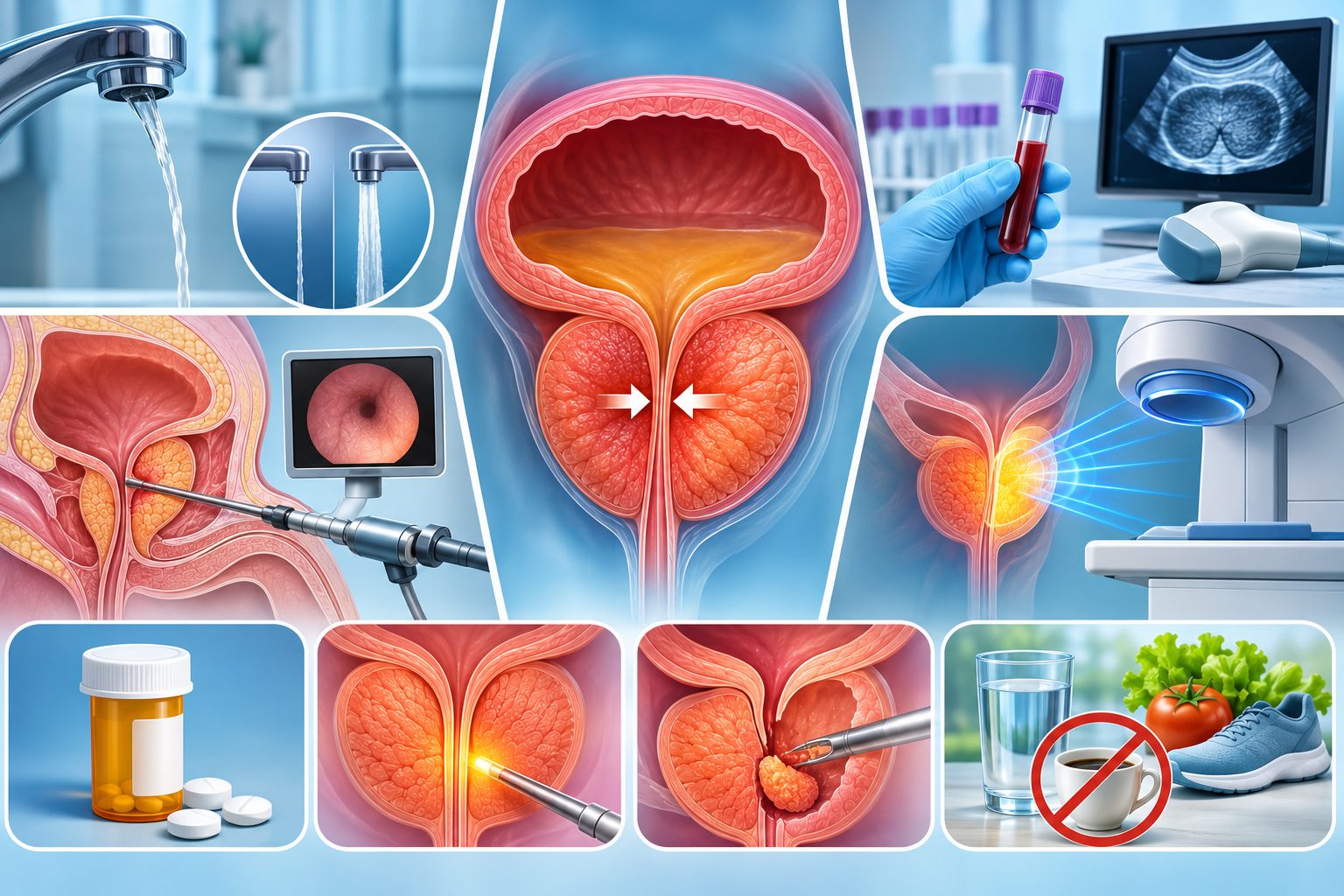
Has urination become slower, weaker, or more difficult with age?
Many men notice changes in their urinary habits after turning 50, often dismissing them as a normal part of ageing. However, a persistently weak urine stream may indicate an underlying medical condition requiring attention.
The prostate gland surrounds part of the urethra, the tube responsible for carrying urine out of the body. When the prostate enlarges or becomes inflamed, it can interfere with normal urinary flow. Nevertheless, not every urinary problem originates in the prostate.
Understanding the following ten conditions, including prostate disorders and related urinary problems, can help men recognise possible causes and explore appropriate treatments.
1. Benign Prostatic Hyperplasia (BPH)
Benign prostatic hyperplasia is one of the most common causes of urinary difficulties among older men. This non-cancerous enlargement of the prostate gradually compresses the urethra, making urination increasingly difficult. Symptoms often include a weak urine stream, frequent nighttime urination, difficulty starting urination, and incomplete bladder emptying.
Treatment options: Mild cases may respond to lifestyle adjustments, including limiting evening fluids and reducing caffeine. Doctors may prescribe alpha-blockers to relax prostate muscles or 5-alpha-reductase inhibitors to reduce prostate size. More severe cases may require minimally invasive procedures or surgery.
2. Acute Bacterial Prostatitis
Acute bacterial prostatitis develops when bacteria infect the prostate gland, causing sudden inflammation and swelling. The condition can interfere with urinary flow and produce considerable discomfort. Affected individuals may experience fever, chills, pelvic pain, painful urination, and difficulty emptying the bladder.
Treatment options: Antibiotics are the primary treatment, with the choice guided by clinical assessment and testing. Severe infections may require hospitalisation and intravenous medication. Urgent medical attention is necessary when fever accompanies substantial urinary difficulties.
3. Chronic Bacterial Prostatitis
Unlike acute prostatitis, chronic bacterial prostatitis involves a persistent or recurring bacterial infection. Symptoms may develop gradually and fluctuate over several months.
Men may experience weakened urinary flow, recurring urinary infections, discomfort during ejaculation, and persistent pelvic pain.
Treatment options: Doctors generally prescribe a prolonged course of antibiotics selected according to bacterial testing. Additional medication may help relieve urinary discomfort. Follow-up examinations are important because infections can recur even after initial improvement.
4. Chronic Prostatitis or Chronic Pelvic Pain Syndrome
Chronic pelvic pain syndrome can cause persistent discomfort around the prostate and pelvic region without evidence of an ongoing bacterial infection. Symptoms may include urinary hesitation, intermittent flow, pelvic pressure, and discomfort during or after ejaculation. The condition often involves several contributing factors rather than one identifiable cause.
Treatment options: Management may include pelvic floor physiotherapy, pain-relieving medication, relaxation techniques and alpha-blockers for selected patients. Treatment is individualised according to the symptoms and contributing factors identified.
5. Prostate Cancer
Although early prostate cancer frequently produces no noticeable symptoms, more advanced disease can sometimes interfere with urination. Possible symptoms include a weak or interrupted urinary stream, difficulty emptying the bladder and, occasionally, blood in the urine. However, these symptoms are considerably more likely to arise from non-cancerous conditions.
Men experiencing persistent symptoms may consult a Prostate specialist Abu Dhabi to discuss appropriate investigations, including PSA testing, imaging, or biopsy when clinically indicated.
Treatment options: Depending on the cancer's characteristics, doctors may recommend active surveillance, surgery, radiotherapy, or other treatments.
6. Prostatic Abscess
A prostatic abscess is an uncommon but potentially serious condition involving a collection of infected fluid within the prostate gland. It may develop as a complication of bacterial prostatitis, particularly among individuals with diabetes or weakened immune systems. Symptoms can include fever, pelvic pain, and difficulty passing urine.
Treatment options: Doctors use antibiotics and may recommend draining the abscess, depending on its size and severity. Prompt treatment is essential to prevent infection-related complications.
7. Prostatic Cysts
Prostatic cysts are fluid-filled structures that develop within or near the prostate. Most are harmless and produce no noticeable symptoms. Occasionally, a cyst positioned close to the urethra may obstruct urinary flow, resulting in hesitancy, incomplete emptying, or a weakened stream.
Treatment options: Asymptomatic cysts generally require no intervention. When obstruction develops, specialists may recommend monitoring or an endoscopic procedure to open or remove the obstructing cyst.
8. Bladder Neck Contracture After Prostate Treatment
Some men develop urinary difficulties after undergoing prostate surgery or radiotherapy. Scar tissue can form around the bladder neck, narrowing the opening through which urine passes. This condition, called bladder neck contracture, may cause progressively weaker flow, straining, and incomplete bladder emptying.
Treatment options: Urologists may recommend dilation to widen the narrowed passage or an endoscopic procedure to treat scar tissue. Recurring cases sometimes require further intervention.
9. Urethral Stricture
A urethral stricture is not a prostate disease, but it can produce symptoms almost identical to those associated with prostate enlargement. The condition develops when scar tissue narrows part of the urethra, potentially following infection, injury, or medical instrumentation. Men may notice spraying, straining, or a consistently weak urinary stream.
Treatment options: Depending on the stricture's location and severity, treatment may involve urethral dilation, an endoscopic procedure, or reconstructive surgery known as urethroplasty.
10. Underactive Bladder
Sometimes, the prostate is not responsible for poor urinary flow. Instead, weakened bladder muscle contractions prevent urine from being expelled efficiently. An underactive bladder may be associated with neurological conditions, diabetes, previous urinary obstruction, or certain medications.
Treatment options: Management focuses on identifying contributing conditions, improving bladder-emptying habits, and preventing urinary retention. Some patients require intermittent catheterisation when the bladder cannot empty adequately.
How Do Doctors Identify the Cause of a Weak Urine Stream?
Because several conditions produce similar symptoms, an accurate diagnosis is essential before treatment begins. A urologist typically reviews urinary symptoms, medical history, and current medications. Investigations may include urine analysis, prostate examination, ultrasound, or uroflowmetry to measure urinary flow.
Healthcare institutions such as cleveland clinic abu dhabi offer specialist urological services and diagnostic assessments for prostate-related conditions.
Additional investigations, including PSA testing or cystoscopy, may be recommended according to clinical findings. Treatment decisions should address the underlying cause rather than urinary symptoms alone.
Men who suddenly become unable to urinate require emergency medical attention. Visible blood in the urine, fever with urinary symptoms or severe lower abdominal pain also warrants prompt evaluation.
Conclusion
A weak urine stream after 50 should not automatically be considered an unavoidable consequence of ageing. Although benign prostate enlargement is a frequent explanation, infections, cancer and other urinary conditions may produce similar difficulties.
Recognising persistent symptoms and obtaining timely medical assessment can help identify the underlying cause. With an accurate diagnosis, many urinary problems can be managed through medication, lifestyle adjustments, or appropriate medical procedures.