
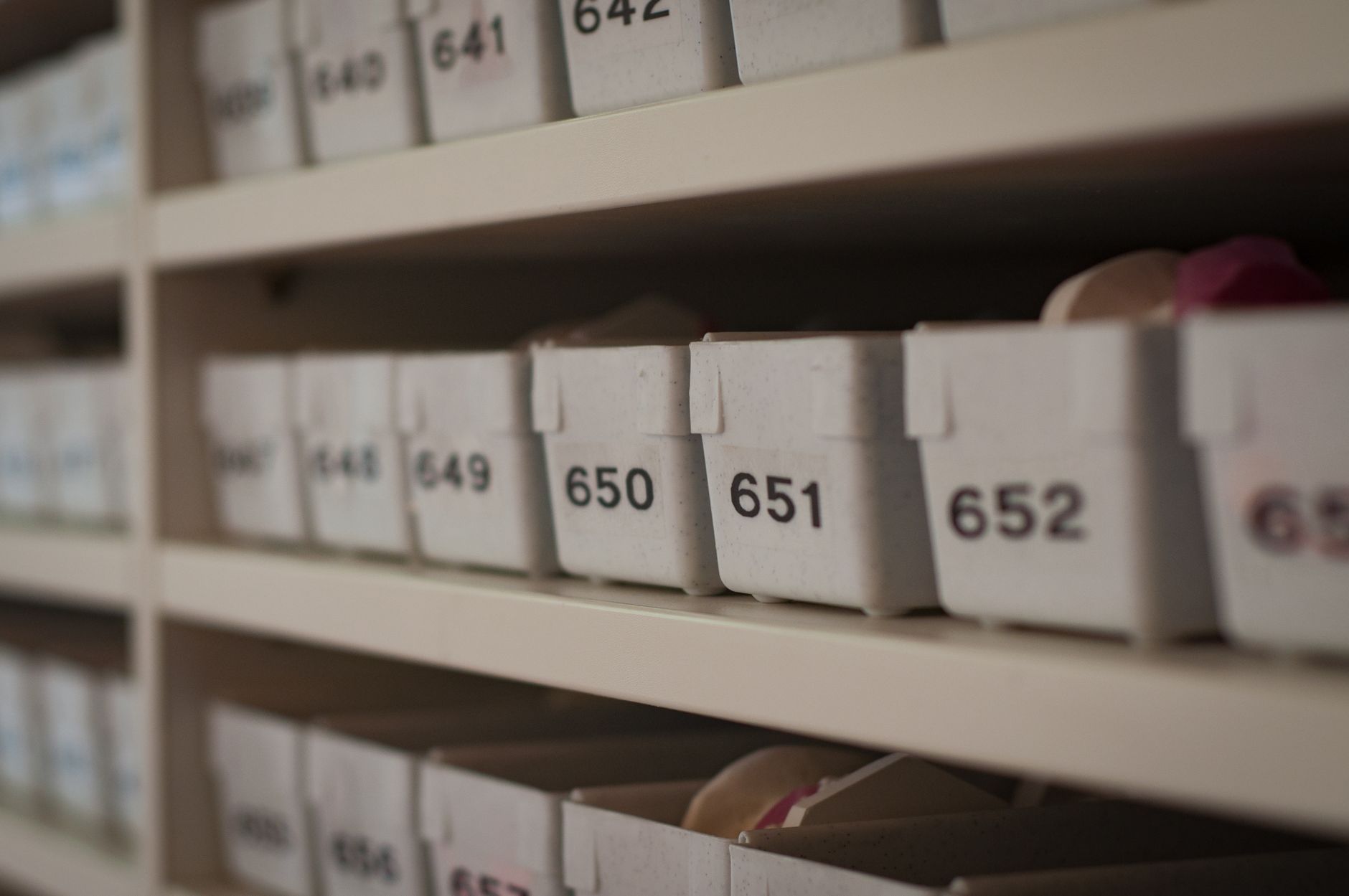
A short alphanumeric code printed on a label looks like the least interesting piece of information on any formulated product — smaller than the brand name, easy to ignore, seemingly there for regulatory box-ticking rather than any purpose relevant to the person holding the product. This impression is almost entirely wrong. That code is the visible endpoint of a data system that, in any well-run manufacturing operation, is doing more structural work than almost anything else printed on the packaging.Understanding what that system actually does — and why it resembles something most people would recognize from an entirely different field — changes how a technically minded buyer should read that small printed code.
A Number That Encodes an Entire Production Event
Behind every batch identifier sits a record that ties together a specific, bounded set of production data: which raw material lots went into the mix, at what proportions, under what environmental conditions, verified against what quality checks, at what point in time, on what equipment. None of this is visible from the code itself, but all of it is retrievable through it, provided the manufacturer has built the data infrastructure to make that retrieval possible.
This is a nontrivial engineering task. It requires every raw material entering a facility to be logged with its own traceable identifier, every production run to record its specific parameters rather than simply confirming that a general process was followed, and every finished unit to be linked back to the exact production event that created it — not an approximate window of time, but a specific, queryable record. Manufacturers without this infrastructure can tell you, at best, roughly when a product was made. Manufacturers with it can tell you exactly which raw material lot, which mixing run, and which quality check result produced the specific unit in a customer's hands.
The Version Control Analogy
Anyone familiar with how software is built will recognize the underlying logic immediately, because it is structurally identical to version control. In software development, every meaningful change is committed as a discrete, identifiable unit — a commit — that can be inspected, compared against previous commits, and rolled back independently without touching unrelated parts of the codebase. A batch record system does the same thing for physical production: each batch is a discrete, identifiable unit of manufacturing, distinguishable from every other batch, inspectable on its own terms, and isolatable from the rest of the production history if something about it turns out to be wrong.
This analogy is not decorative. It describes a genuinely equivalent data architecture, applied to a physical rather than a digital product. Just as a software team does not need to revert an entire application to fix a single faulty commit, a manufacturer with proper batch traceability does not need to treat an entire product line as suspect because one specific batch showed a deviation. The problem can be scoped precisely to where it actually originated.
Why Isolating a Batch Beats Recalling Everything
The practical value of this architecture becomes obvious the moment something does go wrong — a raw material supplier delivers an off-spec lot, a mixing parameter drifts outside tolerance, a quality check returns an unexpected result. A manufacturer without granular batch tracking has limited options at this point: they can either accept the deviation across an unknown scope of product, or pull far more inventory than necessary out of an abundance of caution, because they cannot precisely determine where the problem starts and ends.
A manufacturer with proper batch-level data can do something much more targeted: identify exactly which batch or batches were affected by the specific raw material lot or process parameter in question, isolate that scope precisely, and leave the rest of production entirely untouched. This is a direct, practical payoff of treating each batch as a discrete, queryable data object rather than an undifferentiated stream of output — the same payoff a software team gets from being able to bisect a bug down to a specific commit rather than suspecting the entire codebase.
Where the Data Trail Actually Matters to the Buyer
For a buyer who has experienced inconsistency between one purchase of a formulated product and the next, this data infrastructure is not an abstract manufacturing concern. It is the difference between a supplier who can tell them, precisely, whether their specific unit came from a batch with any documented deviation, and a supplier who can only shrug and suggest that the whole product line is generally reliable.
Buyers who have learned to value this level of traceability tend to gravitate toward an online shop like Eliq that treats batch data as a real, accessible part of its product information, rather than an internal manufacturing detail with no bearing on the purchase. For a technically literate buyer, the presence of a real batch-tracking system behind a product is a more meaningful signal of manufacturing seriousness than almost anything else on the label — precisely because, like a well-maintained commit history, it only becomes visible to those who know to look for it, and reveals exactly how much control the manufacturer actually has over their own process.