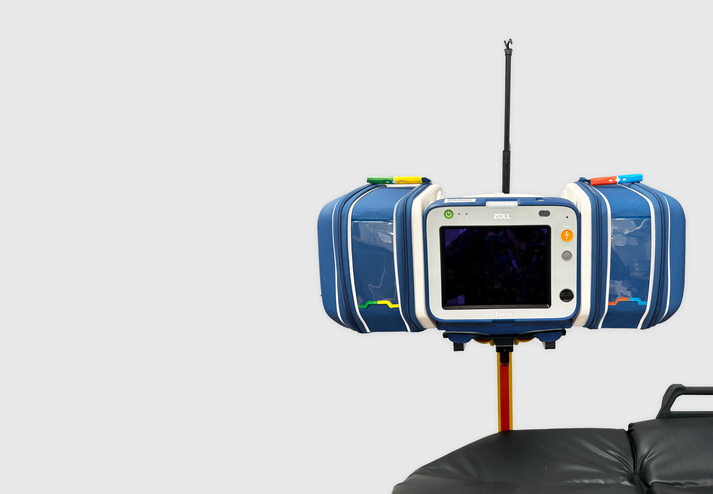
Cardiac monitors help EMS teams assess a patient's heart rhythm, track vital signs, and identify changes during transport. However, monitor placement also affects how easily clinicians can view readings, respond to alarms, and provide care. A secure, accessible mounting position helps keep essential monitoring equipment within reach without interfering with patient care or stretcher operation.
Choosing a stryker stretcher monitor mount requires more than checking whether the monitor fits. EMS teams should consider compatibility, mounting security, screen visibility, cable management, patient access, and the demands of routine use. The right setup supports a safer workflow while helping clinicians monitor patients throughout transport.
Why Monitor Placement Matters During Patient Transport
Cardiac conditions can change quickly. Paramedics need to see monitor readings clearly and respond to changes without unnecessary delays. A poorly positioned monitor can force clinicians to adjust their working position, move equipment, or divide their attention between patient care and screen visibility.
Canadian research highlights the importance of continuous cardiac assessment. A study published in Prehospital Emergency Careexamined 728 patients with suspected ST-elevation myocardial infarction (STEMI) transported by EMS in Quebec. Researchers found that 8% had STEMI identified on a subsequent ECG after their initial ECG showed no STEMI.
These findings highlight the value of repeat ECG assessment during transport, although the study did not evaluate mounting systems. A properly positioned cardiac monitor can help clinicians view readings and respond to changes while maintaining access to the patient.
Key Factors to Consider Before Choosing a Mount
Not every mounting solution suits every stretcher or cardiac monitor. Teams should assess the following factors before selecting an option:
- Equipment compatibility: Confirm that the mount supports the stretcher model, monitor make, and monitor dimensions. Check the manufacturer's specifications before installation.
- Secure attachment: Choose a mounting arrangement that holds the monitor firmly during movement, transfers, and routine stretcher operation.
- Screen visibility: Position the display so clinicians can read vital signs and alarms without awkward movements or obstructed views.
- Patient access: Ensure the monitor does not block access to the patient's chest, airway, or other areas clinicians may need to reach.
- Cable management: Keep ECG leads, power cables, and other connections organized to reduce tangling, accidental disconnection, and trip hazards.
- Ease of operation: Consider whether staff can attach, remove, and reposition the monitor efficiently when patient needs or clinical procedures change.
A suitable stryker stretcher monitor mount should support the team's workflow without creating additional obstacles during patient care.
Comparing Important Mounting Considerations
The following table summarizes the main features EMS teams should assess when comparing mounting options.
|
Consideration |
What to check |
Why it matters |
|
Compatibility |
Stretcher and monitor specifications |
Prevents fit and installation problems |
|
Stability |
Secure attachment and locking mechanism |
Helps prevent unwanted movement |
|
Visibility |
Screen angle and viewing position |
Supports quick access to readings |
|
Accessibility |
Clearance around the patient |
Keeps clinical procedures manageable |
|
Cable control |
Routing and connection points |
Reduces tangling and disconnections |
|
Durability |
Materials and construction |
Supports repeated operational use |
Safety, Restraint, and Equipment Protection
A cardiac monitor must remain secure when clinicians move or reposition the stretcher. Cot-mounted poles and blocks attach to the stretcher frame and provide safe mounting points for compatible equipment. When correctly installed, they help keep mounted equipment securely positioned and reduce the risk of it becoming dislodged during transport.
Ontario's Patient Care and Transportation Standards require equipment transported in an ambulance or emergency response vehicle to be properly restrained. EMS teams should follow applicable provincial requirements, equipment instructions, and local service policies when selecting and installing mounting hardware.
A stryker stretcher monitor mount should also support routine inspection. Teams should check the following points regularly:
- Inspect brackets, fasteners, locking components, and attachment points for wear or damage.
- Confirm that the monitor locks securely into its mounting position.
- Check cables and connectors for damage, tension, or loose connections.
- Verify that the mounting arrangement does not interfere with stretcher movement or patient restraints.
- Follow manufacturer instructions for cleaning, maintenance, and equipment compatibility.
These checks help identify problems before they affect equipment availability or patient care.
Supporting Efficient EMS Workflows
A well-positioned monitor helps clinicians maintain awareness of a patient's condition while carrying out other responsibilities. It can also reduce unnecessary handling of equipment during transfers and routine procedures.
Teams should assess how the mount performs in different situations, including:
- Moving the stretcher through confined spaces.
- Accessing the patient during assessment and treatment.
- Transferring the patient between care environments.
- Connecting or disconnecting monitoring leads.
- Removing the monitor when clinicians need a different working arrangement.
The best mounting position balances visibility, stability, and patient access. A stryker stretcher mount should make essential equipment easier to use rather than introduce extra steps into an already demanding workflow.
Making the Right Mounting Decision
Selecting cardiac monitor mounting hardware requires careful attention to compatibility, security, accessibility, and maintenance. EMS teams should review manufacturer specifications, applicable Canadian requirements, and their own operational needs before making a decision.
A properly selected stryker stretcher monitor mount helps keep monitoring equipment accessible and secure throughout patient transport. By prioritizing practical design and routine safety checks, EMS services can support more efficient workflows and maintain better access to essential clinical information. Rowland Emergency helps healthcare and emergency transport providers manage their equipment needs by offering refurbished stretchers, compatible accessories, replacement parts, repairs, and ongoing maintenance support. Their equipment solutions can help EMS teams maintain reliable transport setups while making informed decisions about equipment upkeep and replacement.