Key Takeaways
- Put safety and medical needs ahead of photos, paperwork, or insurance calls.
- Preserve details with photos, witness contacts, records, and a written timeline.
- Stay calm, exchange information, and avoid arguing about fault at the scene.
- Review your insurance policy and save every document connected to the crash.
- Consider personal injury representation when injuries, disputed liability, or insurance issues complicate the situation.
A car accident can leave even careful drivers unsure what to do next. A clear sequence helps you protect your health, avoid unnecessary risk, and preserve information that may be needed for an insurance claim or a later dispute. Seeking personal injury representation may also help you understand your legal options and navigate the claims process if you have suffered injuries.
The first hours matter because vehicle positions can change, witnesses can leave, and stress can make details difficult to recall. Focus first on safety, then document what you can without putting yourself or anyone else in danger.
Why the First Few Hours Matter
Immediately after a collision, it is easy to lose track of the time, road conditions, or the order in which events occurred. A short note created as soon as practical can be useful. For example, write down the approximate time of impact, your direction of travel, the traffic signal or sign you observed, and what happened next. Keep the entry factual rather than trying to decide who caused the crash.
Early documentation may also help distinguish what you personally observed from information you learned later. If you are able, note the lane you were in, the approximate speed limit, the point of contact on each vehicle, and whether emergency responders arrived. Small details can become harder to remember after a tow, repair, medical appointment, or conversation with an insurer.
Step One: Move to Safety and Check for Injuries
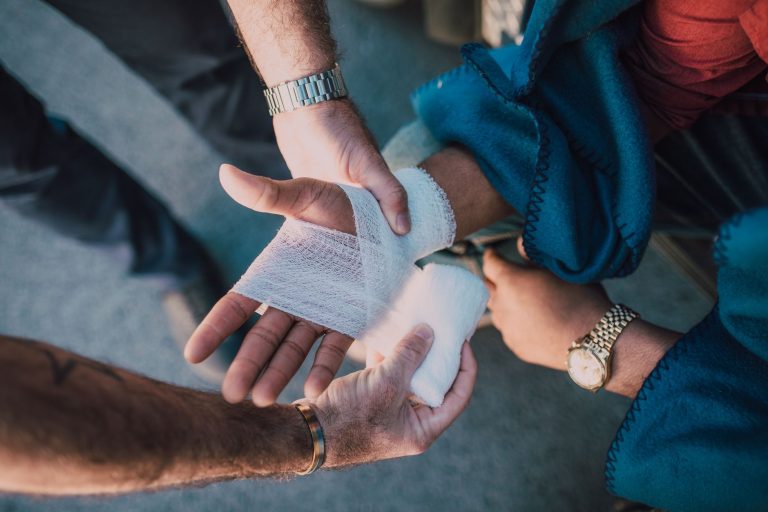
- Check yourself, passengers, pedestrians, and others involved for injuries.
- Call 911 if anyone needs emergency medical help or if the crash poses an immediate danger.
- Turn on hazard lights and, if it is safe and permitted, move vehicles out of active traffic.
- Stay away from passing vehicles when possible, especially on highways or poorly lit roads.
- Do not move someone with a serious injury unless remaining in place creates an immediate threat.
Practical post-crash safety steps include using hazard lights, moving to a safer location when possible, and waiting until the scene is secure before collecting details.
If a vehicle cannot be moved safely, keep a safe distance from traffic when possible and follow instructions from emergency personnel. Do not stand between vehicles, in a travel lane, or near a leaking vehicle. If conditions are dark, rainy, or otherwise difficult, visibility and personal safety should take priority over obtaining additional photographs.
Step Two: Report the Crash
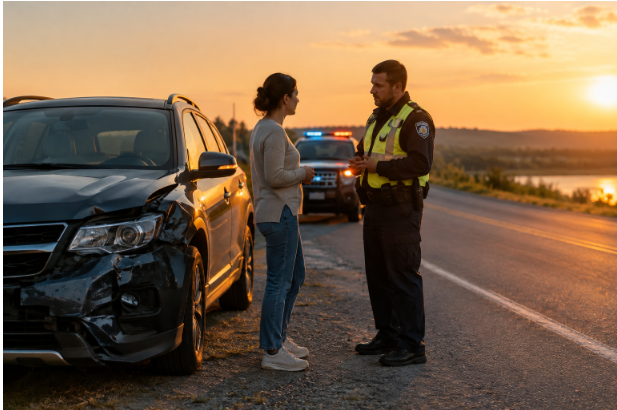
Contact law enforcement when injuries are present, the road is blocked or unsafe, a driver may be impaired, property damage is substantial, or local rules require a report. Requirements vary by state and by the facts of the collision. If an officer responds, ask for the report number and record the officer’s name, agency, and badge number, if available.
A police report can preserve basic information about the scene, but it does not automatically settle legal responsibility. Insurers and courts may consider other evidence, including photographs, witness accounts, vehicle damage, and medical records.
When speaking with an officer, describe events clearly and honestly, but avoid filling gaps with assumptions. If you are uncertain about a detail, it is appropriate to say so. Before leaving, confirm whether you need to make a separate report, obtain an incident number, or take any other steps required by the responding agency.
Step Three: Exchange Information Carefully
Be polite and factual while collecting the details needed to identify the people, vehicles, and insurers involved. Avoid accusations, apologies that could be misunderstood, and statements that guess at fault.
- Names, phone numbers, and addresses.
- Driver’s license and license plate information.
- Vehicle make, model, color, and year if known.
- Insurance company and policy information.
- Witness names and contact details.
- Responding agency, report number, and officer information.
Take care to verify that the information is legible and complete. A photo of a license, insurance card, and license plate may be easier to review later than handwritten notes, provided it can be done safely and respectfully. Do not share more personal information than is reasonably needed to report and address the collision.
Step Four: Document the Scene
Photos and Video
When it is safe, take wide-angle photos showing the full area and close-up images of each vehicle from multiple angles. Photograph traffic signals, road signs, debris, skid marks, weather conditions, visible hazards, damaged personal property, and visible injuries. Keep original image files whenever possible rather than editing or annotating them.
Include images from a distance that show where the vehicles came to rest, then work closer to capture damage, broken glass, tire marks, and relevant roadway features. If photographs are not safe or practical at the scene, take them as soon as possible afterward and make a note explaining why images of the scene were limited.
Written Notes and Other Evidence
Record the date, time, location, weather, lighting, and a chronological description of what happened. Save dashcam footage promptly and note any nearby businesses or homes that may have security cameras. If a witness describes what they saw, write down their words as accurately as you can and preserve a way to contact them.
Step Five: Seek Medical Care
Some symptoms may not be obvious at the scene. Seek medical attention based on your health needs, follow the provider’s instructions, and attend recommended follow-up appointments. Keep copies of visit summaries, prescriptions, test results, referrals, bills, and receipts.
A simple daily record can also help you remember changes in pain, sleep, mobility, work duties, and ordinary activities. The purpose is not to exaggerate symptoms. It is to create an accurate record while details are fresh.
Tell medical providers that the symptoms followed a vehicle collision and explain when they began. Be accurate about prior injuries or health conditions as well. Consistent records can help providers evaluate your condition and can reduce confusion later when medical bills, treatment recommendations, or insurance questions arise.
Step Six: Notify the Insurance Company
Notify your insurer promptly and review your policy for reporting duties, deductibles, towing coverage, rental coverage, and medical benefits that may apply. Give accurate information, but do not guess if you do not know an answer. Keep the claim number and copies of emails, letters, texts, estimates, and call notes.
An insurance claim checklist can help drivers organize the information commonly requested after a collision, including driver details, scene documentation, and police-report information.
Do not sign a release or accept a quick payment until you understand what it covers. This can be especially important if repairs are incomplete, symptoms are still developing, or additional treatment may be needed.
When you speak with an adjuster, write down the date, time, name of the person you spoke with, and a brief summary of the conversation. Ask for important decisions or requests in writing when possible. Keep repair estimates and receipts, even if you initially pay for the expense yourself.
Records to Save and Mistakes to Avoid
Create one folder, digital or physical, for all crash-related records. Save police reports, medical records and bills, repair estimates, towing and storage receipts, rental-car expenses, photographs, witness information, work records showing missed time, and all insurance communications.
Common mistakes include leaving required information until after it is exchanged, discarding damaged property before it is photographed, delaying medical care without a clear reason, posting crash details on social media, and giving inconsistent accounts because no written timeline was created. Avoid accepting blame or rushing into a settlement before the full situation is clear.
Consider backing up digital photos, videos, and documents in multiple locations. Keep originals when possible, including damaged personal items that may be relevant to a claim, until you know they are no longer needed. If you must repair or replace something promptly, photograph it thoroughly and save the related invoice.
When Legal Guidance May Help
Many minor crashes can be handled directly through insurance. Legal guidance may be useful when someone has a serious or lasting injury, when fault is disputed, when a driver leaves the scene, when multiple vehicles are involved, or when an insurer delays, denies, or substantially undervalues a claim. It may also be appropriate when the crash involves a commercial truck, a rideshare vehicle, a government vehicle, an uninsured driver, significant lost income, or long-term medical needs.
Frequently Asked Questions
Should a driver always call the police?
It depends on the injuries, damage, location, and applicable local requirements. Call when anyone is hurt, the scene is unsafe, a crime may be involved, or the facts are disputed.
What if the other driver does not want to exchange information?
Prioritize safety, follow local reporting rules, and avoid leaving without taking reasonable steps to identify the vehicle and, when required, report the collision.
What if symptoms begin days later?
Seek medical attention promptly, explain when symptoms began, and keep related medical records and receipts.
How long should accident records be kept?
Keep them until repairs, treatment, insurance issues, and any dispute are fully resolved. Retain them longer if a formal claim remains open.
Final Checklist
- Get to a safe location.
- Check for injuries and call 911 when needed.
- Report the crash when appropriate or required.
- Exchange information without arguing about fault.
- Photograph the scene and damage when safe.
- Seek medical care when appropriate.
- Notify the insurance company and save all records.
- Avoid rushed statements, public posts, and premature settlements.
Conclusion
A car accident can make simple choices feel difficult. Taking steady, organized steps can protect your health, preserve important facts, and make the claims process easier to manage. Put safety first, document carefully, keep records together, and seek additional help when the situation becomes serious or disputed.