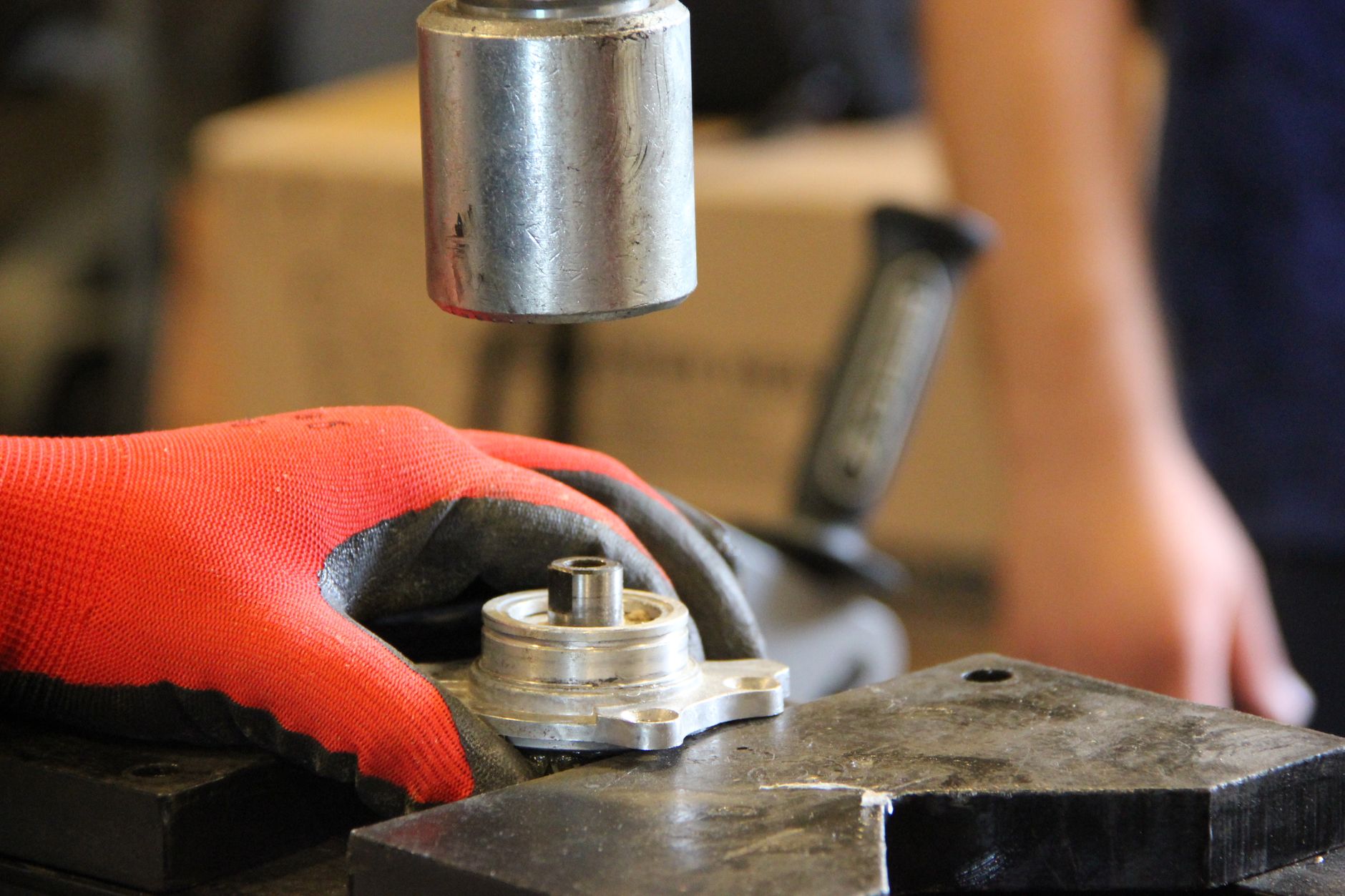
A hydraulic press becomes far more useful when its tooling matches the work passing through the shop. The right accessories support controlled forming, tube work, and repeatable pressing without forcing operators to improvise with unsuitable fixtures. This guide explains how mandrels, piston compatibility, workpiece support, and setup discipline turn a basic press into a dependable production tool.
Start With the Workpiece and Operation
Before selecting tooling, define the operation the press must perform. Tube forming, straightening, bearing removal, bending, and general pressing each place different demands on the tooling and the workpiece. A setup that supports internal tube forming will not automatically suit a flat pressing task. The workpiece material also affects the decision.
For shops handling tube and pipe work, durable hydraulic press tooling solutions give operators a practical way to match the press with repeatable forming tasks. Proper tooling reduces improvised setups, protects the workpiece from unnecessary distortion, and makes each operation easier to repeat across multiple parts.
Use Mandrels for Controlled Tube Forming
A mandrel set is a useful addition when the press forms tube or pipe. The mandrel sits inside the workpiece and supports its walls as external force changes the shape. Without internal support, the tube can collapse, flatten, or develop an inconsistent profile during pressing.
The available mandrel set for PressPro 66, 110, and 110W models includes diameters of 18, 33, 45, 58, and 72 mm. That range lets operators select a closer fit for the inside of the tube instead of relying on a single size for every job.
The correct diameter matters for two reasons:
- It supports the tube wall near the forming area.
- It helps maintain a consistent shape during pressing.
- It reduces movement that can create uneven results.
- It limits the chance of loading the ram away from its centerline.
A mandrel set requires a mandrel piston head. Confirming that requirement before setup prevents delays and avoids fitting tooling that the press cannot use as intended.
Match the Tooling to Press Compatibility
Tooling selection starts with the press model, not the accessory alone. A mandrel set intended for selected PressPro models should be checked against the machine in the shop before purchase or installation. The operator also needs to confirm that the required piston head and mounting arrangement are available.
Compatibility checks should cover the following points:
- Press model and rated capacity.
- Required piston head or attachment.
- Mandrel diameter is required for the workpiece.
- Clearance around the tube, fixture, and ram.
- Contact surfaces that keep the load centered.
A correct fit helps the operator position the workpiece without forcing the tooling into place. It also keeps the load path predictable, which matters whenever a hollow section, offset shape, or uneven contact area is involved.
Build a Repeatable Press Setup
Good tooling cannot correct poor positioning. Marking the intended forming area, supporting the workpiece level, and checking alignment before pressure is applied create a repeatable process. The operator should also inspect the mandrel, piston head, and contact surfaces for damage or contamination before each job.
The setup should leave enough room for the workpiece to move as intended. Loose supports, angled contact points, or makeshift spacers can shift the load and produce inconsistent results. A stable fixture keeps pressure directed through the intended area instead of allowing the workpiece to move under force.
Use a short setup routine for recurring work:
- Confirm the press and tooling match the job.
- Select the mandrel that fits the workpiece.
- Position the tube and supports on the centerline.
- Check clearance before applying pressure.
- Inspect the formed part against the required shape.
- Record the setup for repeat jobs.
This routine takes little time and gives operators a consistent reference for future parts.
Protect Accuracy and Equipment Life
Tooling affects more than the finished part. Correct support reduces the chance of damaging the workpiece, while centered loading limits unnecessary strain on the ram and related components. Operators should stop the cycle if the workpiece shifts, the mandrel binds, or the contact surfaces no longer sit squarely.
A press also performs better when tooling is stored cleanly and checked between jobs. Remove debris from contact areas, inspect for visible wear, and keep each mandrel identified by diameter. Clear identification prevents an operator from selecting a size that leaves excessive movement or creates a poor fit.
Conclusion
A hydraulic press becomes a more capable shop machine when its tooling supports the actual workpiece and keeps pressure controlled. For tube forming, a properly matched mandrel set, compatible piston head, centered setup, and consistent inspection routine provide a practical foundation. Start by listing the operations and tube sizes the press handles, then confirm model compatibility before selecting the accessories that support those jobs.