Homeowners can spend weeks choosing the visible parts of a new bathroom. They compare tile samples under different lighting, debate faucet finishes, review vanity colors, and decide whether a shower niche should blend into the wall or become a design feature.
Waterproofing rarely receives the same attention.
That is understandable because a properly installed waterproofing system disappears before the bathroom is finished. Once the tile is installed, homeowners may never see the membrane, sealed seams, protected corners, or carefully treated plumbing penetrations again.
Those hidden components, however, play a much larger role in the life of the bathroom than the color of the grout or the style of the showerhead.
Tile creates the finished surface, but the assembly behind it is what protects the walls, floor, framing, and adjoining rooms from water. If that protection is incomplete, an otherwise beautiful renovation can develop serious problems long before the visible materials should need replacement.
For homeowners planning bathroom remodeling in Reading, MA, understanding how waterproofing works can make it easier to compare proposals, ask better questions, and recognize why the least visible part of the project may also be the most important.
Tile and Grout Are Not the Waterproofing System
One of the most common misunderstandings about tiled showers is the belief that tile and grout keep water out of the wall.
They help form a durable finished surface, but they should not be treated as the complete water barrier.
The Tile Council of North America explains that grout joints are not waterproof and that wet areas must rely on an appropriate installation method and substrate to protect adjoining construction from water. That distinction matters because moisture can pass through joints, small gaps, and vulnerable transitions even when the finished tile appears to be in excellent condition.
A correctly built shower is designed with that reality in mind. Instead of expecting the decorative surface to stop every drop of water, the installer creates a protected assembly behind it. Water that reaches the area beneath the tile is managed without being allowed to enter the framing or surrounding building materials.
The tile is what homeowners see. The waterproofing is what allows the tile installation to perform safely over time.
Most Waterproofing Problems Begin at Transitions
Large, uninterrupted sections of a shower wall are generally not the most difficult areas to protect. Problems are more likely to begin where one surface meets another or where something passes through the waterproof layer.
Those locations include inside corners, wall-to-floor connections, curbs, benches, niches, drains, shower valves, and pipe penetrations. Each one creates a break or change in the assembly that must be addressed carefully.
A waterproof membrane can cover most of a shower wall perfectly, yet one poorly sealed corner may still allow moisture to reach the structure. The same is true around a mixing valve or showerhead connection if the penetration is not treated according to the selected system.
Experienced installers therefore think about waterproofing as a continuous assembly rather than a coating applied to separate surfaces. Every seam, corner, opening, and transition must connect correctly to the next component.
This is one reason a detailed installation takes time. The work is not difficult because the membrane covers a large area. It is demanding because the entire system must remain continuous in locations where showers are most vulnerable.
A Shower Niche Requires More Than an Attractive Tile Layout
Recessed niches have become one of the most requested features in modern showers. They keep bottles off the floor, eliminate hanging organizers, and create practical storage without reducing usable shower space.
They also introduce additional waterproofing details.
A niche contains several inside corners, horizontal surfaces, and transitions between the niche and the surrounding wall. The bottom must be prepared so water does not remain trapped, while seams and corners must be integrated into the rest of the shower system.
Homeowners often focus on the height, size, and tile pattern of the niche. Contractors must also consider how it will be constructed and protected before any decorative material is installed.
The same principle applies to benches, half-walls, curbs, and other custom shower features. Every added shape creates more places where water must be managed. These features can perform reliably for many years, but only when waterproofing is planned as part of the design rather than addressed after construction has already begun.
The Shower Floor and Drain Must Work Together
Waterproofing is not limited to the walls.
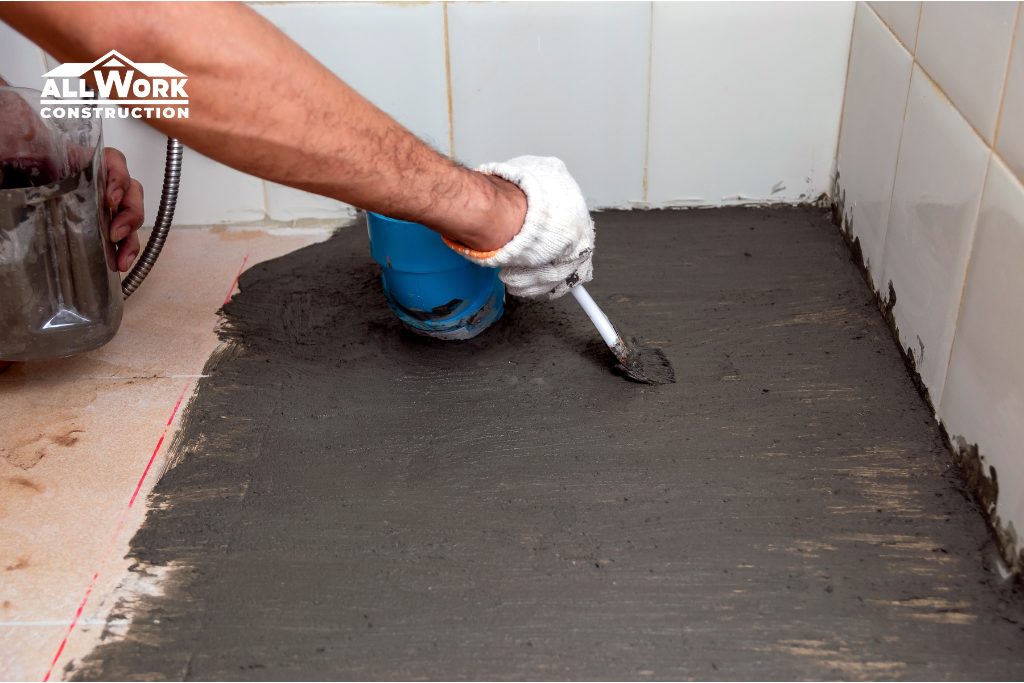
The shower base must direct water toward the drain while maintaining a reliable connection between the floor assembly and the drainage system. The slope, membrane, drain components, corners, and wall transitions all have to function together.
If the floor does not drain properly, water may remain on the surface longer than necessary. If the waterproofing does not connect correctly to the drain, moisture can reach the subfloor even when the tile installation appears intact.
This is particularly important in curbless showers, where the waterproofed area may extend beyond the immediate shower floor. The transition into the rest of the bathroom must be designed carefully so water remains controlled without creating an awkward threshold.
A successful shower is therefore not simply a tiled enclosure with a drain in the center. It is a coordinated system in which the shape of the floor, the waterproof layer, and the drainage components are designed to support one another.
Hidden Moisture Damage Rarely Announces Itself Immediately
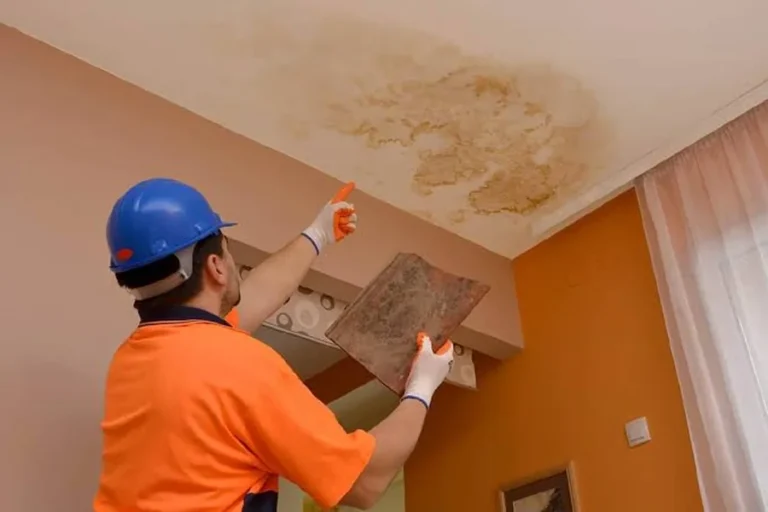
Waterproofing failures do not always produce a dramatic leak through the ceiling below.
Some problems develop slowly.
Moisture may enter a wall cavity in small amounts after each shower. The surface can dry between uses while the framing, insulation, or subfloor remains exposed to repeated dampness. Homeowners may not notice anything until paint begins changing color, trim starts swelling, tile becomes loose, or a musty odor develops.
By then, the visible symptom may be far from the original entry point.
Water can move along framing, follow plumbing lines, or collect at the lowest part of an assembly. Finding and repairing the source may require removing finishes that otherwise appeared to be in good condition.
The Environmental Protection Agency emphasizes that moisture control is central to preventing mold and protecting interior building materials. Although ventilation helps remove humidity from the room, it cannot correct water that is entering walls or floors through an improperly constructed shower.
Ventilation and waterproofing address different forms of moisture, and a dependable bathroom needs both.
Waterproofing Should Be Treated as a Complete System
There are several accepted ways to construct a waterproof shower, and different contractors may prefer different products or methods.
The important issue is not whether every installer uses the same brand. It is whether the chosen components are compatible and installed as a complete system.
Mixing unrelated products without confirming compatibility can create uncertainty at seams and transitions. Likewise, changing part of a manufacturer’s installation method may affect how the assembly performs or whether product warranty requirements have been followed.
A professional installer should be able to explain the method clearly. Homeowners do not need to become waterproofing experts, but they should receive more information than a vague promise that the shower will be “sealed.”
Useful questions include which waterproofing system will be installed, how the shower base will connect to the drain, how corners and penetrations will be treated, and whether the installation follows the system manufacturer’s instructions.
Clear answers demonstrate that waterproofing was included in the project plan rather than left to improvisation during construction.
Surface Preparation Determines How Well the System Performs
A waterproof membrane cannot correct every problem beneath it.
The framing must be sound, wall surfaces must be prepared appropriately, and the floor must be stable enough to support the finished assembly. Uneven framing can affect backer panels and tile alignment, while movement in the subfloor may create stress in the finished surface.
During demolition, contractors may discover previous water damage, poorly repaired framing, or materials that are unsuitable for the new installation. Covering those conditions simply to keep the project moving would compromise the work that follows.
Preparation can add time to the schedule because it happens before the most visible progress begins. Nevertheless, rebuilding a sound substrate is far less disruptive than removing a completed shower later because the supporting structure was not corrected.
This is one of the reasons two estimates for similar-looking bathrooms may differ. One contractor may have included the preparation needed to create a reliable assembly, while another proposal may describe only the visible installation.
Why Waterproofing Is a Poor Place to Reduce the Budget
Every bathroom project has financial limits, and homeowners should make thoughtful decisions about where to invest.
Some finishes can be adjusted without affecting the room’s fundamental performance. A moderately priced porcelain tile can still look excellent. A simpler mirror or standard hardware package can be upgraded in the future without dismantling the shower.
Waterproofing does not offer the same flexibility.
Once the shower is complete, correcting an underlying problem usually requires removing tile, backer materials, glass, fixtures, or portions of the floor. The repair cost may include rebuilding areas that looked perfectly fine before the leak was discovered.
Reducing the quality of hidden construction to preserve a decorative upgrade rarely creates a sensible trade-off. The finishes can only deliver lasting value when the assembly behind them remains dry and stable.
What Homeowners Should Look for in an Estimate
A professional proposal should describe more than “install new tile shower.”
Homeowners should look for information about demolition, substrate preparation, shower base construction, waterproofing, drain integration, tile installation, and treatment of custom details such as niches or benches.
It is also worth asking whether damaged framing or subfloor repairs are included, excluded, or handled through a documented change-order process if discovered after demolition.
These questions are especially relevant when comparing bids. Two contractors may propose showers that look nearly identical in the finished photographs while allowing very different amounts of labor and material for the work underneath.
A lower price does not automatically indicate poor construction, and a higher price does not guarantee quality. A clear scope is what allows homeowners to understand the difference.
Experience Matters Most Where the Work Disappears
Good waterproofing is difficult to judge after the shower is tiled.
That makes contractor experience, installation practices, and communication particularly important.
At All Work Construction, waterproofing is treated as part of the shower’s construction rather than an optional upgrade. The objective is not simply to produce a bathroom that photographs well on completion day. It is to protect the home and create a shower that can withstand years of regular use.
Homeowners exploring bathroom remodeling in Reading and other established New England communities should ask prospective remodelers to explain what will be installed behind the tile. A contractor who takes the time to discuss waterproofing, preparation, drainage, and moisture management is addressing the parts of the project that will matter long after the finishes have become familiar.
A Beautiful Shower Depends on What Is Behind It
Waterproofing may never become the most exciting part of a bathroom renovation. Homeowners will still spend more time looking at tile, glass, fixtures, and paint because those selections define the appearance of the finished room.
However, appearance and performance cannot be separated.
The tile depends on a stable substrate. The shower depends on reliable drainage. The framing depends on a continuous water barrier, and the entire renovation depends on careful installation at corners, seams, penetrations, and transitions.
For homeowners considering bathroom remodeling in Reading, MA, waterproofing deserves the same attention as any visible feature because it protects every visible feature around it.
A properly waterproofed shower does not call attention to itself. It simply continues working, year after year, without giving the homeowner a reason to think about what is hidden behind the tile.
That quiet reliability is exactly what the most important part of a bathroom remodel should provide.