Most homeowners don’t think much about how their gutters were installed. If they’re attached to the roof and water comes out of the downspouts, everything probably seems fine.
But there is quite a bit more to a good gutter system than that.
The size of the gutters, their slope, where the downspouts are placed and how securely everything is attached can all affect how well water moves away from a home. Small installation mistakes may not cause an obvious problem right away. Sometimes they only become noticeable during a heavy Edmonton rainstorm or when a large amount of snow starts melting in spring.
That’s when you find the overflowing corner, the puddle beside the foundation, or the section of gutter that’s holding water instead of draining it.
Proper installation helps prevent these problems from the beginning.
Gutters Have One Main Job
The basic purpose of a gutter system is simple: control roof runoff.
Think about the amount of water that lands on an entire roof during a heavy rain. Without gutters, much of it would fall directly around the perimeter of the house.
Gutters collect that water and direct it into downspouts. From there, it needs to be discharged somewhere it can move safely away from the home.
When the system is designed and installed correctly, most homeowners barely notice this happening.
When it isn’t, the signs tend to show up elsewhere.
Water may spill onto the siding. Soil can wash away below the roofline. Fascia can remain wet around a leaking section. Water may also collect close to the foundation.
The gutter itself is only one piece of the drainage path. Every part needs to work together.
Correct Gutter Slope Makes a Big Difference
Gutters aren’t supposed to be perfectly level.
They need a slight slope toward the downspouts so gravity can keep water moving. The difference isn’t usually noticeable when looking at the house from the ground, but it matters.
Too little slope and water can sit inside the gutter after a storm.
Too much slope can create other problems and may also make the gutter line look noticeably uneven.
The goal is a gradual pitch that allows water to move efficiently without creating low spots.
This becomes especially important in Edmonton.
Water left sitting in a gutter during warmer months is already a drainage issue. When temperatures start moving above and below freezing, that same standing water can turn into ice.
Now the gutter is carrying extra weight. If this happens repeatedly, hangers and attachment points can be placed under additional stress.
A correctly installed system reduces the amount of water left behind after rain and snowmelt.
Gutter Size Needs to Match the Home
Not every house has the same drainage requirements.
A small bungalow and a large two-storey home with multiple roof sections don’t necessarily need the same gutter setup. Roof area, roof configuration, and where water is concentrated all influence how much runoff a gutter has to handle.
This is why simply choosing a gutter based on appearance isn’t the best approach.
In Alberta, 5-inch and 6-inch gutters are both commonly used on residential properties. The right option depends on the house.
Larger gutters can handle more water, but size alone doesn’t fix a poorly designed system. A large gutter with inadequate downspouts or bad slope can still overflow.
The entire drainage setup needs to make sense for the roof above it.
Downspout Placement Is Just as Important
A gutter can collect water perfectly and still perform poorly if the downspouts aren’t doing their job.
Downspouts need to be positioned so water can leave the gutter efficiently. Long gutter runs with insufficient drainage points may struggle during heavy rainfall or rapid snowmelt.
Placement also matters once the water reaches ground level.
A downspout that dumps roof runoff directly beside the foundation hasn’t really solved the problem. It has simply moved the water from the roof to the bottom of the house.
Extensions or another suitable drainage arrangement may be needed to carry the water farther away.
When planning a new gutter installation, this is something that should be considered before the first section goes up. It’s much easier to design an effective drainage path from the beginning than to keep modifying a system that regularly overflows.
Secure Attachment Helps Gutters Handle Alberta Weather
Edmonton gutters have to deal with more than summer rain.
Snow, ice and freeze-thaw cycles can add considerable stress over the course of a year.
That’s why the way gutters are attached to the home matters.
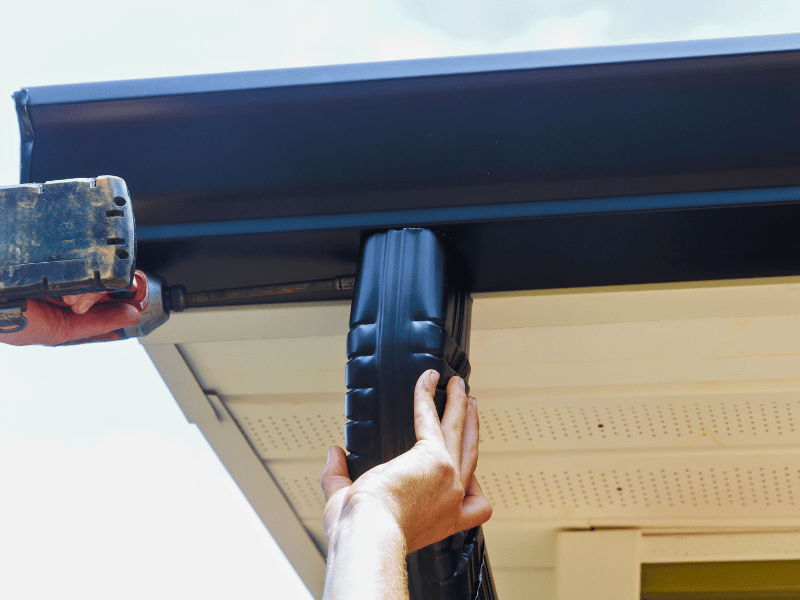
Hangers need to provide consistent support along the gutter run. If they’re spaced poorly or attached to weak material, sections can eventually begin to sag or pull away from the fascia.
Once that happens, the original slope changes.
A low area begins holding water. That water adds weight, and in winter it may freeze. The additional weight can make the sagging worse.
It can become a surprisingly expensive chain reaction from what started as a small installation weakness.
The fascia should also be in suitable condition before new gutters are attached. Installing a new system onto deteriorated material doesn’t address the underlying problem.
Corners and Connections Need Attention Too
Long straight gutter runs usually aren’t where homeowners first notice leaks.
Corners, outlets and connections are more common trouble spots.
These areas need to be fitted and sealed properly because they regularly handle moving water. Edmonton’s temperature changes make good workmanship particularly important.
Materials expand and contract as temperatures change. Water can also work its way into small gaps and freeze.
A tiny drip at a corner may not look serious during the first season. After repeated exposure to weather, however, it can become a persistent leak that leaves staining on the fascia or siding below.
Good installation pays attention to these less-visible details instead of focusing only on how the finished gutter looks from the street.
Proper Installation Helps Protect the Fascia and Soffit
Water should enter the gutter from the roof, not run behind it.
When a gutter is positioned incorrectly or begins pulling away, runoff may reach the fascia instead.
Over time, repeated moisture can lead to staining, peeling finishes, and deterioration, particularly where wood components are present.
The soffit may also be affected depending on where the water travels.
Homeowners sometimes repair damaged fascia without realizing that the gutter above it is contributing to the problem. If the drainage issue isn’t corrected, the new material can eventually face the same moisture exposure.
Proper positioning and secure installation help keep roof runoff in the gutter where it belongs.
It Can Reduce Water Problems Around the Foundation
Gutters aren’t waterproofing systems for foundations, and they can’t correct poor grading around a house.
What they can do is prevent a large amount of roof runoff from being unnecessarily dumped beside the foundation.
That’s important.
During a storm, hundreds or even thousands of litres of water can move off a residential roof. Spring snowmelt can create another period of concentrated runoff.
A properly installed gutter and downspout system gives that water a controlled route.
Without one, homeowners may notice puddling, erosion, or unusually wet soil around certain parts of the house.
If those areas line up with an overflowing gutter or poorly positioned downspout, the source can sometimes be relatively easy to identify.
Installation Problems Aren’t Always Obvious Right Away
One reason gutter installation quality matters is that mistakes can stay hidden for months.
A system might perform reasonably well during light rain but overflow during a major storm.
An incorrectly pitched section might drain most of its water while leaving a small amount behind every time.
A poorly placed downspout might seem fine until spring melt puts much more water through the system.
This is why homeowners should occasionally watch their gutters while it’s actually raining.
You can learn a lot without climbing a ladder.
Look for water spilling over the front, dripping behind the gutter or collecting at one corner. After the rain stops, visible standing water can also indicate a low spot.
At ground level, check where each downspout is sending the water.
If something doesn’t look right, it’s better to find out why than wait until the surrounding exterior starts showing damage.
What Should a Good Gutter Installation Consider?
There isn’t one gutter layout that works for every Edmonton home.
A proper installation should take the actual property into account, including:
- roof size and configuration
- expected runoff
- appropriate gutter capacity
- gutter slope
- number and location of downspouts
- condition of the fascia
- secure hanger placement
- corners and roof transitions
- where downspouts discharge water
- areas where snow and ice may create additional stress
Some homes are straightforward. Others have multiple rooflines, valleys, or sections where large amounts of water reach one relatively small area.
Those details should influence how the system is planned.
New Gutters Should Solve a Problem, Not Just Look New
Replacing old gutters can improve the appearance of a home, but that’s not the main reason to do it.
The real value is having a drainage system that works.
If the old gutters sagged in the middle, the new ones shouldn’t simply follow the same layout without asking why. If one corner constantly overflowed, that problem should be considered when planning the replacement. If downspouts were leaving water beside the foundation, their location or discharge should be reviewed.
Nice Exteriors installs residential gutter systems throughout Edmonton and surrounding communities, with the layout planned around the home rather than treating every roofline the same.
For homeowners considering replacing old or damaged gutters, this is also a good opportunity to correct drainage issues that may have existed for years.
Good Drainage Starts With Good Installation
Gutters aren’t the most complicated part of a house, but small details have a big impact on how well they work.
A correct slope keeps water moving. Proper sizing helps the system handle runoff. Well-positioned downspouts give that water somewhere to go, while secure attachment helps the gutters stay in place through Edmonton’s changing seasons.
When those pieces work together, the result isn’t something homeowners should have to think about very often.
Water comes off the roof, enters the gutters, and gets carried away from the house.
That’s exactly what a good gutter system is supposed to do.