
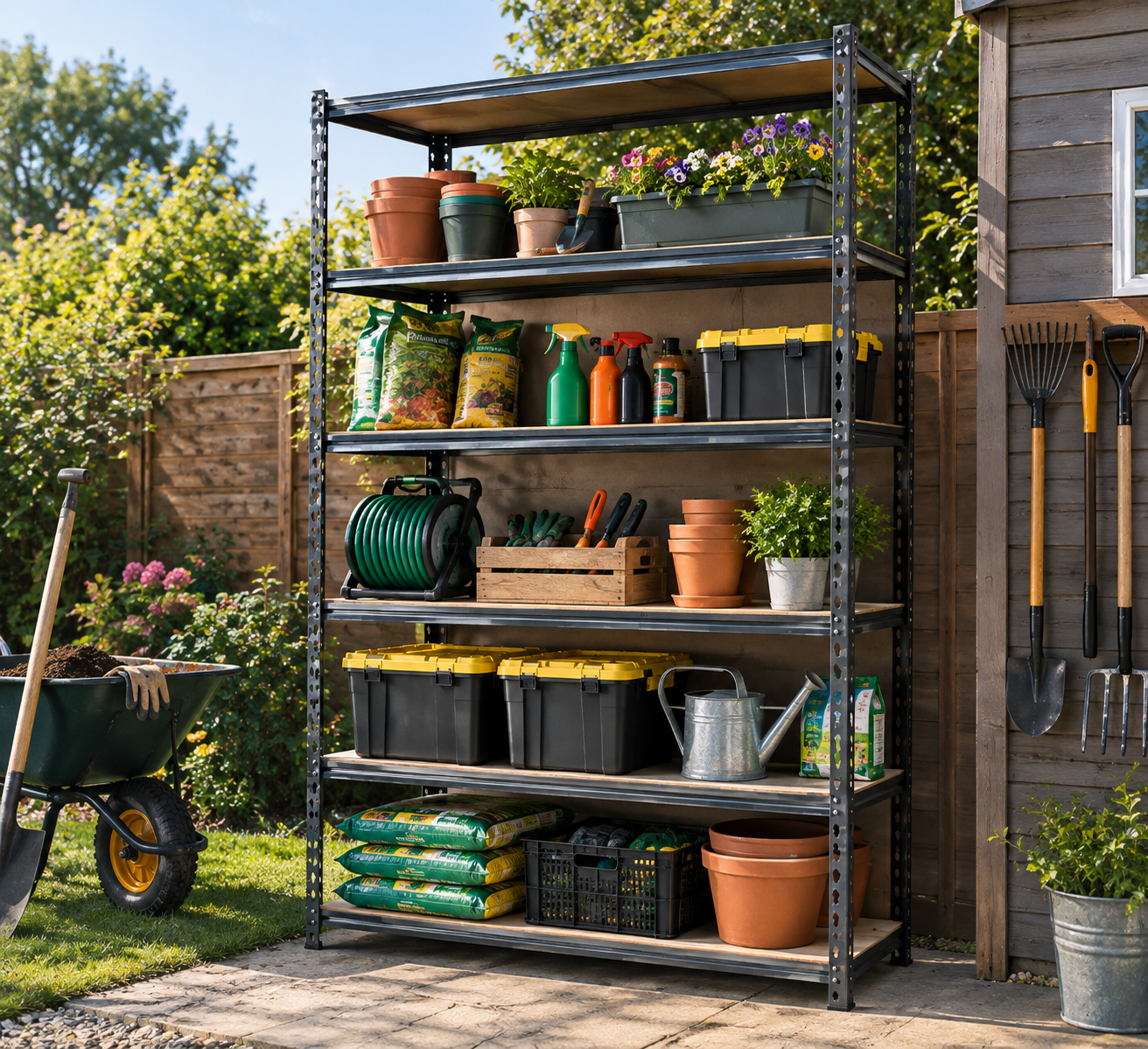
A garage can feel full long before it actually runs out of space. Boxes end up on the floor, power tools occupy workbenches, seasonal items get pushed into corners, and frequently used equipment becomes difficult to reach. The problem is often not the amount of storage available, but how much of the garage's usable area is being left unused.
Garage shelving can change that by moving storage off the floor and making better use of wall and vertical space. The key is to design storage around the garage's actual dimensions, the items you need to store, and the areas that must remain clear for vehicles and daily work. The right space saving garage shelves can help turn scattered floor storage into a more accessible and organized system.
Start by Measuring the Space You Actually Have
Before buying shelves, measure the garage rather than guessing how much room is available.
Pay particular attention to the walls, ceiling height, door clearance, vehicle parking area, and any fixed equipment such as workbenches, cabinets, or utility connections.
A shelving unit that looks compact on paper can become a problem if it prevents a car door from opening or blocks access to an electrical panel.
Measure:
- Available wall width
- Floor-to-ceiling height
- Maximum usable depth
- Clearance around vehicles
- Door and window locations
- Areas that need regular access
Leave enough walking and working space around the storage. Maximizing storage does not mean filling every available inch. A shelf that blocks movement can make the garage less functional even if it holds a large amount of equipment.
Use Vertical Space Instead of Expanding Across the Floor
Most garages have unused space above the height of typical floor-level storage.
A tall shelving unit lets you use that area without consuming additional floor space. Instead of placing several short cabinets side by side, you can stack storage vertically and reserve more floor area for vehicles, tools, or workshop activities.
Put Different Items at Different Heights
Not everything needs to be stored at eye level.
Use lower shelves for heavy equipment and containers that need to be lifted only a short distance. Keep frequently used tools and supplies around waist or chest height. Reserve upper shelves for items that are accessed less often, such as seasonal decorations or spare equipment.
This creates a more practical storage layout:
- Lower levels: heavy parts, power equipment, paint cans, and large containers
- Middle levels: hand tools, cleaning supplies, hardware, and frequently used equipment
- Upper levels: seasonal items, spare materials, and rarely used boxes
The objective is to use the full height of the shelving without making everyday items difficult or unsafe to retrieve.
Choose Shelf Depth Based on What You Store
Deep shelves are not automatically better. A shelf that extends too far into the garage can reduce the available walkway or interfere with vehicle clearance. It can also make smaller items difficult to reach because they disappear behind larger objects.
Match shelf depth to the items you actually plan to store. Shallow shelves can work well for containers, small tools, and supplies. Deeper shelves become useful for bulky equipment, storage bins, and larger boxes.
Before purchasing, measure your largest commonly stored items and compare those dimensions with the usable shelf surface.
You should also consider how much empty space remains around each item. A shelf packed from front to back may technically hold more, but retrieving something from the rear can become frustrating.
Make Adjustable Shelves Work Around Your Inventory
Garage storage needs tend to change.
You may currently have several small toolboxes but later need space for larger equipment. Fixed shelves can leave wasted vertical gaps when the items stored on them vary significantly in height. Adjustable shelving gives you more control over that space.
Create Shelf Heights Around Your Items
Instead of accepting a fixed configuration, arrange the shelves according to the inventory.
For example, a garage could use:
- One taller section for large storage bins
- Several medium-height shelves for tools and supplies
- A smaller clearance area for compact boxes
- Extra room on one level for an unusually tall piece of equipment
This avoids the common problem of having a large empty gap above short containers while another shelf is overcrowded.
If you regularly reorganize your garage, adjustable shelves can also make it easier to change the layout without replacing the entire storage system.
Build Storage Around Your Workflow
Organization is more effective when the things you use together are stored together.
A mechanic may want automotive fluids, diagnostic equipment, and hand tools in nearby sections. Someone using the garage as a workshop may need power tools, fasteners, measuring equipment, and materials within easy reach.
Think about the sequence in which you use items.
For example, if a particular tool is used every weekend, placing it on an upper shelf behind several boxes creates unnecessary work. Move frequently used items to accessible positions and reserve harder-to-reach areas for things you rarely need.
This approach also reduces the amount of time spent moving boxes around just to reach one item.
Use Heavy-Duty Shelving for Dense Storage
The type of items stored on a shelf should determine its required load capacity.
Tools, automotive parts, power equipment, metal components, and containers filled with liquids can become very heavy when grouped together. A shelf that works for lightweight household boxes may not be appropriate for a workshop or garage carrying dense materials.
Garage organization shelves designed for heavier loads can provide a more suitable option when storing substantial equipment.
Check the Load Capacity Properly
Do not look only at the total advertised capacity.
Check how the manufacturer defines the capacity and whether it applies per shelf or to the entire unit. Also consider how the load is distributed.
A practical setup should:
- Keep heavy items on lower levels
- Distribute weight across the shelf
- Avoid concentrating the heaviest objects in one location
- Follow the manufacturer's stated capacity
- Keep the shelving stable on the garage floor
The actual weight of your inventory matters more than how impressive the maximum capacity looks on the product page.
Keep the Garage Floor Clear
Floor space is usually the most valuable area in a garage because it serves several purposes. It may need to accommodate a vehicle, allow you to move around equipment, or provide a workspace for repairs.
Moving boxes and equipment onto shelving can reclaim that floor area.
For example, instead of keeping six storage containers along the garage wall, stack them vertically on shelving. The footprint stays close to the same as one or two containers while the available storage volume increases substantially.
This can also make cleaning easier because fewer items need to be moved every time you sweep or wash the floor.
Leave Room for Future Storage Needs
Avoid designing a system that is completely full on day one.
If every shelf is packed tightly, even a small addition to your inventory can force items back onto the floor. Leaving some capacity provides room for new tools, seasonal equipment, spare parts, or other items you acquire later.
A wider shelving unit can sometimes make better use of a long uninterrupted wall, while a narrower unit may work better when you need to preserve access to doors, windows, or work areas.
The best arrangement depends on the shape of the garage and how you use it.
Make Vertical Storage Accessible
Going higher creates storage capacity, but the upper shelves still need to be usable.
Store lightweight items that you rarely need on higher levels. Avoid placing heavy containers overhead where lifting them down creates unnecessary risk.
For frequently accessed items, keep the storage height within comfortable reach. If you need a step stool to retrieve something every day, the shelf is probably too high for that particular item.
Vertical garage storage works best when height is assigned according to frequency of use and item weight rather than simply filling the highest available position.
Create a Storage System That Is Easy to Maintain
A garage does not stay organized because shelves exist. The storage system needs a simple logic that makes it easy to put things back.
Group similar items together and avoid creating overly specific categories that require constant rearrangement. Label storage bins when their contents are not visible. Keep the most frequently used equipment in predictable locations.
Every few months, review what is actually being stored. Remove empty containers, broken equipment, and materials that no longer have a purpose. Then adjust shelf heights or locations as your inventory changes.
The result is a garage where storage supports the space rather than competing with it.
Maximize Space Without Sacrificing Usability
Effective garage storage comes down to using the space you already have more deliberately. Measure the available area, move storage upward, select shelf depth based on your inventory, and keep heavy or frequently used items where they are practical to access.
Adjustable and heavy-duty shelving can provide additional flexibility when your storage needs change. More importantly, a well-planned shelving layout keeps the floor open for vehicles, projects, and movement.