
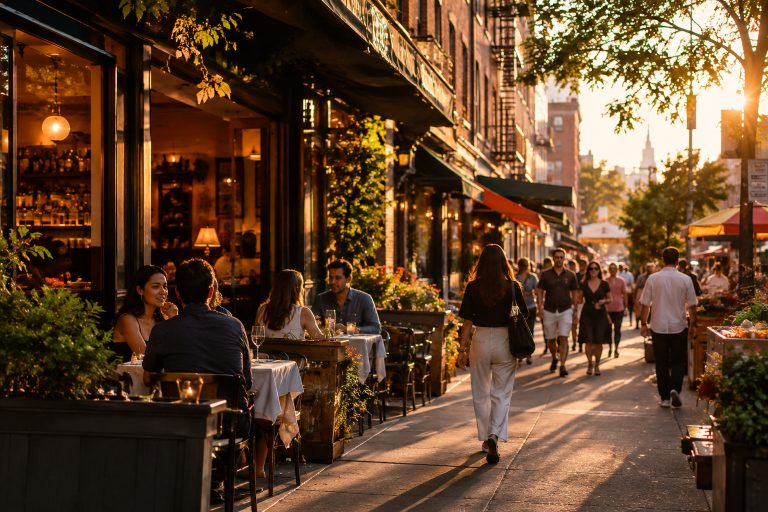
A great food day in New York City, New York, is rarely about checking off the most famous places. It is about settling into one area, noticing what is happening on the blocks between meals, and giving yourself enough time to enjoy the experience. A guide to the best restaurants in New York can be useful for ideas, but the strongest itinerary starts by deciding where you want to spend the day. New York rewards travelers who plan locally. A route built around one neighborhood can leave room for storefront browsing, a park bench, a gallery, a museum, or a spontaneous bakery stop. It also prevents the familiar mistake of spending more time in transit than at the table.
Why Neighborhood-Based Dining Works
Restaurants may look close together on a city map, but avenues are long, sidewalks are crowded, and a cross-town subway transfer can disrupt the pace of a day. Staying within one main area creates a more relaxed rhythm. Rather than racing from breakfast in one borough to lunch in another and dinner back in Manhattan, you can explore one community in greater detail. Choose a neighborhood that fits both your appetite and your plans. Consider your hotel or starting point, preferred cuisine, budget, group size, weather, and evening destination. Pick a nearby backup area as well, ideally one reachable on foot or by a short train ride, in case wait times or reservations change.
Build the Day Around One Anchor Meal
Your anchor meal is the part of the itinerary that matters most. It might be a celebratory dinner, a difficult reservation, a relaxed lunch with friends, or a tasting menu you have planned around. Once that choice is set, arrange the rest of the day around it rather than filling every hour first.
Once that choice is set, arrange the rest of the day around it rather than filling every hour first.
- Select the meal you most want to experience.
- Identify the closest practical subway station or arrival point.
- Add one lighter stop before or after the meal.
- Schedule a non-food break, such as a walk, market, park, shop, or museum.
- Keep one casual backup within a short walk.
One fixed booking and several flexible choices usually work better than a rigid schedule with six planned stops. If a line is long or a meal is more filling than expected, the day can still adapt without feeling like a failure.
Use a Comfortable Meal Rhythm
Most visitors do well with three or four meaningful food moments rather than constant eating. Start with coffee, tea, fruit, or a pastry. Make lunch a casual counter-service meal or a shareable plate. Leave the afternoon open for a market snack, a drink, or dessert, then slow down for dinner. Sharing is especially useful for groups. It lets everyone sample more while avoiding the problem of arriving at dinner already full. For solo diners, counter seats and bar seating can offer a practical, flexible alternative when a full reservation is unavailable.
Match the Route to the Kind of Day You Want
- Classic New York day: Build around familiar comfort food, then include a sweet finish.
- International food day: Focus on several smaller dishes within one cultural food corridor.
- Date-friendly day: Pair a light lunch with a scenic walk and a reserved dinner.
- Family day: Prioritize easy menus, shorter waits, comfortable seating, and nearby activities.
- Budget day: Use bakeries, markets, food halls, and casual counters, then choose one planned splurge.
- Rainy-day plan: Center the route on indoor food halls, cafés, shops, and museums near subway entrances.
Plan for Walking, Transit, and Spending
Before leaving, check the MTA's planned service changes so a weekend reroute or station work does not derail your route. Allow extra time for stairs, elevator needs, rain, crowded platforms, and the walk between a station and the restaurant. A destination that is technically nearby may still be inconvenient when the weather turns, or your group includes children. Set a practical budget by dividing the day into categories: breakfast or coffee, lunch, dinner, dessert or drinks, plus tax, tip, and one unexpected discovery. A modest morning and midday meal can make room for a more memorable evening. Review the current menus before going, as prices, service charges, and portion sizes can shape the final bill.
Reservations, Lines, and Dietary Needs
Reserve the meal that matters most, particularly for weekends, holidays, or a pre-theater evening. For everything else, favor flexibility. Eat a little earlier or later than peak meal times, ask about a waitlist, consider counter seating, and keep one backup nearby. Long lines can change the mood of an entire day, so changing plans is often the smarter choice. Travelers with dietary needs should choose areas with multiple suitable options rather than relying on one restaurant. Review the current menu, confirm serious allergies directly with staff, and avoid assuming a dish is safe based solely on its name. For a broader context on the city's food access and equity work, New York City's food policy resources outline initiatives connected to health, sustainability, and access across the five boroughs.
A Flexible One-Day Template
- Morning: Have a light breakfast near your starting point.
- Late morning: Walk the neighborhood or visit a nearby attraction.
- Lunch: Choose a filling but shareable casual meal.
- Afternoon: Leave room for coffee, dessert, shopping, or a museum.
- Early evening: Return to the dinner area before you are rushed.
- Dinner: Enjoy the anchor reservation or move confidently to your backup.
Common Questions
How many food stops should a day include?
For most people, three or four is enough. The right number depends on portion sizes, wait times, walking distance, and whether dinner is the main event.
Should every meal be reserved?
No. Reserve the priority meal, then preserve at least one open period for a walk-in meal or an unexpected local find.
Is Manhattan better than the outer boroughs for food?
Neither is automatically better. Manhattan may fit a dense sightseeing day, while Brooklyn, Queens, the Bronx, or Staten Island can reward visitors who give a single borough enough time to be the focus.
Conclusion
The best New York City food itinerary is not a race between famous addresses. Choose one neighborhood, center the day on one memorable meal, add a few nearby possibilities, and leave space to enjoy the streets between bites. A well-planned itinerary should balance must-try restaurants with casual stops, cafés, bakeries, or local spots that fit naturally into the day. Consider travel time, meal schedules, and the type of experience you want rather than trying to visit as many places as possible. This approach makes it easier to discover different flavors without feeling rushed. With a little planning and room for flexibility, you can enjoy New York City’s diverse food scene while still having time to explore the neighborhoods, sights, and atmosphere that make each dining experience more memorable.