There’s a particular kind of frustration that comes from standing in your own kitchen, trying to cook a meal, and spending more time hunting for the right pan or digging through cluttered drawers than actually cooking. Sound familiar? The problem almost never comes down to skill or enthusiasm — it comes down to organization. A well-organized kitchen doesn’t just look good. It fundamentally changes how cooking feels and how often you actually do it.
Let’s sort this out.
1. Start With a Ruthless Declutter
Before Organizing Anything — Edit Everything
The single biggest mistake people make with kitchen organization is trying to organize everything they currently own. But if half of what you own doesn’t belong or isn’t being used, you’re just arranging clutter more neatly.
Pull everything out of your cabinets, drawers, and countertops. Every gadget, every utensil, every dusty appliance you got as a gift in 2018 and have never touched. Ask yourself honestly — do I actually use this? When was the last time? If something hasn’t earned its kitchen real estate in the past year, it probably doesn’t belong there.
Less stuff means more space, less confusion, and faster cooking. Every single time.
2. Organize Around How You Actually Cook
Your Kitchen Should Work for You — Not the Other Way Around
The most functional kitchen organization is built around your actual cooking habits — not Pinterest aesthetics or generic advice. Think about what you cook most often and organize accordingly.
- Keep everyday items at eye level and within easy reach
- Store things near where you use them — cutting boards near the prep area, pots near the stove, coffee mugs near the coffee maker
- Put rarely used items higher up or in harder-to-reach spaces
This sounds obvious — but most kitchens aren’t organized this way. Most are organized based on how things were placed when someone first moved in and never thoughtfully reconsidered since.
3. Zone Your Kitchen Intentionally
One of the most effective kitchen organization strategies is creating distinct zones — dedicated areas for specific tasks. Think of it like setting up workstations.
Common Kitchen Zones
- Prep zone — Near your main counter space. Store knives, cutting boards, peelers, and graters here.
- Cooking zone — Around your stove. Pots, pans, spatulas, wooden spoons, and cooking oils live here.
- Baking zone — If you bake regularly, group your mixing bowls, measuring cups, baking sheets, and flour in one dedicated area.
- Coffee and breakfast zone — Mugs, coffee maker, toaster, and cereals all together near an outlet.
- Cleaning zone — Dish soap, sponges, and cleaning supplies under or near the sink.
When everything has a logical zone, your brain stops spending energy figuring out where things are and starts spending it on actually cooking.
4. Make the Most of Your Cabinet Space
When planning a kitchen refresh, unfinished cabinets can offer a flexible option for homeowners who want to customize the finish while improving available storage.
Smart Cabinet Solutions
- Stackable shelves and risers — Double your usable shelf space instantly by stacking dishes and bowls on risers
- Door organizers — The inside of cabinet doors is valuable real estate. Use it for spice racks, cutting board holders, or cleaning supply organizers
- Pull-out drawer inserts — Deep lower cabinets are notorious black holes for pots and pans. Pull-out inserts make everything visible and accessible
- Pan organizers and vertical dividers — Store baking sheets, cutting boards, and pan lids vertically rather than stacking them horizontally
5. Tame the Spice Situation
Spices deserve their own section because disorganized spices cause a genuinely disproportionate amount of kitchen frustration. Digging through a crowded cabinet of poorly labeled jars while something is burning on the stove is a special kind of chaos.
Simple Fixes That Work
- Drawer spice organizers — Laying spices flat in a drawer with labels on the lids makes finding them instantaneous
- Tiered cabinet risers — If cabinet storage is your preference, a tiered riser puts every jar in clear view
- Alphabetical or category organization — Pick a system and stick to it consistently
- Decant into uniform jars — It takes an afternoon but the payoff in visual clarity and ease of use is enormous
While you’re at it — check expiration dates. Spices lose potency over time, and half of most people’s spice collections are well past their prime.
6. Conquer Drawer Chaos
Kitchen drawers have a mysterious ability to become chaotic almost immediately regardless of how well-organized they start. The solution is simple but often overlooked — drawer dividers and inserts that create fixed homes for specific items.
Dedicate drawers to specific purposes rather than mixing everything together. A utensil drawer, a tools drawer, a wraps and bags drawer — each one with dividers keeping things in their assigned spots. The moment everything has a specific home, the drawer stays organized almost automatically.
7. Clear the Countertops
Countertop clutter is one of the biggest obstacles to easy, enjoyable cooking. Every unnecessary item on your counter is taking up both physical and mental space.
The rule of thumb is simple — only things you use every single day earn permanent counter space. Coffee maker, toaster, knife block — those qualify for most people. Everything else should find a home inside a cabinet and come out only when needed.
Clear counters mean more prep space, easier cleaning, and a kitchen that feels calm rather than chaotic before you’ve even started cooking.
8. Label Everything Worth Labeling
Labels seem like overkill until you’ve lived with them for a week — and then going back feels unthinkable. Label your pantry containers, your spice jars, your freezer bags, your storage baskets. Even your family members benefit from knowing exactly where things go and where to put them back.
A simple label maker is one of the best small investments a kitchen organizer can make. It makes everything look tidier, reduces confusion, and helps maintain organization over time rather than letting things gradually drift back to chaos.
9. Create a Functional Pantry System
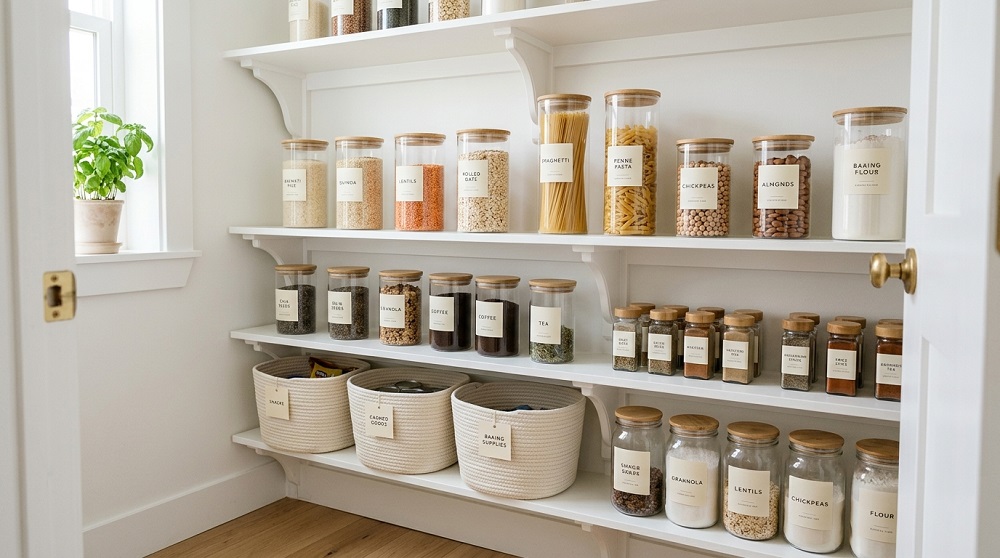
A well-organized pantry makes meal planning easier, reduces food waste, and saves real money by eliminating duplicate purchases of things you already had but couldn’t see.
Pantry Organization Principles
- First in, first out — Newer items go behind older ones so nothing gets forgotten and expires at the back
- Clear containers — Decanting dry goods like pasta, rice, and cereal into clear containers makes inventory obvious at a glance
- Group by category — Canned goods together, baking supplies together, snacks together, breakfast items together
- Designate a “use soon” spot — A visible space for items approaching their expiration date ensures they actually get used
10. Maintain It — That’s the Real Secret
Organization isn’t a one-time project — it’s an ongoing habit. The most beautifully organized kitchen in the world falls apart without consistent maintenance.
Build these small habits into your routine:
- Ten-minute weekly reset — Spend ten minutes each week putting things back where they belong and addressing any small disorder before it compounds
- One in, one out rule — Before buying a new kitchen gadget or appliance, remove something you no longer use
- Clean as you go — Wiping surfaces and returning items to their homes during cooking prevents post-meal cleanup from feeling overwhelming
Final Thoughts
A well-organized kitchen isn’t a luxury — it’s a game changer for how often you cook, how much you enjoy it, and how efficiently you move through your daily routine. When everything has a place and that place makes intuitive sense, cooking transforms from a stressful chore into something that actually feels good.
Declutter first. Organize around your habits. Maintain it consistently.
Your kitchen — and your cooking — will never be the same.