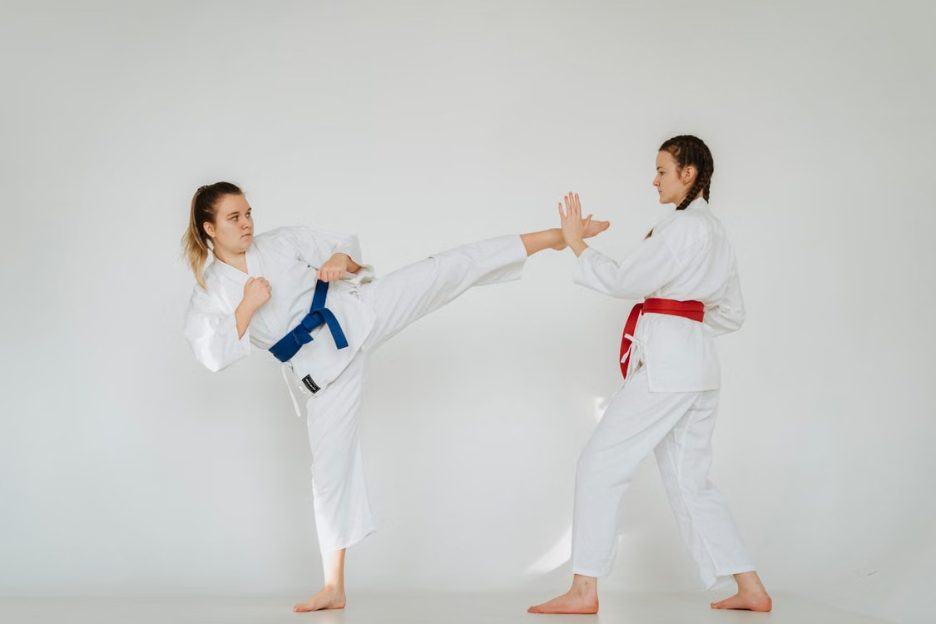
Running a martial arts school is about much more than teaching punches, kicks, throws, and defensive techniques. It requires establishing a conducive environment where discipline, self-confidence, physical fitness, and respect are developed.
Nonetheless, as training sessions are physically demanding and involve physical contact, accidents are inevitable despite the precautions the trainer may put in place. There is always a possibility of injury to one of the learners, or even an accident involving a visitor, not to mention the potential for equipment damage.
This is where martial arts group insurance comes in handy, particularly when a school needs a martial arts club group policy that can reflect the activities and risks associated with its members.
1. Protecting Schools From Liability Claims
Among the key roles that martial arts group insurance plays is assisting schools in minimizing liability risks. Given that students engage in physical activities, there may be injuries resulting from sparring, practice sessions, demonstrations, conditioning, and moving around in the facility.
Even if such an event occurs through no fault of the school, there might still be a lawsuit alleging a failure to maintain a safe environment. In this respect, group liability insurance for martial arts organizations can help schools manage potential liabilities arising from bodily injury and property damage.
Depending on the plan, liability coverage may also cover employees and volunteers operating the facility. Consequently, a sudden occurrence need not automatically translate into an immense financial strain for the company.
2. Supporting Student Accident Protection
Although liability protection is essential, martial arts schools can also benefit from coverage designed specifically for participant accidents. After all, students are at the center of every class, and their physical participation creates risks that differ from those associated with many other businesses.
Participant accident coverage can help address eligible medical expenses resulting from injuries sustained during training. Consequently, schools may have an additional layer of protection when a participant is injured during an activity. This can be particularly valuable for schools that work with large numbers of students, children, beginners, or participants across different martial arts disciplines.
Moreover, having appropriate accident protection can demonstrate that a school takes student welfare seriously. While insurance does not replace sound safety procedures, it can complement them by helping the school respond financially in the event of an unexpected injury.
3. Covering Instructors and Staff
Instructors play a central role in martial arts schools because they teach techniques, supervise students, and maintain an orderly training environment. However, their involvement may also mean they are included in a liability claim following an accident.
For this reason, schools should understand exactly who is included under their insurance policy. Employees and volunteers may be covered under certain arrangements, while independent contractors may require separate protection or an additional policy endorsement. The distinction is important because assuming that every instructor is automatically insured could create an unexpected coverage gap.
Furthermore, schools that use several instructors should regularly review their staffing arrangements and insurance requirements. By doing so, owners can identify potential gaps before an incident occurs rather than discovering them when a claim is already being made.
4. Protecting Martial Arts Equipment
For many martial arts schools, specialized equipment may be necessary to conduct training classes properly. Equipment such as mats, pads, heavy bags, protective gear, training equipment, and mirrors might be quite expensive. However, it might also be vulnerable to theft, fire, water damage, bad weather, and other unforeseen circumstances.
Thus, having special coverage for equipment might be an additional way to ensure financial security if such coverage is included in the insurance policy. Moreover, it is important to note that one should not assume there is coverage for equipment simply because one has general liability insurance. One needs to examine their policy carefully.
5. Supporting Camps, Tournaments, and Off-Site Activities
Not all martial arts dojos limit themselves to operating only within the confines of their training facilities. Dojos organize demonstrations, competitions, camps, fundraising efforts, parades, seminars, and many other off-site events. Off-site events pose further risk since the dojos might be operating in an unfamiliar environment using facilities that they do not own.
Accordingly, the insurance coverage will have to consider off-site events. With some policies, dojos will be able to cover off-site events such as camps, tournaments, demonstrations, and many others.
This flexibility can be particularly valuable as a school grows. If the organization operates several studios, multi-location martial arts insurance may provide a way to structure coverage for those locations under one insurance arrangement, depending on the insurer and policy terms.
Rather than limiting its activities due to uncertainty about insurance, the business can assess each event and determine whether additional protection is appropriate.
6. Helping Schools Meet Facility Requirements
Insurance can also help martial arts schools collaborate better with facility owners, community facilities, event planners, and others. In many cases, the facility owner will require insurance coverage before granting access to their facility.
An insurance certificate can confirm that insurance is in place. Additionally, some insurance policies allow another party, such as a facility owner, to be named as an additional insured when applicable.
As a martial arts school grows, it may also expand into additional training facilities or open new locations. This can raise an important question for owners: Can multiple martial arts locations be covered under one group policy?
In some cases, multiple locations may be included under one group policy, depending on the insurer, policy structure, and specific activities carried out at each facility. School owners should therefore confirm that every location is properly identified and covered before assuming that one policy applies to all of them.
This means that insurance not only helps manage risks. It can also help a martial arts school find locations, participate in community activities, and develop professional relationships with other organizations that require insurance coverage.
Conclusion
Discipline, trust, and student growth are key ingredients in a successful martial arts school. However, there is always a business aspect that needs to take into account the risks that may arise. Injuries, property damage, liabilities, loss of equipment, or conducting classes outside the premises may lead to difficult situations that are hard to deal with without proper insurance.
This is where martial arts group insurance plays a very important role in the proper management of the business. From liability and participant accident insurance to instructor and equipment insurance, and for particular activities, martial arts group insurance is needed to provide comprehensive protection.