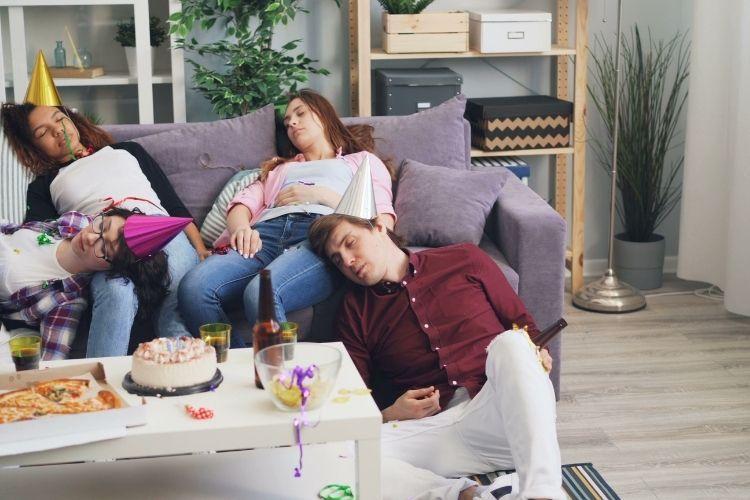
Weddings, proms, milestone birthdays, engagement parties and other big celebrations can take weeks of planning and one very long day of living in the moment. Once the photographs are taken, the music stops, and the outfit finally comes off, the contrast can feel surprisingly sharp.
That day-after feeling doesn’t necessarily mean anything went wrong. Big events often disrupt regular meals, familiar sleep times, quiet moments, and movement. Add travel, hours on your feet, alcohol for some adults and the emotional build-up of a special occasion, and the following day may call for less activity, not more.
A useful post-event reset isn’t a detox or productivity challenge. It is simply a return to basics.
Start With the Basics, Not a Miracle Fix
The morning after a celebration tends to attract quick fixes: extra-strong coffee, “detox” drinks or supplements promising to make you feel normal immediately. There is little reason to overcomplicate it.
If alcohol was part of the evening, the National Institute on Alcohol Abuse and Alcoholism explains that hangover symptoms can involve mild dehydration, disrupted sleep and stomach irritation. Its guidance is straightforward: “There is no magic potion for beating hangovers” (National Institute on Alcohol Abuse and Alcoholism [NIAAA], n.d.). Time matters.
Some adults may already include cannabinoid products in their personal routines where their purchase and use are legal. Products such as 30mg Delta-8 gummies should be approached as intoxicating products, however, not as sleep aids or shortcuts to post-event recovery. The U.S. Food and Drug Administration (FDA) states that Delta-8 THC has psychoactive and intoxicating effects and that Delta-8 products haven’t been evaluated or approved by the agency for safe use (FDA, 2022). Cannabis can also affect reaction time, coordination, and decision-making, all of which are important for safe driving (Centers for Disease Control and Prevention [CDC], 2024c). Anyone who is impaired shouldn’t drive, and edible products should always be stored away from children and pets.
Rehydrate Without Turning It Into a Project
After dancing, traveling, spending hours in a warm venue, or drinking alcohol, water is a sensible place to start. Keep it nearby and drink regularly rather than trying to force down an enormous amount at once.
If you drank alcohol, hydration may help with thirst because alcohol increases urination and can contribute to mild dehydration. Keep expectations realistic, though. NIAAA notes that research hasn’t found a relationship between the severity of electrolyte disturbances and hangover severity, and added electrolytes haven’t been shown to reduce the severity of a hangover (NIAAA, n.d.).
In other words, water is useful. It just isn’t a reset button.
Eat Something Familiar and Satisfying
A late-night event can throw meal timing off completely. You may have eaten early, picked at canapés between conversations, or found yourself hungry again long after the venue closed.
The next day is a good time to return to your normal eating pattern rather than trying to “make up” for what you ate. Choose a meal you genuinely want and can comfortably tolerate. A simple combination of carbohydrates, protein, fruit or vegetables, and fluids may be easier to face than an elaborate wellness recipe when you are tired.
If your stomach feels unsettled after drinking, there is a physical reason for it. Alcohol can irritate the stomach lining and increase acid release, which may contribute to nausea and stomach discomfort (NIAAA, n.d.).
There is no need to turn breakfast into a punishment or a cure. Think familiar, manageable and satisfying.
Protect the Next Night’s Sleep
One late night doesn’t need to become an entire weekend of disrupted sleep.
The CDC recommends seven or more hours of sleep a day for adults ages 18 to 60 and identifies good sleep as important for both physical health and emotional well-being (CDC, 2024a). After an event, returning to a familiar sleep schedule can be more useful than trying to compensate in one enormous stretch.
Get some natural light after waking and move back toward your regular bedtime where possible. CDC guidance also recommends keeping consistent sleep and wake times and getting enough natural light, particularly earlier in the day (CDC, 2024b).
A nap may sound wonderful, and for some people it will be. Consider how naps usually affect you, though. If sleeping for several hours in the afternoon leaves you staring at the ceiling at midnight, a quieter day followed by your normal bedtime may make more sense.
Lower the Volume on Your Day
Big celebrations are stimulating. There are conversations, photographs, music, travel, schedules, and dozens of small decisions. Your reset day doesn’t have to match that energy.
Change into comfortable clothes. Take off any makeup you were too tired to remove properly the night before. Put your phone on charge somewhere other than your hand. Unpack the things you need, but leave the full suitcase overhaul until you have more energy.
If your mind still feels busy, a familiar relaxation practice may help you shift gears. The National Center for Complementary and Integrative Health identifies techniques including deep breathing, guided imagery and progressive relaxation as approaches intended to produce the body’s relaxation response (National Center for Complementary and Integrative Health [NCCIH], 2021).
You don’t need an elaborate ritual. Ten quiet minutes with fewer demands may be more restorative than turning relaxation into another task on your list.
Move, but Keep the Bar Low
If you feel well, a short walk or a little gentle stretching can mark the transition back to ordinary life. This isn’t the day to punish yourself with a hard workout because you ate dessert, stayed up late, or missed the gym.
Pay attention to how you actually feel. If you are dizzy, nauseated, unusually weak, or still impaired, strenuous exercise can wait.
That same judgment matters for everyday responsibilities. NIAAA notes that hangovers can affect attention, decision-making, and muscle coordination, potentially interfering with activities such as driving or operating machinery (NIAAA, n.d.).
A reset should leave you feeling cared for, not corrected.
Make Room for the Emotional Comedown
Physical tiredness is only part of the picture. After months of dress fittings, group chats, appointments, planning, and anticipation, a major celebration can leave a sudden blank space in the calendar.
You don’t have to fill it immediately.
Save a few favorite photographs. Message someone who made the day special. Write down a funny detail or small moment you don’t want to forget. Then allow the event to become a memory rather than another project to manage.
If parts of the celebration were stressful, it can also help to postpone the full post-mortem. Exhaustion has a way of making small problems feel much bigger. Give yourself time to return to your usual routine before replaying every awkward conversation or minor mishap.
The shoes that pinched, the speech that ran long, or the photograph that didn’t quite work can usually wait until tomorrow.
Conclusion: Give Yourself a Softer Landing
The best post-event reset is rarely glamorous. It looks more like water on the bedside table, a decent meal, comfortable clothes, a short walk, and an earlier night.
After a wedding, prom, or party, there can be pressure to bounce straight back into work, errands and social plans. A more useful approach is to notice what the celebration temporarily displaced and restore those basics one by one.
Hydrate. Eat normally. Lower the stimulation. Avoid driving if you are impaired. Make sleep a priority. Give your body and mind a little room to return to their usual rhythm.
Most importantly, resist turning recovery into another thing you have to achieve. A memorable celebration deserves a softer landing.
References
Centers for Disease Control and Prevention. (2024a, May 15). About sleep. Sleep.
Centers for Disease Control and Prevention. (2024b, May 15). About sleep and your heart health. Heart Disease.
Centers for Disease Control and Prevention. (2024c, February 22). Cannabis and driving. Cannabis and Public Health.
National Center for Complementary and Integrative Health. (2021, June). Relaxation techniques: What you need to know.
National Institute on Alcohol Abuse and Alcoholism. (n.d.). Hangovers. Retrieved September 10, 2026.
U.S. Food and Drug Administration. (2022, May 4). 5 things to know about Delta-8 tetrahydrocannabinol – Delta-8 THC.