A walking pad is a practical home gym choice when you want convenient walking workouts without giving permanent floor space to a full-size treadmill. It works especially well for daily steps, easy cardio, warm-ups, and recovery walks. However, it is not the best substitute for a running treadmill, and models without handrails may not suit people who need extra balance support.
Why a Walking Pad Works Well in a Home Gym
It Adds Cardio Without Taking Over the Room
A rack, bench, weights, and open exercise area can fill a home gym quickly. A compact walking pad adds a dedicated place for cardio while using less floor space than most full-size treadmills. Many models can also roll under a bed, sofa, or raised cabinet after use.
It Complements Strength Training
A walking pad can make the cardio part of a home routine easier to complete. You might walk for five to ten minutes before lifting, add a relaxed session after strength work, or use it for longer low-to-moderate-intensity workouts on non-lifting days. Because speed is easy to control, you can adjust the session to match your energy and recovery.
It Makes Short Sessions Easier to Fit Into the Day
Home equipment removes travel time, weather concerns, and gym hours from the decision to exercise. That can make a ten-minute walk realistic before breakfast, between meetings, or while waiting for dinner. Several short sessions can be easier to maintain than one long workout.
How Much Space Does a Walking Pad Need?
Do not judge space from the product photo alone. You need room for the machine, safe access, normal walking movement, the power cord, and storage. The exact clearance depends on the model and its manual, so there is no single measurement that works for every walking pad.
|
What to measure |
Why it matters |
|
Full machine length and width |
Confirms that the walking pad fits while operating |
|
Clear area around the deck |
Keeps weights, benches, walls, and furniture away from your stride |
|
Walking surface length and width |
Affects how naturally and confidently you can walk |
|
Storage height and footprint |
Confirms that the machine fits under or beside furniture |
|
Route to the storage spot |
Makes sure wheels, doorways, and turns allow easy movement |
|
Distance to a suitable outlet |
Prevents the cord from crossing a walkway or stretching tightly |
Measure the Operating Area First
Mark the published machine dimensions on the floor with painter’s tape. Then stand inside that outline and check whether you can step on and off without hitting a bench, wall, dumbbell rack, or other equipment. Follow the manufacturer’s required clearances because the empty area around the machine is part of the operating space.
Check the Belt Size, Not Only the Overall Size
The overall dimensions tell you whether the machine fits the room. The walking surface tells you whether it fits your stride. A very compact model may feel restrictive to a taller user, a person with a longer stride, or anyone who wants to walk near the top of the machine’s speed range.
Plan the Storage Route Before Buying
Storage only helps when you can use it without a struggle. Check the machine’s weight, wheel position, handle points, and approved storage orientation. Measure narrow doorways and furniture gaps along the route. A walking pad that fits under a sofa is not convenient if the sofa’s frame blocks the wheels or the machine is too heavy for the intended user to move regularly.
Who Is a Walking Pad Best For?
A walking pad is a strong match for people who want walking to be a regular part of a broader home fitness plan. It is particularly useful for beginners, strength trainees who want convenient light cardio, remote workers trying to move more, and households with limited room for permanent equipment.
A different machine may be better if you want to run, train for races, perform fast intervals, or use steep grades at higher speeds. People who need fixed handrails or a large deck should also compare full-size options.
What to Check Before Buying
Start with intended use. Decide whether the machine is for easy walking, brisk fitness sessions, desk use, or shared household workouts. Then compare specifications that affect that use:
- Speed range and whether the machine is approved for walking only
- Usable belt length and width
- Maximum user weight with a reasonable capacity margin
- Handrail and emergency-stop design
- Incline range, if incline walking matters to you
- Machine weight, wheels, and approved storage position
- Recommended continuous runtime and cool-down instructions
- Warranty, return policy, maintenance, and replacement support
A Home-Focused Walking Pad to Consider
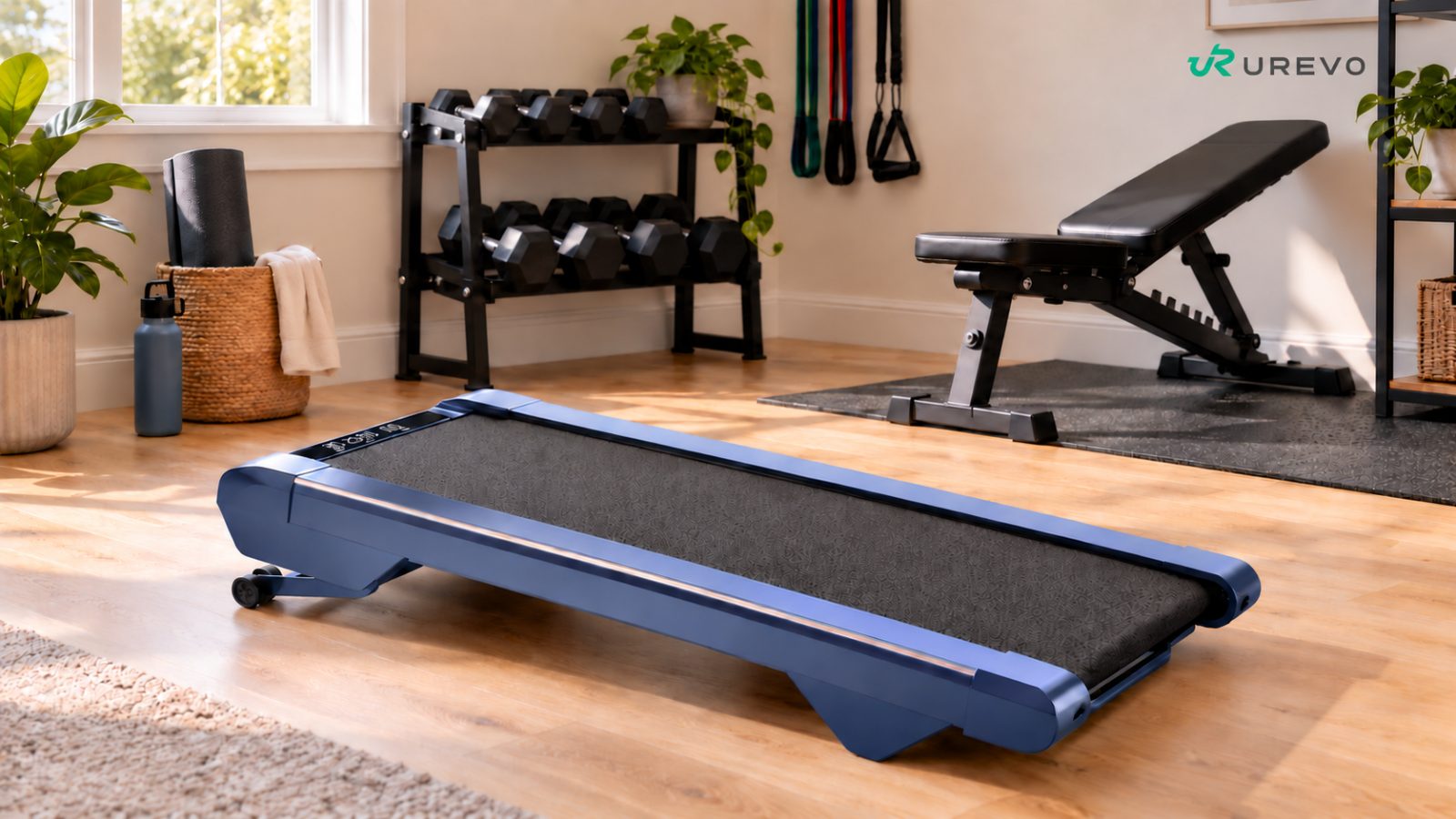
If walking-focused cardio matches your home gym, the UREVO CyberPad for Home Smart Treadmill is designed for this setting. Its listed overall size is 47.6 by 23.6 inches, with a 43.3-by-16.5-inch walking area. It offers speeds from 0.6 to 4.0 MPH, up to 14% incline, and a listed 350-pound maximum user weight.
Those specifications make it a better fit for walking and incline walking than for running. Before choosing it, measure the complete operating area, confirm that the belt fits your stride, and make sure the 70.6-pound machine can move along your planned storage route.
Final Thoughts
A walking pad can be an excellent home gym addition when your goal is convenient indoor walking in a limited space. Its main value is not that it replaces every cardio machine. It gives you a simple way to add warm-ups, easy aerobic work, recovery sessions, and more daily movement around strength training.
Choose one only after checking the operating footprint, walking surface, storage route, flooring, noise, power setup, and intended speed. If those details match your room and routine, a walking pad is likely to be used more consistently than a larger machine that does not fit your space or preferred workouts.