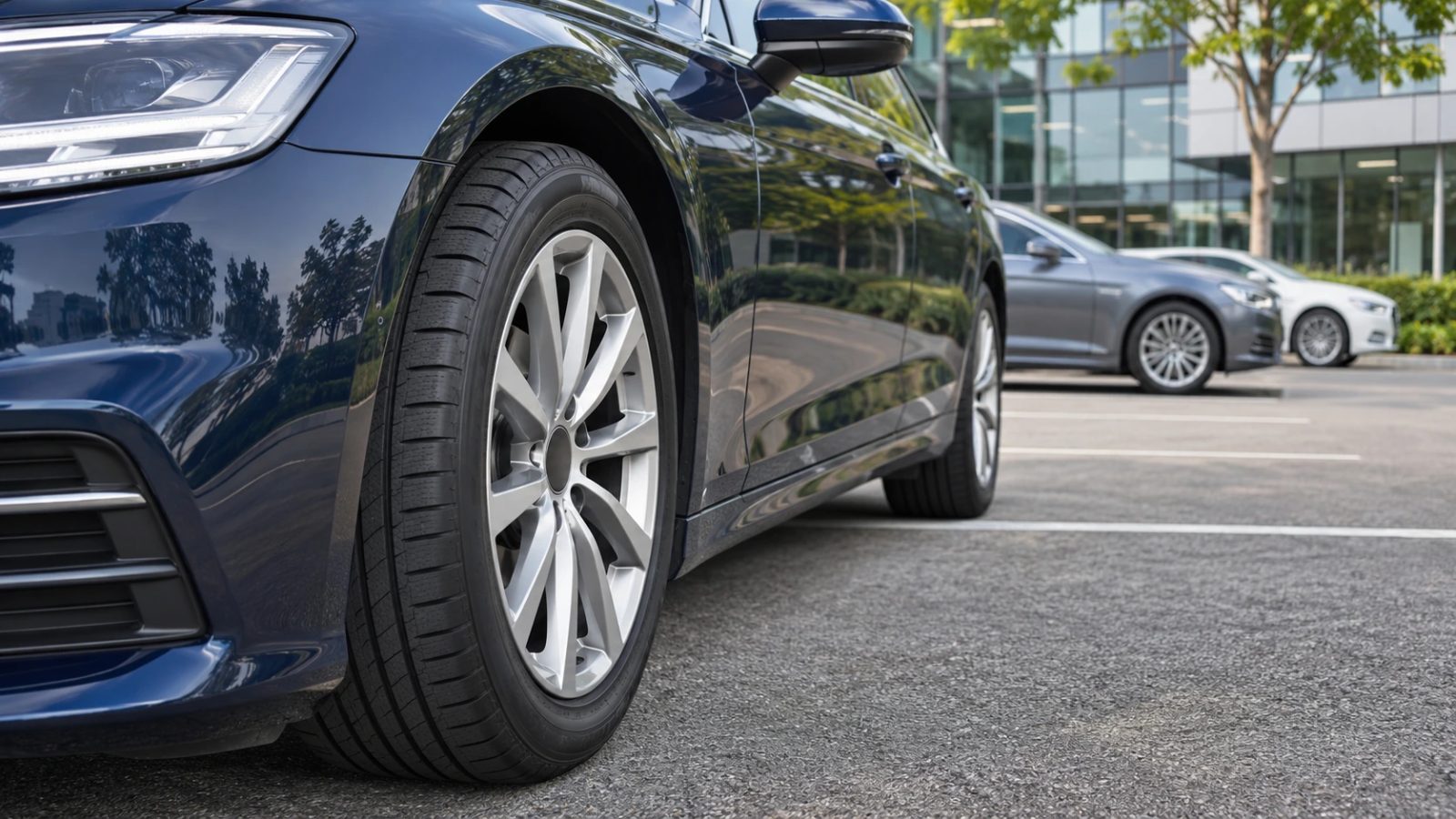
Run flat tires can give a company-car driver limited mobility after a loss of tire pressure. Whether they are worth buying depends on vehicle compatibility, the routes employees travel, access to replacement stock and the actual cost of interruptions. The useful business question is not whether the technology sounds reassuring. It is which disruption it can realistically help the company manage.
For a business with passenger cars used for client visits, site inspections or airport transfers, a tire incident involves more than a workshop invoice. Someone must reorganize appointments, arrange assistance and decide whether another vehicle is needed. Run-flat capability may change that response, but it does not make the vehicle puncture-proof or remove the need for service.
The strongest purchasing decision connects the tire specification with an operating plan and a cost comparison. A product feature alone cannot establish the return on investment.
What does run-flat capability actually provide?
Run-flat systems are designed to support continued travel after pressure loss within specified conditions. Self-supporting designs use reinforced sidewalls; other systems use a support ring. The practical purpose is limited onward mobility, rather than normal use of a damaged tire.
The distinction matters when writing a company policy. A driver should not interpret a pressure warning as permission to finish a sales round or continue to the original destination. The appropriate response follows the vehicle and tire instructions, the condition of the vehicle and the availability of a suitable place to stop or obtain assistance.
Speed and distance allowances are not interchangeable between products. A figure quoted for another manufacturer's tire is not evidence of the allowance for the tire fitted to your car. Record the applicable instructions during procurement, before an employee has to find them during an incident.
This assessment concerns passenger cars. Do not transfer the same product assumptions to delivery vans, buses or heavy vehicles simply because they also belong to a business fleet.
Start with the vehicle, not the product label
Before comparing prices, establish whether a run-flat fitment is appropriate for the exact vehicle and wheels. Confirm size, load and speed requirements, the approved construction and the tire-pressure monitoring arrangements with the vehicle documentation and qualified supplier.
A functioning tire pressure monitoring system, or TPMS, matters because a run-flat tire may retain a relatively normal shape after pressure loss. The driver needs a reliable warning and clear instructions for responding to it. Appearance is not a substitute for pressure monitoring.
Giti's GitiControl P10 product page identifies RunFlat among its listed characteristics. A business considering run flat tires should still obtain confirmation of the exact P10 version, size, local availability and approved vehicle application. The model page is a starting point for that conversation, not a fitment certificate or a complete emergency-driving instruction.
Ask the supplier to put the proposed specification on the quotation. If the company already operates cars supplied with run-flat equipment, replacing that equipment is a different decision from converting cars originally supplied with conventional tires. Neither should be reduced to matching the wheel diameter.
Map the interruption the business wants to manage
Begin with actual incidents. Look at where the vehicle stopped, what assistance was needed and how long the employee and vehicle were unavailable. Separate waiting for recovery from waiting for a replacement tire. They are different problems and may need different solutions.
An urban pool car operating near a contracted tire center has a different support requirement from a car traveling between widely separated client sites. Limited mobility may be useful when an appropriate service location can be reached within the fitted product's restrictions. It cannot bridge an unlimited gap in the support network.
There is also a difference between moving to a suitable stopping location and keeping an appointment. The purchasing case should not depend on employees stretching a speed or distance limit to protect a schedule. If timely arrival is critical, a backup vehicle or reassignment procedure still belongs in the plan.
This route assessment is an internal management exercise, not a claim that run-flat technology prevents every tow or reduces crashes by a particular percentage.
Compare the whole response cost
Request comparable fitted quotations for options that meet the vehicle's requirements. Include fitting, balancing, any monitoring-system work and applicable taxes. Keep the same purchase quantities and comparison period on both sides.
Then examine the costs the technology might change:
- Recovery or roadside-assistance charges not already covered.
- Employee time lost while arranging and waiting for assistance.
- Temporary transport or replacement-vehicle costs.
- Repair or replacement following the incident.
- Additional stock or service arrangements needed to support the chosen fitment.
Avoid counting the same loss twice. An employee's paid time and the full revenue from a delayed appointment are not automatically separate recoverable costs. Finance should decide which items represent additional expenditure, lost contribution or simply a rescheduled activity.
Also avoid assuming that the quoted purchase difference is the only difference. Ask each supplier about repair eligibility, inspection requirements and replacement availability. Those answers belong in the comparison even when no reliable monetary estimate is available yet.
A worked example without invented savings
Consider a hypothetical business evaluating one replacement cycle for 20 compatible company cars. Assume its quotes show an additional $240 per car for the proposed run-flat option, including comparable fitting. The extra purchase cost is therefore $4,800. These figures illustrate the calculation; they are not current market prices or a Giti quotation.
Suppose the business has also recorded six pressure-loss incidents over a comparable period, each involving $180 in potentially avoidable recovery and waiting costs. That creates a $1,080 cost pool to investigate. It is not a saving: some incidents may still require recovery, and other costs may remain unchanged.
Even if the entire $1,080 disappeared, it would not cover the $4,800 purchase difference. The business would need another $3,720 in evidenced benefits or cost reductions to reach that simplified break-even point, before accounting for any additional costs.
The useful next step is to inspect those six incident records. Which involved a car and tire combination that could have continued under approved conditions? Was a suitable service location reachable? Would replacement stock have been available? This turns an attractive feature into a testable purchasing hypothesis rather than an assumed financial result.
Replacement stock and tire history belong in the plan
Ask the service provider what happens after the car reaches the workshop. Can it inspect the specific run-flat fitment, apply the relevant manufacturer's repair policy and source a suitable replacement? A shorter roadside interruption can still be followed by workshop downtime.
Repairability is not a universal yes or no. It depends on the manufacturer's policy, the damage and the tire's operating history. A tire that looks serviceable externally may need removal and internal inspection before a decision. Procurement should establish the process rather than promise that every puncture can be repaired.
Keep manufacturing identification, installation dates and service records distinct. The tire date code identifies when a tire was manufactured; it does not show when it entered service or prove its present condition. NHTSA advises that aging cannot be detected simply by looking at a tire, and some manufacturers specify age-based replacement recommendations regardless of treadwear.
For cars with low annual mileage or long periods parked, ask how age-related replacement guidance will be monitored alongside wear and damage. Do not treat low mileage, an apparently clean sidewall or favorable storage history as an exemption from the applicable instructions.
Give drivers an incident procedure they can use
Before assigning a car, make sure the driver knows which tire system is fitted, how to recognize the pressure warning and where to find the relevant emergency instructions. Keep the assistance contact accessible without relying on a search during the incident.
The procedure should explain who decides whether recovery is needed, how the driver reports the warning and how the company records any travel after pressure loss. It must not encourage continued driving when damage, vehicle behavior or the manufacturer's instructions require stopping safely and obtaining assistance.
After the event, record the warning, assessment, action and final disposition of the tire. Feed that information back into purchasing decisions. A vehicle being mobile for part of the incident is not the same as being available for the rest of the working day.
Questions buyers should settle before ordering
Can any company car be converted to run-flat tires?
No blanket approval applies. Verify the exact vehicle, wheels, monitoring system and proposed tire specification before purchase. A product label or matching nominal size does not establish compatibility.
Does run-flat capability replace roadside assistance?
No. The permitted onward travel is limited, and some incidents will still require recovery. Keep a suitable assistance arrangement and define what happens when the nearest appropriate service provider cannot be reached.
Does a run-flat tire have to be replaced after every puncture?
Not necessarily, but repair must not be assumed. Follow the relevant manufacturer's policy and a professional assessment of the damage and operating history. Confirm that policy with the supplier before standardizing the fitment.
Make the purchasing decision specific
Run-flat capability can be useful when the approved vehicle fitment, operating routes, service network and driver response work together. It is a weaker business proposition when its expected benefit rests on unverified savings or assumes that limited mobility eliminates downtime.
Before renewing a company-car tire contract, obtain the exact fitment confirmation, comparable fitted quotes and a review of recent pressure-loss incidents. Choose the option whose practical benefits justify its full cost for those vehicles. The right outcome may be a targeted fitment for particular cars, rather than a single tire policy imposed across the entire fleet.