- Start with the fence’s purpose, such as safety, privacy, access, animal containment, or appearance.
- Match the material and layout to the property type, terrain, traffic, and maintenance expectations.
- Wood, metal, vinyl, and chain-link each offer distinct advantages for Treasure Valley properties.
- Specialty projects, including pool fences, dog enclosures, handrails, pergolas, and dumpster screens, require more detailed work than a standard boundary fence.
- Gates, drainage, local requirements, and long-term upkeep should be part of the plan before installation begins.
Why A Standard Fence Is Not Always Enough
A basic fence can mark a property line, but it may not address the challenges posed by a sloped backyard, a busy commercial service area, a pool, or a dog that digs. For property-specific planning, Fence Unlimited offers fence and lumber solutions through its specialty fencing services for residential, agricultural, and commercial projects. The locally owned Kuna company designs and installs custom features such as pool fences, dog enclosures, handrails, pergolas, gates, and service-area screens across the Treasure Valley, including Boise, Meridian, Eagle, Nampa, Caldwell, and Star.
The right specialty fence combines functionality, safe access, visual appeal, and practical maintenance. A fenced yard with a walk-through gate may work well for one household, while a rural property may need wider equipment access, durable posts, and a layout that follows uneven ground.
Start With The Fence’s Main Job
Before comparing styles, write down what the fence must accomplish. A clear primary goal makes later choices about height, material, gate hardware, and layout much easier.
- Safety: Restrict access to a pool, retaining wall, steps, ramp, or other hazard.
- Containment: Keep dogs, livestock, or equipment within a defined area.
- Privacy: Screen a patio, backyard, storage space, or neighboring view.
- Access: Create convenient entry for people, vehicles, mowers, trailers, or farm equipment.
- Structure: Add a pergola, arbor, trellis, or decorative entry feature to an outdoor space.
Match The Design To The Property Type
Residential Properties
Homes in Kuna and nearby Treasure Valley communities often need a balance of appearance and everyday usability. Consider pool barriers, privacy panels, pet runs, deck rails, and gates that are easy to use yet provide reliable closure. For a yard with changing grades, a racked or stepped fence layout may be more suitable than forcing level panels across a slope.
Agricultural Properties
Ranches and small-acreage properties may need longer fence runs, animal containment, and wider gates for regular equipment traffic. Fence placement should account for terrain, irrigation, traffic patterns, and the practical need to reach fields, barns, or storage areas without creating bottlenecks.
Commercial Properties
Commercial fencing often supports site security, customer access, and a clean exterior. Dumpster enclosures, lockable gates, handrails, and service-area screens should be planned to support daily operations, collection access, and the safe movement of employees and visitors through the site.
Compare Specialty Fence Materials
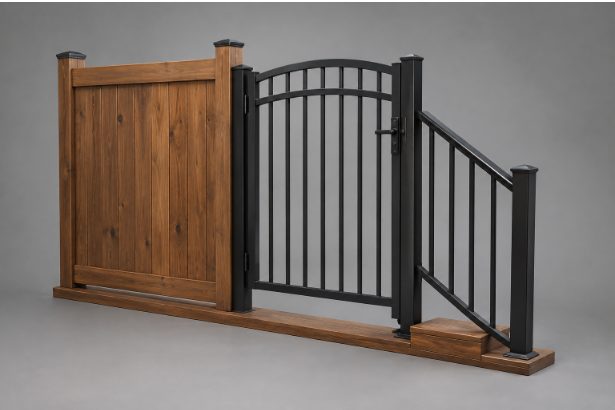
- Wood: A versatile choice for privacy fencing, custom screens, pergolas, and arbors. It offers a warm, traditional look but benefits from periodic inspection and finish maintenance.
- Metal: Well suited to handrails, gates, security barriers, and decorative fencing. Coated metal can provide an open look while maintaining strength and definition.
- Vinyl: Commonly selected for residential privacy and low-maintenance fencing because it does not require routine painting or staining. Review available styles and replacement options before choosing a system.
- Chain link: A practical option for dog areas, utility spaces, farms, and larger boundaries where airflow and visibility are useful. Privacy slats, coatings, and gates can adapt its appearance and function.
Specialty Applications That Need Extra Planning
Pool Fences
A pool barrier should create a complete enclosure with dependable gate hardware and clear rules for access. The Consumer Product Safety Commission’s pool barrier guidance explains how barriers, gates, covers, and alarms can work as layers of protection. A fence does not replace attentive adult supervision, and property owners should confirm applicable local requirements before construction.
Dog Enclosures
Plan a dog enclosure based on the animal’s size, jumping ability, digging habits, and behavior around gates. The bottom edge matters for dogs that push or dig, while secure latches help prevent accidental openings. A shaded area, water access, and a double-gate entry can make a run more usable when space and budget allow.
Handrails, Pergolas And Service Enclosures
Handrails can provide additional support on stairs, decks, ramps, and uneven walkways. Public-facing and commercial work may be subject to accessibility rules, so review the ADA Standards for Accessible Design and verify project-specific requirements with the appropriate local authority. Pergolas, arbors, and trellises need sound anchoring, drainage planning, and a design that fits expected sun, wind, snow, and plant growth. Dumpster enclosures need enough gate width and clearance for collection and cleaning.
Plan For Kuna Weather, Gates, And Maintenance
Treasure Valley conditions can include strong sun, wind, winter snow, seasonal temperature changes, dry soil, and irrigation near fence lines. Drainage, slope, post depth, coatings, fasteners, and gate alignment all affect long-term performance. Water collecting around posts or a gate that drags on uneven ground can create avoidable maintenance problems.
Because gates are typically the most-used components of a fence system, decide early whether the project needs a walk gate, a double drive gate, a self-closing pool gate, a lockable access point, or an automated entry. Account for swing direction, clearance, slope, vehicle turning space, and any electrical needs before posts are set.
A Practical Specialty Fence Checklist
- Identify the main purpose and any secondary needs.
- Measure fence lines, gates, slopes, trees, utilities, and drainage areas.
- Choose a material based on use, appearance, exposure, and upkeep.
- Review local permits, setbacks, HOA rules, and safety requirements.
- Plan hardware, locks, automation, and service access.
- Ask about cleanup, warranties, replacement parts, and seasonal maintenance.
Choose For The Way Your Property Will Be Used
The best specialty fence is not simply the tallest, least expensive, or most decorative option. It is the one that fits the property’s purpose, layout, daily use, local conditions, and maintenance expectations. Start with a clear list of needs, compare materials honestly, and request a site-specific plan before committing to a final design.