
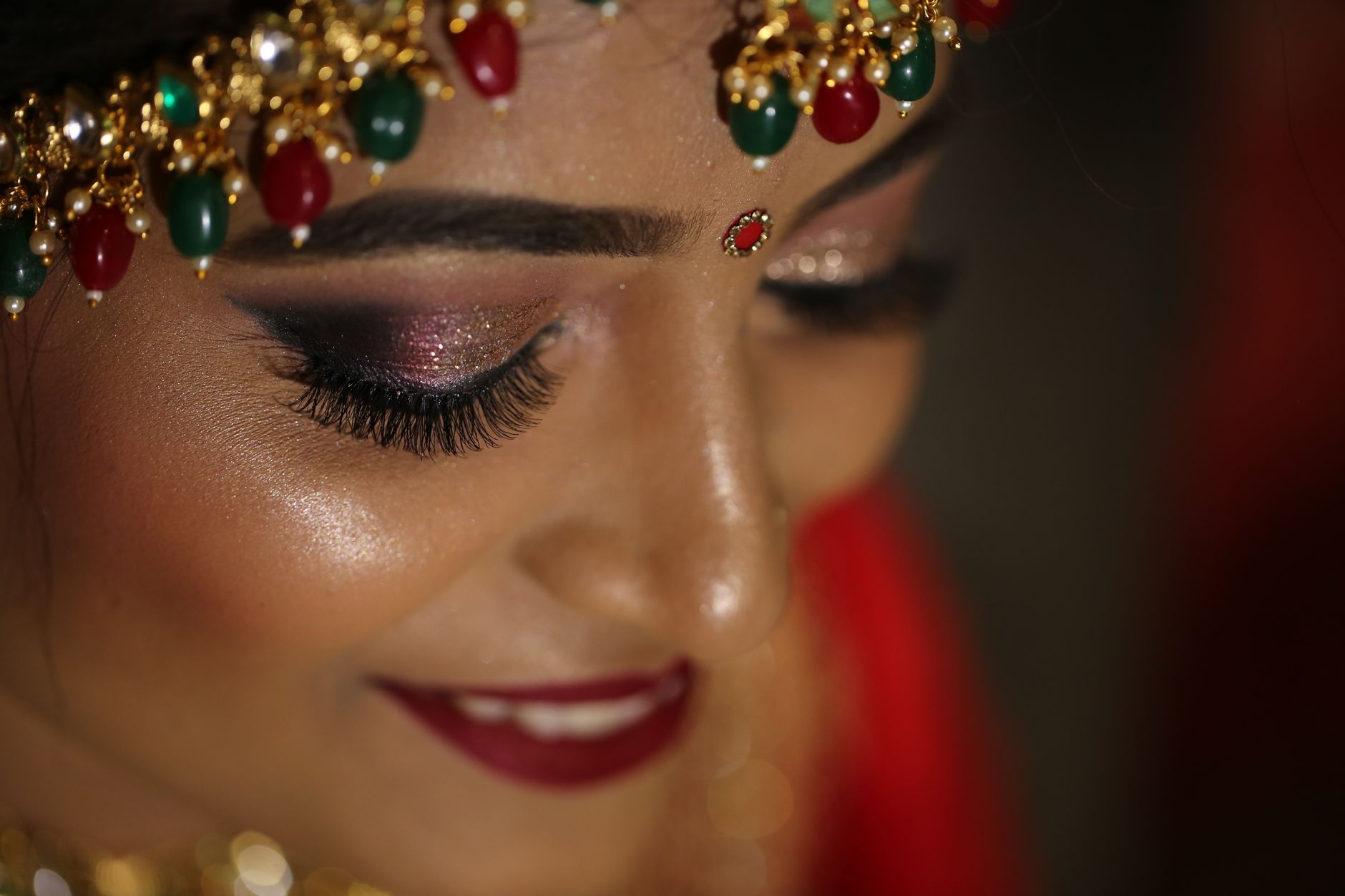
Every bride wants radiant skin on the big day. Behind the endless product recommendations, copper peptides have become a familiar skincare ingredient. Their popularity has a scientific rationale, but the clinical evidence is more limited than confident beauty claims often suggest. Here is what they are and how to approach them sensibly before a wedding.
Copper peptides, most commonly discussed as GHK-Cu, combine the naturally occurring tripeptide GHK with copper. GHK has been detected in human biological fluids, and reported circulating levels appear to decrease with age. That does not prove that falling GHK-Cu causes visible skin ageing or that applying it reverses the process.
Why it belongs in a bridal routine
What makes copper peptides interesting is their laboratory and preliminary clinical research. GHK-Cu has been studied in relation to fibroblasts, collagen-associated pathways and tissue repair. Reviews by Loren Pickart and colleagues describe regenerative and gene-expression findings (Pickart and Margolina, 2018), but much of the evidence is laboratory-based, older or not independently replicated in large modern trials. Small cosmetic studies have reported improvements in measures such as skin density or the appearance of fine lines, but results are not guaranteed.
This research has helped make GHK-Cu a familiar ingredient in serums and moisturizers. Topical products are marketed for firmer-looking skin, smoother texture and softer-looking fine lines. Whether they deliver a visible benefit depends on the formulation and the individual, and the evidence is not as strong as it is for fundamentals such as daily sunscreen.
One honest clarification is worth making. The copper peptides in a cream or serum are a cosmetic product for your skin. You may also see injectable or research-grade versions of the peptide mentioned online, and those are a completely different matter. Research-grade forms are sold for research purposes only and are not approved as medicines, so for bridal skincare the topical route is the one that applies.
Timing is everything
If there is one piece of advice that matters most for wedding skincare, it is to start cautiously. Copper peptides, like most skincare products, should be judged gradually rather than overnight. Starting a new product two to three months before a wedding is a practical buffer for assessing tolerance, not a clinically established deadline for results. The weeks immediately before the wedding are a poor time to experiment with unfamiliar products because irritation may not have time to settle.
A few more practical tips help. Introduce one new active at a time so you can tell what is working. Be consistent, because sporadic use will not deliver much. Do a little reading on what pairs well together, since some ingredients are best used at different times of day. And always patch test a new product first. When your face is going to be photographed from every angle, caution is your friend.
It also helps to remember that skincare is only part of the picture. Sleep, nutrition, stress management and daily sunscreen all influence how skin looks. A copper peptide serum is an optional addition with plausible but limited supporting evidence, not a substitute for those habits.
If it helps to picture a timeline, think of it in phases. Around three to six months out is the moment to settle your core routine and introduce a copper peptide product, giving your skin plenty of time to adjust and show results. In the month or two before, the goal shifts to consistency rather than experimentation, keeping to what already works for you. And in the final week, the golden rule is to change nothing new at all, focusing instead on hydration, rest, and sun protection. Boring, maybe, but that steadiness is exactly what gives skin its best chance to look calm and radiant on the day.
Approached this way, copper peptides can be a reasonable optional part of a wedding skincare routine without being presented as clinically proven. Readers can consult the original studies and use supplier material from Doctor Peptide as a route to references, while remembering that commercial product information is not independent dermatological advice.
References
Pickart L, Margolina A. Regenerative and Protective Actions of the GHK-Cu Peptide in the Light of the New Gene Data. International Journal of Molecular Sciences, 2018.
Pickart L, Vasquez-Soltero JM, Margolina A. GHK Peptide as a Natural Modulator of Multiple Cellular Pathways in Skin Regeneration. BioMed Research International, 2015.