There’s a persistent myth that a beautiful home requires significant financial investment. That somehow making your space look intentional, welcoming, and genuinely lovely requires professional decorators, expensive furniture, and designer accessories. The truth is far simpler and far more encouraging — the most impactful home decorating happens through thoughtful choices about color, arrangement, lighting, and those little details that cost almost nothing but change everything about how a space feels.
Your home can be genuinely beautiful on nearly any budget. It just requires attention, intention, and knowing where effort delivers the biggest visual return.
1. Start With Paint — The Most Transformative Budget Upgrade
Maximum Impact Per Dollar Spent
A fresh coat of paint is genuinely one of the most powerful decorating investments available. A single wall, an accent color, or refinishing all the walls in a space transforms the entire energy and feel of that room in ways that almost nothing else can match.
Choose colors that make you genuinely happy rather than chasing trends. Soft, warm neutrals create calm. Deeper tones create intimacy. Brighter hues inject energy. Paint is also one of the most reversible design decisions — if you change your mind, you can paint over it.
DIY painting saves enormous money compared to hiring professionals. Invest in quality brushes and rollers — cheap tools actually cost more in wasted paint and frustration — and take your time. The difference between a rushed paint job and a careful one is genuinely noticeable, but the only real expense is time.
2. Rearrange What You Already Have
Free Redecoration
Before buying anything new, spend an afternoon simply rearranging furniture. A different furniture layout fundamentally changes how a room feels and functions. Moving a sofa away from the wall, repositioning a bed, creating a conversation area instead of everything facing a television — these shifts cost nothing and often reveal possibilities your current arrangement never allowed.
Fresh perspective from a new arrangement often makes a space feel significantly larger, more welcoming, and more functional without any purchases whatsoever.
3. Invest in Good Lighting
Lighting is genuinely transformative and wildly underutilized in most homes. Poor lighting makes even beautiful spaces feel unwelcoming and depressing. Good lighting makes modest spaces feel warm and inviting.
You don’t need expensive fixtures — affordable options from IKEA, Amazon, and local retailers work beautifully. What matters is how you light a space. Multiple light sources at different brightness levels — overhead light for general illumination, table lamps for task lighting, accent lights for ambiance — create layers that transform any room.
Dimmer switches are affordable and profoundly underrated. The ability to adjust brightness to match the mood and time of day makes a space feel significantly more intentional and comfortable.
4. Declutter and Organize
Space Feels Better When It’s Not Overwhelmed
A cluttered space feels chaotic and depressing regardless of how nice individual items are. Ruthlessly decluttering before decorating amplifies the impact of everything else you do.
Pull everything out of a room, sort it into keep/donate/discard categories, then return only the items you genuinely love or use. Donate or sell the rest. The resulting space automatically feels more spacious, calmer, and more intentional — without any decorating at all.
Affordable storage solutions — floating shelves, baskets, drawer organizers — cost very little and keep clutter contained and organized. Things that are organized and accessible don’t feel like clutter anymore — they feel like an intentional collection.
5. Add Greenery — Real or Faux
Plants transform spaces in ways that are hard to quantify but genuinely obvious once you notice them. Living plants add life, color, and genuine air-quality benefits. Affordable options like pothos, snake plants, and spider plants thrive with minimal care and cost just a few dollars.
If you travel frequently or don’t trust your plant care abilities, high-quality artificial plants have improved dramatically. Nobody would know the difference at a casual glance, and they deliver the visual benefits of real plants without the maintenance demands.
Pair plants with affordable ceramic or terracotta pots to elevate them from nursery-style plastic containers.
6. Layer Textiles Thoughtfully
Throw blankets, cushions, area rugs, and curtains are among the most affordable and impactful decorating additions available. They add color, comfort, texture, and the ability to change the entire feel of a space seasonally.
Mix textures deliberately — smooth alongside rough, matte alongside shiny — creates visual interest that reads as intentionally designed rather than randomly assembled. Coordinate colors across textiles without demanding they match exactly, creating a cohesive look that feels deliberately curated.
Thrift stores, discount retailers, and end-of-season sales make acquiring quality textiles extremely affordable.
7. Create a Focal Point in Each Room
Rooms feel more intentional when they have a clear focal point — a wall that’s slightly different, a statement piece of furniture, or an arrangement of artwork or shelving that draws the eye.
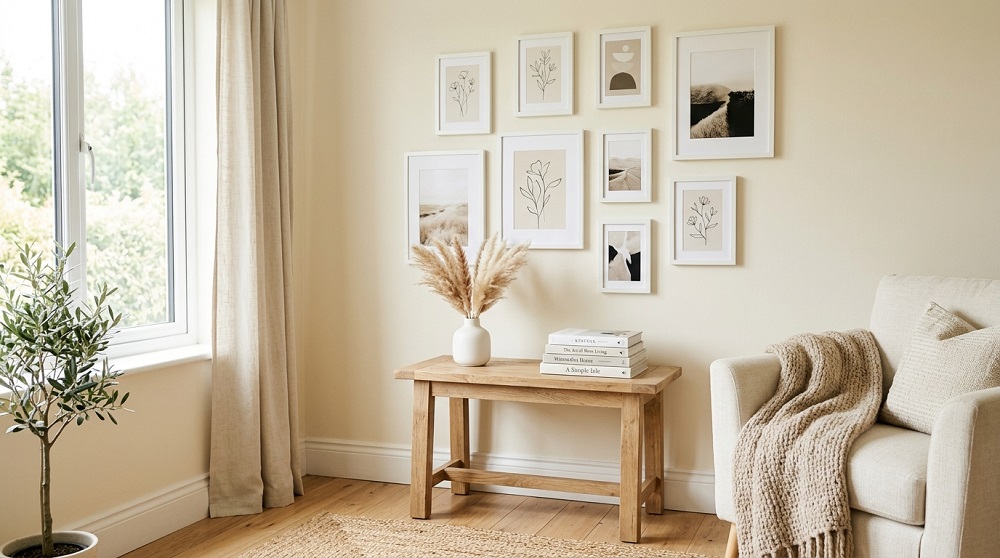
A gallery wall of affordable framed prints from Etsy or local thrift stores creates a focal point for a fraction of the cost of original artwork. A painted accent wall draws attention and anchors the room’s color scheme. A carefully styled bookshelf becomes a natural focal point that looks intentional and thoughtful.
Focal points create visual hierarchy that makes even modest spaces feel more sophisticated and designed.
8. Refresh Existing Furniture With Paint or Fabric
Before replacing furniture, consider refreshing what you have. An inexpensive bookcase painted a fresh color becomes a entirely different piece. Old chairs given new throw pillows and a fresh upholstery feel brand new without the replacement cost.
Furniture paint, upholstery fabric, and stain are all affordable materials that can completely transform existing pieces — giving them new life without adding to landfill waste.
9. Add Personal Touches That Cost Nothing
Photographs, artwork, collections you genuinely love, and items with genuine meaning cost nothing to display — but they make spaces feel authentically personal in ways that no amount of generic decor can replicate.
Frame family photos inexpensively. Display collections you’ve accumulated. Create shelves that tell your story rather than looking like a catalog spread. Personal spaces feel warm and lived-in because they contain the actual evidence of the lives being lived in them.
10. Mirrors — The Cheapest Way to Create Space and Light
Mirrors are one of the single most powerful budget decorating tricks. They reflect light, making spaces feel brighter and larger. They create visual interest and can anchor a wall with style.
Affordable mirrors from discount retailers cost just ten to thirty dollars and deliver returns that seem disproportionate to the investment. Large mirrors in particular have an outsized impact on how spacious and bright a room feels.
11. Window Treatments That Transform
Curtains, blinds, and shades dramatically affect both how a window looks and how a room functions. Heavy curtains soften light and create a cozy feel. Sheer curtains allow light while providing privacy. Shutters or Roman shades create clean lines and architectural interest.
Affordable curtain options from budget retailers work beautifully. Hanging them at ceiling height rather than at window height creates the illusion of taller ceilings and significantly amplifies their visual impact.
12. Lighting Accent Features
Small accent lighting — LED string lights, candles, small lamps — creates warmth and ambiance that genuinely transforms how a space feels in the evening. These are some of the cheapest decorating additions available and yet deliver returns far exceeding their cost.
Fairy lights strung along a bedroom wall, candles arranged on a shelf, or a small accent lamp in a reading nook all cost very little but create an atmosphere that’s impossible to achieve with overhead lighting alone.
Building Your Budget Decorating Strategy
Start With What You Have
Before spending money, audit what you already own. Rearrange it, clean it, give worn pieces fresh paint or new accessories. Often the decorating you need has been sitting in closets and storage all along.
Make One Intentional Investment Per Room
Rather than spreading a small budget thin across everything, choose the single upgrade that will have the biggest impact in each room — paint, lighting, or a statement piece — and do that well. Quality matters more than quantity.
Shop Secondhand First
Thrift stores, Facebook Marketplace, estate sales, and Buy Nothing groups are treasure troves of affordable decorating options. Someone’s unwanted item becomes your statement piece for a fraction of retail cost.
DIY When You Can
Paint, rearrangement, decluttering, and styling existing collections are all free or nearly-free decorating investments that deliver outsized visual returns.
Final Thoughts
Beautiful homes aren’t created through expensive purchases and professional designers. They’re created through thoughtful choices, attention to detail, and the willingness to invest time in getting a space to look and feel the way you want it to.
The best decorating budget is often just better decisions about what you already have, paired with targeted small investments in the changes that deliver the most visual impact.
Your home can be genuinely beautiful on any budget. It just requires intention, effort, and the confidence to trust your own taste and vision.
Start with what matters most. Build from there. Enjoy every step of making your space genuinely yours.