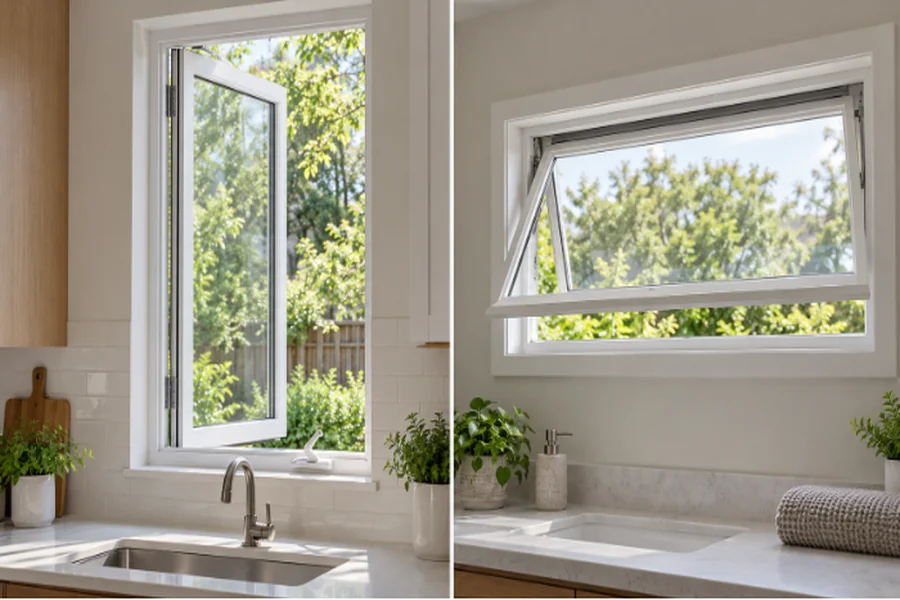
Casement and awning window styles differ in how they open, which affects ventilation, placement, and everyday use. Start by matching the style to what each room needs, rather than choosing one style for the whole house.
Think about reaching over a kitchen sink, airing out a bathroom, or opening a bedroom window at night. A window that looks good on the outside should also feel convenient from inside.
Understand How Each Style Opens
A casement has hinges along one side and swings outward, usually with a crank. An awning has hinges at the top, allowing its bottom edge to tilt outward. Both need clearance outside, so check nearby paths, shrubs, and decks before ordering.
The opening direction also affects airflow. A side opening can catch a breeze, while a top hinge creates a sheltered opening beneath the sash. Actual ventilation depends on window size, opening angle, and outdoor conditions.
Match Kitchens With Easy Operation
Over a kitchen sink, casement windows can be practical because a crank may be easier to reach than a sash you must lift. They also suit taller openings where you want a generous view and fresh air.
Check the handle position against your faucet and backsplash. Ask to operate a sample, since a deep countertop can make even a crank awkward to reach. Confirm that the outward swing will clear nearby outdoor furniture.
Balance Bathroom Privacy And Airflow
In bathrooms, awning windows often work well in wider, shorter openings placed higher on the wall. This arrangement can provide ventilation while keeping the glass above sightlines.
Obscure glass offers another privacy option, especially where neighboring homes are close. The projecting sash may help shield an opening from light rain, but wind can still push water inside. Close the window during storms, and keep using your bathroom exhaust fan to remove moisture.
Check Bedroom Escape Requirements
Bedrooms need more than comfortable airflow. Where a window serves as an emergency escape opening, its clear opening dimensions and operation must meet applicable local requirements.
Don’t assume either style qualifies just because its frame looks large. Ask the installer to verify the model, opening restrictions, and placement with local requirements before purchasing. Also consider screens and hardware when checking escape access.
Combine Views With Ventilation
In living rooms, a large fixed window can provide the main view, with an operating section beside or below it. A tall side opening may suit a narrow wall, while a shorter opening can fit beneath a broad pane.
Compare visible frame widths and screen locations using samples. For comfort, review the glass package, air leakage performance, and installation details instead of choosing by opening style alone.
Measure Everyday Practicalities
Before your consultation, note furniture placement, outdoor obstacles, and who will operate each window. Bring photos and ask about:
- Handle access behind counters or furniture.
- Exterior clearance when fully open.
- Screen removal and glass cleaning.
- Available opening limits and security hardware.
- Replacement parts, maintenance instructions, and warranty coverage.
Try the locking mechanism yourself, and confirm that everyone using the room can reach it comfortably.