
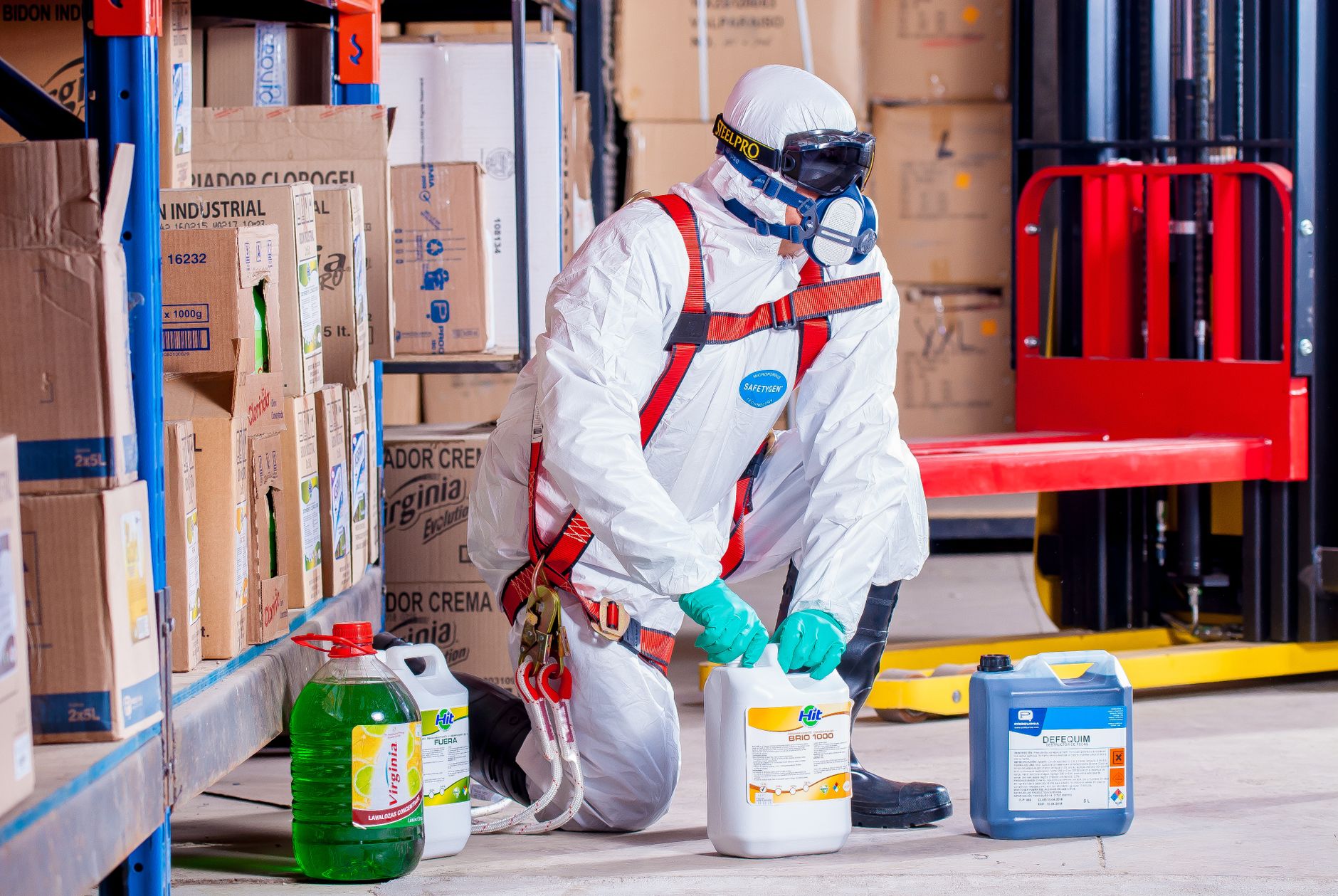
If your site keeps drums of solvent, IBCs of acid or a bulk tank of cleaning chemicals, you already sit inside a web of rules that the HSE takes seriously. Get the storage wrong and you're looking at improvement notices, clean-up bills and, in bad cases, prosecution. Get it right and most of it becomes routine. Here's what UK businesses actually have to do to stay on the right side of the regulations.
What the Law Actually Asks of You
The main duty comes from the Control of Substances Hazardous to Health Regulations 2002, usually shortened to COSHH. COSHH applies to virtually every UK employer who uses or stores substances that are hazardous to health, so the question isn't whether it applies to you, but how much work it takes to comply.
In practice, COSHH wants you to risk assess each substance, control exposure, use the safety data sheet for every product and train the people who handle it. If you store flammables, you'll also be dealing with DSEAR, which covers explosive atmospheres and ignition control.
The HSE then layers practical guidance on top. The main documents are HSG51 for flammable liquids in containers up to 1,000 litres, HSG71 for chemical warehousing and packaged dangerous substances, HSG140 on the safe use and handling of flammable liquids, and HSG176 if you're storing flammables in fixed tanks. If you store oil in quantities above 200 litres at an industrial site, the Control of Pollution (Oil Storage) (England) Regulations 2001 also apply, and the Environment Agency takes a close interest in anything that could reach a drain or watercourse.
An inspector will expect to see a written COSHH assessment for each chemical, and they'll check the store against it. If the paperwork says one thing and the shelf says another, that gap is the first thing they'll pull you up on.
Bunding and Secondary Containment
Secondary containment is the bit most people picture when they think of chemical storage. The idea is simple. If a container fails, the liquid needs somewhere safe to go instead of running into a drain or soaking into the ground.
The number to remember is the 110% rule. Bunds should be sized to hold 110% of the maximum capacity of the largest tank or drum, which gives you latitude for the spill itself plus any foam added during emergency response. Where you've got lots of containers together, the alternative figure is 25% of the total volume stored, and you take whichever is larger. A single 1,000 litre tank, for example, needs a bund that holds at least 1,100 litres.
The containment itself can take a few forms, depending on what you're storing and where:
- Bunded pallets and drip trays for drums and smaller containers
- Bunded floors or external bund walls for IBCs and bulk tanks
- Built-in sumps inside chemical storage cabinets for smaller quantities indoors
Whatever you use, the bund has to stay empty and intact. A common failing is letting a bund fill with rainwater or using it as a dumping ground, which leaves no room for an actual spill. For open external bunds, frequent rainwater checks are part of the job, and any water that's been in contact with chemical residue has to be treated as contaminated waste.
Picking the Right Tank and Lining Materials
The container matters as much as the containment around it. Chemicals attack the wrong materials over time, and a tank that looked fine on day one can weaken, crack or leak after months of contact. The material has to suit the chemistry of what's going inside.
For many acids, alkalis and solvents stored at ambient temperatures, a chemically resistant thermoplastic is the practical choice for tanks, linings and bund structures. PPC plastic, a polypropylene copolymer, is one of the materials commonly specified for this kind of fabrication. It offers strong chemical resistance, low moisture absorption and good impact strength even at low temperatures, and it welds cleanly, which matters when tanks and bunds need to be built to size.
Material choice isn't a one-size answer, though. Always check the chemical's safety data sheet, look at the concentration and temperature you'll be storing at, and confirm the material can handle it. A supplier who fabricates to size will usually help you match the grade and thickness to the job.
Mistakes That Catch Businesses Out During Inspections
A lot of HSE findings come down to a handful of repeat offenders, and they're easy to fix once you know to look for them.
Storing incompatible chemicals next to each other is one of the most frequent problems. Acids and alkalis, oxidisers and flammables, anything that reacts badly if it leaks and mixes, all of it needs physical separation rather than just sitting on adjacent shelves. A practical benchmark is keeping incompatible groups at least three metres apart or using a fire-resisting partition. Poor ventilation is another, since vapour that builds up in a closed store creates both a health risk and, with flammables, a fire risk.
Then there's the everyday stuff. Faded or missing labels, expired products nobody cleared out, shelving that isn't fixed to the structure, drains running straight through a bunded area, and spill kits that are either empty or locked away where no one can reach them quickly. Routine self-inspections catch most of these before an inspector ever does, and keeping a simple record of those checks shows you're managing the store rather than reacting to it.
Where to Put Your Effort First
If you're starting from scratch or tidying up an existing setup, the order that pays off is usually this. Build one honest inventory of everything on site, write or refresh the COSHH assessments, then sort the physical controls of containment, segregation, ventilation and labelling. The materials and bunding are the visible part, but the assessment is what ties it all together and what an inspector will ask for first.
Compliance here isn't a single big project. It's a set of habits backed by the right kit. Choose containers and linings that suit the chemicals, size your bunds properly, keep incompatible substances apart and write down what you check. Do that, and a site visit becomes a routine walk-through rather than a scramble.