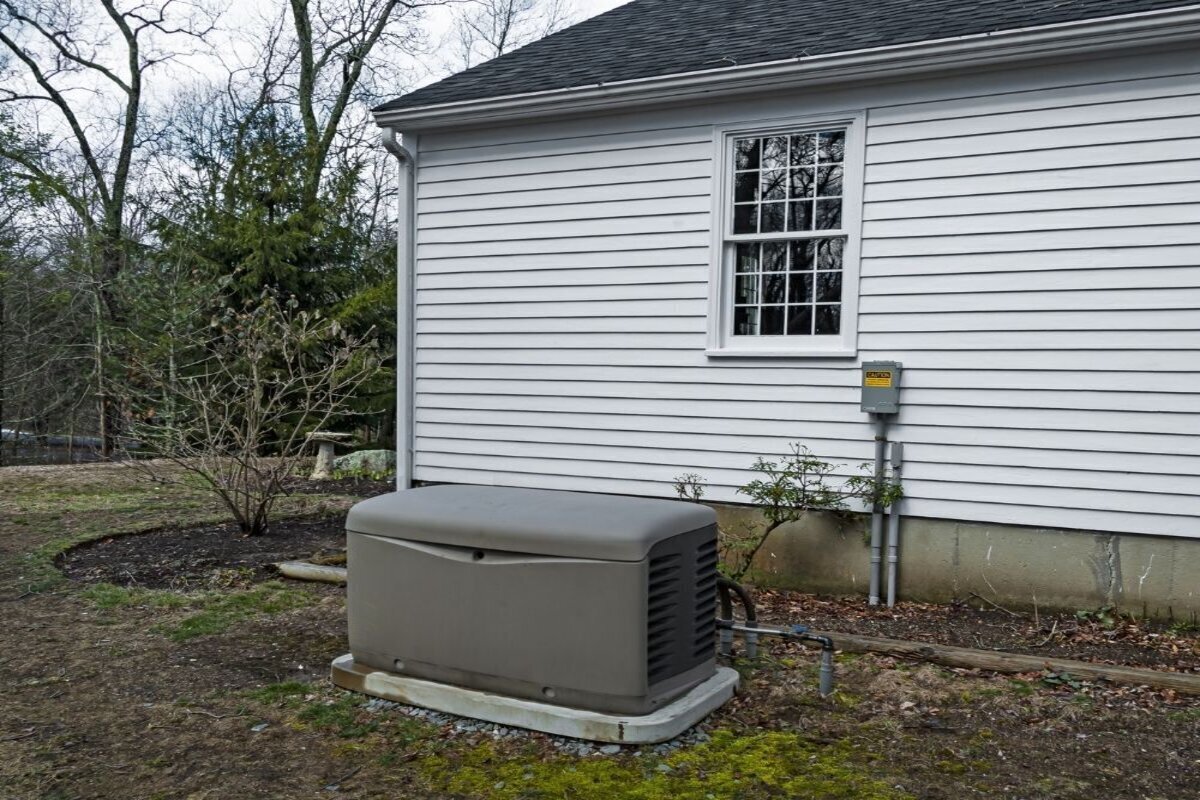
A standby generator can keep essential household equipment working during an extended outage. Before installation begins, however, homeowners face a decision that affects both the project cost and everyday use: where should the unit go?
The nearest empty patch of yard may not be suitable. A location convenient for electrical connections could sit in a drainage low spot, face a neighbor’s bedroom, or leave insufficient room for maintenance. In Thibodaux, a sound placement plan needs to account for heavy rainfall and flood exposure alongside exhaust safety, fuel supply, and access. Evaluate these requirements together before committing to a foundation or trench route.
Identify Safe Locations Before Comparing Costs
Start by marking the house’s doors, windows, vents, and other openings on a simple property sketch. Include nearby buildings, fences, utility equipment, and property boundaries. Then use the installation manual for the specific generator model to establish the required separation distances. Clearances vary with the equipment and installation conditions. A distance suitable for one model should not automatically be applied to another. Local permitting requirements may also affect where the generator can be installed.
An installer such as Gengatorz Power Systems of Thibodaux can help evaluate potential locations against the selected unit’s installation requirements. Exhaust deserves particular attention because it contains carbon monoxide. Keep the generator outdoors in an approved location where exhaust cannot readily enter occupied buildings. Consider openings on neighboring properties as well as your own. Wind direction may help explain how exhaust moves, but changing weather means it cannot substitute for required clearances.
Also check whether technicians can open the enclosure and reach routine service points. A space between a fence and the house may accommodate the cabinet while leaving too little room to work on it.
Separate Ordinary Drainage From Flood Protection
A raised pad can help keep a generator above minor surface runoff. It does not necessarily provide adequate protection against flooding. Before choosing a location, inspect the property after heavy rain if possible. Look for pooling beside the house, runoff from paved areas, and water discharged by gutters. A low area that appears dry during installation may collect water during the first major storm.
For properties with flood exposure, ask the installer and local floodplain authority what elevation requirements apply. The generator, its supporting structure, and associated equipment may need an installation designed around those requirements. Do not assume that a small increase above lawn level is sufficient.
The foundation must also support the equipment without tilting or settling. Its design should suit the generator, soil conditions, and applicable wind and flood requirements. An elevated installation may require an engineered support rather than a conventional ground-level pad.
Address roof runoff separately. Redirecting a downspout can reduce splashing and pooling around an otherwise suitable location. Any drainage changes should preserve the property’s intended runoff paths and avoid sending water toward neighboring buildings.
Confirm Fuel Capacity Before Finalizing the Site
A short route to the natural gas meter or propane supply can simplify installation, but distance alone does not determine whether the generator will receive enough fuel. For natural gas, the installer must account for the generator’s maximum demand, available pressure, pipe length, fittings, and other appliances using the same supply. The meter or regulator may also need evaluation by the utility.
A generator can appear to work properly during a light test yet struggle when larger household loads engage. That is why fuel supply should be checked against the intended operating conditions rather than judged only by whether the engine starts. Propane installations require coordination with the fuel supplier. Tank capacity, fuel level, vaporization capability, regulator selection, and required tank clearances all influence the plan. Leave access for deliveries and maintenance when comparing possible locations.
Discuss fuel routing before landscaping or concrete work begins. Pipes may need protection from vehicles, lawn equipment, and other sources of damage. Qualified professionals should complete the required installation checks and testing.
Map the Electrical Route and Underground Obstacles
The generator’s location should be considered alongside the automatic transfer switch and the home’s electrical service arrangement. A convenient route between these components can reduce trenching, conduit, and installation labor.
Longer routes are sometimes necessary to achieve safer placement or reduce noise. An electrician should calculate conductor requirements for the actual distance and load, including voltage drop. Cable size should follow that assessment rather than a general assumption. Walk the proposed route before work starts. Irrigation systems, drainage pipes, existing cables, mature trees, and hard surfaces can complicate an apparently simple trench.
Contact 811 before excavation. Ask whether private utility lines need separate locating, since they may fall outside the standard marking service. Electrical equipment and connections also need to suit the conditions where they are installed. A weather-resistant enclosure is not automatically suitable for submersion, making flood exposure relevant to more than the generator cabinet itself.
Consider Noise Without Restricting Airflow
Once unsuitable locations have been eliminated, compare the remaining options for sound. Think about bedrooms, patios, and neighboring windows, particularly because the generator may run overnight during an outage. Manufacturer sound ratings can help compare models, but check the stated testing distance and operating conditions. Walls, fences, and nearby buildings can change how noise travels around a property.
Screening needs careful planning. A fence placed too close may obstruct cooling air, interfere with exhaust, or make servicing difficult. Decorative panels and vegetation must remain outside the required clearance areas.
Use only mounting and vibration-control arrangements approved for the equipment. Adding isolation materials without checking the installation requirements can affect stability or anchoring. Sometimes moving the generator farther from a bedroom is worth a longer utility run. Ask the installer to explain the additional cost so you can weigh it against the comfort benefit.
Choose the Location That Remains Practical After Installation
Before approving the final position, review the complete plan: required clearances, flood elevation, foundation, fuel capacity, electrical routing, and maintenance access. A spot should satisfy all of these requirements rather than excel in only one.
After installation, keep vegetation and stored items away from the enclosure. Check the surrounding area after heavy rain for pooling, erosion, or settlement, and maintain a clear route for servicing.
A well-chosen location helps a standby generator remain accessible, protected, and ready for an outage. For Thibodaux homeowners, resolving placement questions early can prevent expensive changes after the foundation and utility connections are already in place.