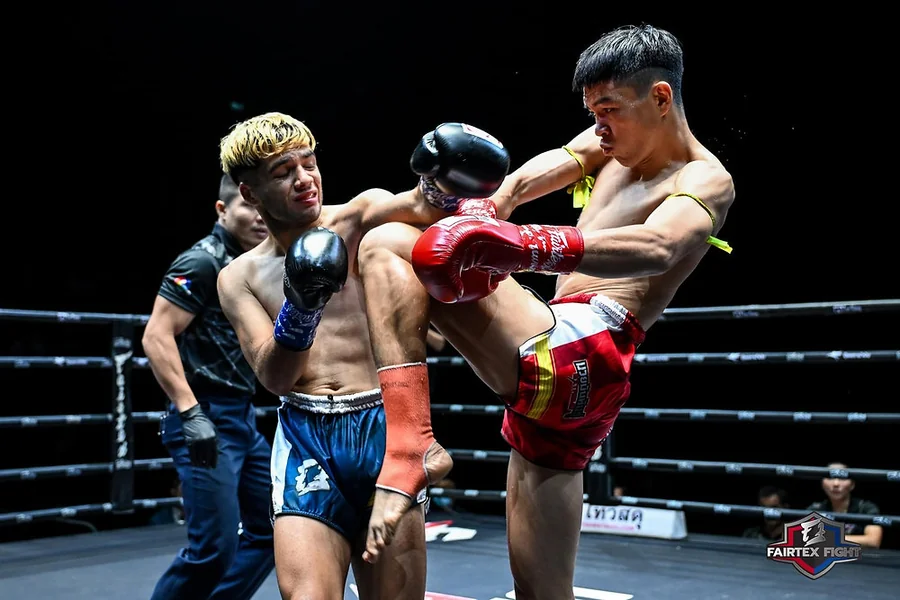
Visitors often notice the Wai Kru when they watch a bout in Thailand. A competitor moves around the ring before the bell, then returns to the corner while the music and crowd settle. The ceremony is not decoration or a warmup. It connects the fighter with teachers and the traditions of Muay Thai. Understanding a few points helps you watch respectfully and ask better questions at your boxing gym.
Learn What the Name Points To
Wai Kru refers to paying respect to a teacher. The Ram Muay is the movement sequence associated with the pre-fight ritual. Names and forms can vary, so avoid treating one version as universal. IFMA describes the Wai Kru as a traditional ritual performed by athletes before a match. An athlete training in Thailand may hear the terms used together, but asking a coach to explain the local practice is more useful than assuming every boxing gym teaches it identically.
Understand the Mongkhon With Care
The mongkhon is the headband worn during the ceremony in many competition settings. IFMA’s guide describes it as sacred competition clothing for the Wai Kru. It is handled with respect, not treated as a costume prop. If a fighter is invited to wear one, ask the teacher how it should be placed and stored. Visitors should not borrow or touch ceremonial equipment without permission.
Notice How the Music Shapes the Movement
At events, traditional live music can accompany the ritual and continue through the contest. The rhythm gives the movements a particular pace and helps distinguish the ceremony from a standard drill. Watch where the fighter pauses, bows, or turns. A Muay Thai boxing training session may not include any of this, and that is normal. The ritual belongs to a specific cultural and competitive setting.
Ask Before Copying a Sequence
A student may want to learn the Wai Kru, but it is better to ask a coach than to imitate a clip. Your instructor can explain what is appropriate for a student and whether a particular gym teaches the sequence. IFMA also lists Wai Kru as a separate cultural discipline, alongside competition. That detail shows the ceremony can be studied for its own cultural value, not only as a prelude to a bout.
Watch With Respect, Not a Camera First
At an event, follow the venue’s instructions and avoid stepping into the ring area. Take photographs only where permitted. Let the performer complete the movement without turning the ritual into a quick social post. Muay Thai boxing is both a combat sport and a cultural practice. For a fighter, understanding that distinction makes training in Thailand richer and keeps curiosity from becoming careless imitation. If you attend a bout, ask the gym what the ceremony means there. IFMA rules allow up to two minutes for seniors and one minute for youth. These IFMA limits apply in Muay Thai boxing contests, not every local show. A Muay Thai boxing teacher may explain a sequence. Context matters: the Wai Kru belongs to Muay Thai boxing, and a fighter can watch respectfully. Muay Thai boxing traditions vary by camp. Chalong Muay Thai for summer staycation is a real traditional Muay Thai boxing gym for everyone to learn from Muay Thai fighter.