At seven in the morning, a night-shift analyst slides a rack of 96-well plates onto the bench, scribbles a note about the three wells that came up short, and goes home. The day shift collects the rack an hour later. Nothing has gone wrong, the plates are fine, and the note is accurate, yet the integrity of a week of work now rests on one handwritten sentence surviving a change of personnel.
Labs are full of moments like that. A tube moves from one instrument to another, a number moves from a screen into a spreadsheet, a decision moves from the person who made it to the person who has to live with it. Each transfer is small, and each one is a little gamble, and the odds stack up fast when you run hundreds of samples a week.
Automated workflows are usually sold as a speed story, which undersells them. The deeper benefit is that they take the gambles out of the ordinary day, so accuracy and throughput stop competing with each other and start improving together.
Where Manual Handoffs Quietly Cost Accuracy
The clinical world has studied this harder than most, and the pattern is consistent. Laboratory errors get sorted into pre-analytic, analytic, and post-analytic categories, and as the AHRQ Patient Safety Network notes, the pre-analytic and post-analytic stages carry most of the problems: mislabeled tubes, data entry slips when a specimen is logged, results reported through the wrong channel. Very little of that happens inside the analyzer. It happens in the gaps around it.
Those gaps are where automation earns its keep. An instrument that reads a barcode never misreads a handwritten label, and a scheduler that moves a plate on its own never forgets which plate it was.
Standardized Execution Before Raw Speed
Good automation starts with writing the method down properly, because a workflow you cannot describe precisely is a workflow you cannot hand to a machine. The same logic shows up well outside the lab, as in this guide to getting ready for a big night without losing the whole day: make the decisions early, once, and the day itself stops being a sequence of small negotiations.
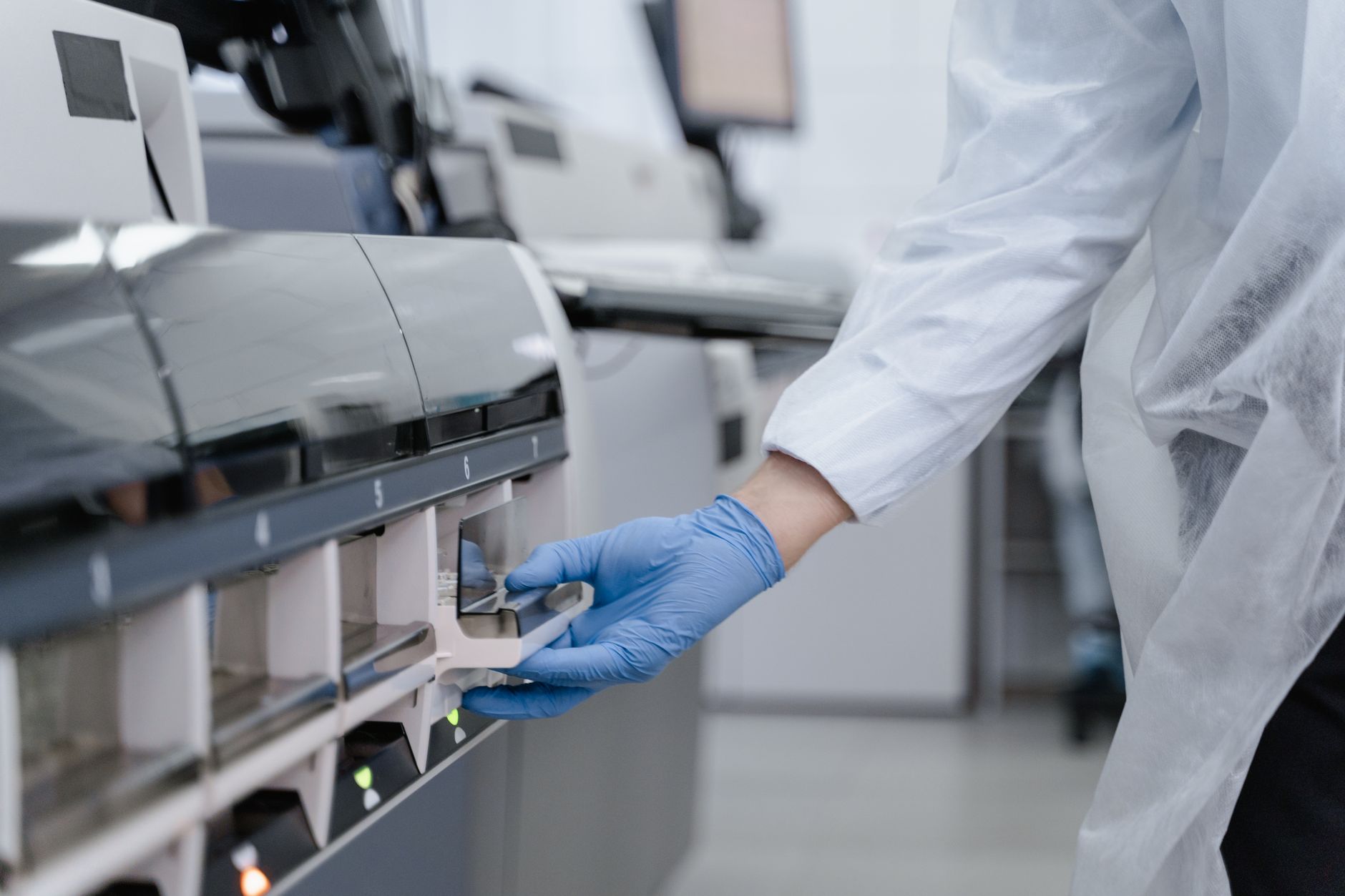
Once the method is standardized, modern laboratory automation solutions can execute it the same way at two in the afternoon on a Tuesday and at three in the morning on a Sunday. Incubation times stop drifting with how busy the bench is, and reagent additions land in the same order on every run.
Fewer Transfers, Fewer Transcription Errors
Every manual transfer is a chance to lose fidelity, and plate preparation is the worst offender, since it is repetitive, time-sensitive, and demanding of attention nobody has in unlimited supply. A 2025 PLOS ONE study of a robotic platform for residual DNA quantitation found that the automated workflow matched or beat the manual one on reproducibility while removing the pipetting and plate-building steps the authors identify as a major cause of human error and assay variability.
The productivity gain follows from the accuracy gain rather than sitting beside it. Reruns are expensive, investigations into aberrant data are worse, and a workflow that produces fewer of both gives back real hours.
Data Capture That Happens While the Work Happens
The strongest argument for orchestration is what it does to your records. When instruments report into a shared layer, run conditions, operator, timestamps, and deviations are captured as the work proceeds, not reconstructed afterward from memory and a notebook. Audit trails stop being an archaeology project, and troubleshooting gets specific, because you can see which plate, which position, which minute.
Quality Controls That Keep Automation Honest
None of this polices itself. An automated system will repeat a mistake with the same discipline it repeats everything else, so the controls matter more after automation, not less. Calibration schedules, positive and negative controls on every plate, defined acceptance criteria, and a plan for a run that fails partway through all need to exist before the first unattended overnight batch.
Validate against the manual method you are replacing, side by side, with real samples rather than idealized ones, and keep a person reviewing the exceptions. The goal is not a lab without judgment in it. It is a lab where judgment goes into the results instead of the logistics.
Accuracy and productivity look like a tradeoff whenever every improvement has to come out of someone's hands. Automated workflows break that trade, because the thing they remove, manual handling, is at once the slowest part of the process and the least reliable.
The labs that get the most out of it tend to start narrow. One high-volume assay, one bottleneck, one well-documented method, measured honestly against whatever it replaced. The wins compound from there, and the second project is always easier than the first.
Which brings us back to that rack of plates at seven in the morning. In a well-orchestrated lab the note is not handwritten and it is not a gamble, because it is already in the record, attached to the sample, waiting for whoever opens the file next.