
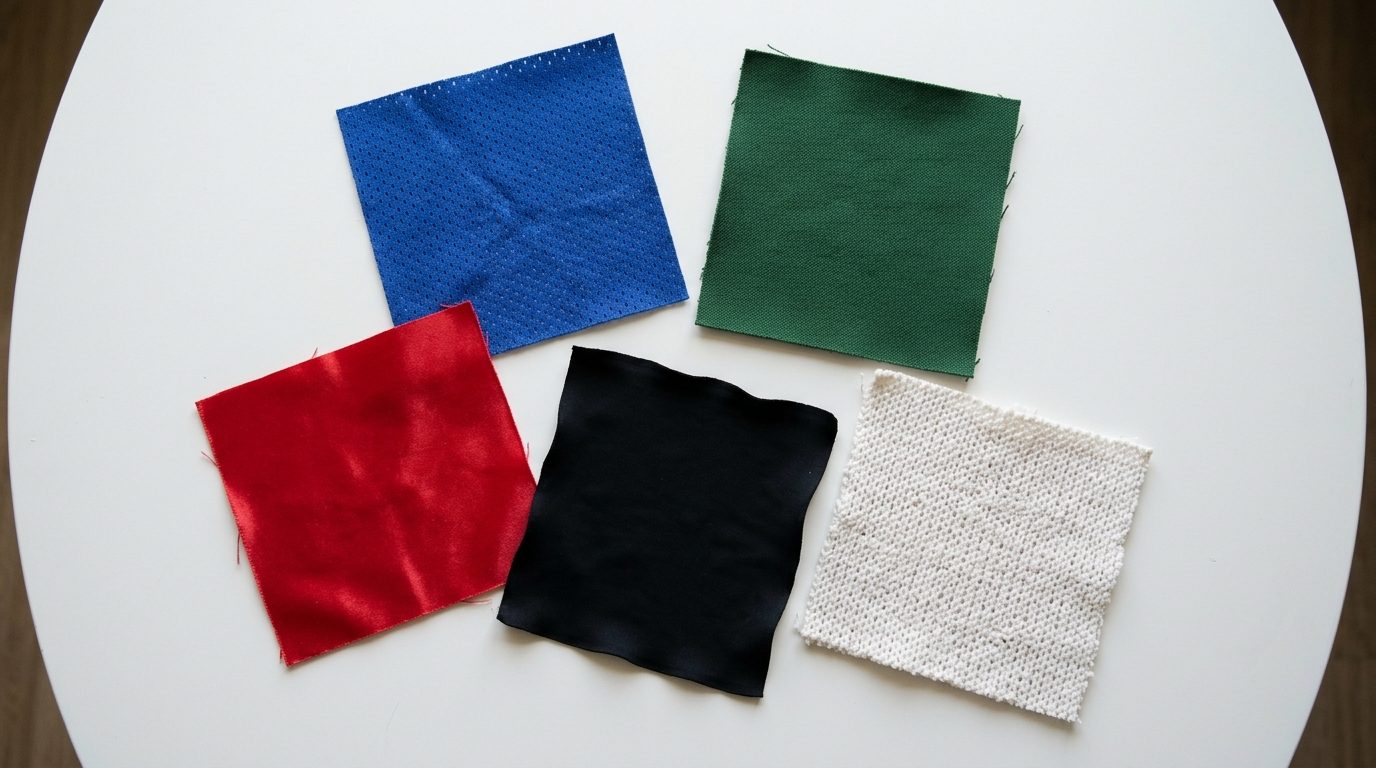
To choose team uniform fabrics, match the fabric to how the sport is played. Fast, hot sports like basketball and soccer need light, airy polyester mesh. Contact sports like football and rugby need heavier double knit polyester that resists pulling and tearing. Sports with lots of bending, like wrestling and volleyball, need a polyester and spandex blend that stretches four ways. After that, check the fabric weight, how it handles sweat, what the league rules allow, and how easy it is to wash.
Picking a uniform fabric looks like a small decision. It is not. The fabric decides how hot the players feel, how long the jersey lasts, whether the numbers stay readable, and whether the league will even let the team play in it. Coaches, team managers and parents usually have to make this call once a year, and most of them do it based on the picture in the catalog instead of the cloth itself. This guide explains what actually matters, sport by sport, in plain words.
Why fabric matters more than design
A good design on the wrong fabric is still a bad uniform. A football jersey made from thin soccer mesh will tear at the shoulders in the first few games. A basketball jersey made from heavy football fabric will feel like a blanket by the second quarter. Fabric is the base. Everything else sits on top of it.
Three things change the most from one fabric to another:
• Heat and sweat. Some fabrics pull sweat off the skin and dry fast. Others hold it and get heavy.
• Strength. Some fabrics can be grabbed, pulled and slid on. Others open up at the seams.
• Stretch. Some fabrics move with the body in every direction. Others only give a little, or not at all.
The main fabrics used in team uniforms
Almost every team uniform today is made from polyester or a polyester blend. Cotton is rare in game uniforms because it soaks up sweat and stays wet. Research on sportswear fabrics has found that knitted fabrics made from 100 percent polyester offer better moisture handling and thermal comfort for active sports than cotton or cotton blends, which is why polyester took over the market.
A study in the Journal of Textile and Apparel, Technology and Management found that micro polyester fabrics gave better moisture management than textured polyester and polyester spandex blends, and that a moisture management finish improved wicking and drying even further. Public health guidance from the National Collaborating Centre for Environmental Health explains the same idea from the other side: natural fibers like cotton absorb more sweat and can feel wetter during long exercise in heat, while synthetic wicking fabrics move the sweat outward so it can evaporate.
Here are the fabrics you will see most often, and what each one is good at.
| Fabric | What it is | Best for | Watch out for |
| Polyester mesh (air mesh) | Light knit with small holes for airflow | Basketball, soccer, flag football, practice jerseys | Tears easily if grabbed, not for contact sports |
| Double knit polyester | Two layers knit together, thick and firm | Football, baseball, hockey, rugby | Warmer, heavier, slower to dry |
| Dazzle or tricot | Smooth, slightly shiny, medium weight | Soccer, lacrosse, volleyball, basketball shorts | Can snag, shows wear on the shine |
| Polyester spandex blend | Polyester with 8 to 20 percent spandex for stretch | Wrestling, volleyball, compression gear, gymnastics | Loses stretch if washed hot or dried hot |
| Interlock polyester | Smooth, soft, stable knit | Esports, warm ups, sublimated tees | Less airflow than mesh |
| Ripstop polyester | Woven with a grid that stops tears spreading | Bags, shells, some hockey and rugby panels | Not stretchy, feels stiff |
Fabric weight: what GSM means
Fabric weight is measured in GSM, which means grams per square meter. A higher number means a thicker, heavier fabric. Weight is the fastest way to tell if a fabric fits the sport.
• 120 to 140 GSM: very light. Good for running, soccer and summer practice gear. Thin enough that dark colors may show the skin a little.
• 140 to 180 GSM: the sweet spot for most game jerseys in basketball, volleyball, soccer, lacrosse and flag football.
• 200 to 240 GSM: heavy and firm. This is football, hockey, rugby and baseball territory. It holds up to tackles and slides.
• 240 GSM and up: hoodies, warm ups, pants and jackets.
If a supplier cannot tell you the GSM of the fabric, that is a sign to ask more questions. Any serious maker knows the weight of every fabric they cut.
Choosing fabric sport by sport
Football
Football is the hardest sport on a jersey. Players grab, pull and fall on each other every play. The standard choice is double knit polyester around 220 to 240 GSM, often with a stretch mesh insert on the sides so the jersey stays tight to the pads without ripping. Shoulder seams should be reinforced. Numbers must also follow the rules of the league. Under the NFHS football rules used by most US high schools, numbers must be clearly visible, in a solid color that contrasts with the jersey, and placed on both the front and back. The Minnesota State High School League summary of the 2024 NFHS jersey rules is a useful plain language version if you want to check before ordering. When comparing custom football uniforms from different makers, ask about fabric weight and whether the number color meets your state rules, not just the price per set.
Basketball
Basketball players run hard in a warm gym, so air mesh polyester around 160 to 180 GSM is the usual pick. The holes in the mesh let heat out. Avoid heavy fabrics here. Shorts are often a smooth dazzle fabric so they slide instead of sticking to the legs. Reversible jerseys use two thin layers of mesh, so each side should be light or the whole thing gets hot.
Soccer and lacrosse
Both sports are played outdoors with constant running, so light and quick drying is the goal. Lightweight dazzle or micro mesh in the 140 to 160 GSM range works well. Lacrosse adds some contact with sticks, so slightly tighter knits with less open mesh hold up better than loose basketball style mesh.
Baseball and softball
These jerseys get slid on, dove in and dragged through dirt. Double knit polyester around 200 to 220 GSM is the normal choice for the jersey, with 220 GSM or heavier performance polyester for the pants. Pants are the first thing to wear out, so check the knee area is either double layered or made from a heavy, tight knit.
Wrestling, volleyball and compression gear
Any sport where the body bends, twists and dives needs stretch in every direction. Polyester spandex blends, usually around 92 percent polyester and 8 percent spandex for singlets, stretch four ways and snap back. Volleyball jerseys use a lighter version of the same idea so players can dive and reach without the shirt riding up. Compression shirts and shorts use a higher spandex share, often 15 to 20 percent, to stay tight.
Ice hockey
Hockey jerseys go over bulky pads and get pulled in every scrum, so they need a heavy, open knit that is strong but still lets air out. Pro weight hockey fabric is usually a heavy polyester knit with an open structure, often with a different fabric on the shoulders and elbows where sticks and boards hit. Fight straps and reinforced hems are common on game jerseys.
Rugby
Rugby combines football level grabbing with 80 minutes of running. Heavy duty polyester, often a tight knit or a knit with a slight stretch, is standard. Seams should be flat and strong, and the collar area needs reinforcing because that is where players grab.
Esports and sideline apparel
Esports jerseys are not for sweating, they are for sitting under lights. Soft interlock polyester that prints clean and feels good on the skin is the right choice. Sideline hoodies, pullovers and warm ups use fleece backed polyester at 240 GSM or heavier for warmth.
Quick comparison by sport
| Sport | Fabric type | Typical weight | Key need |
| Football | Double knit polyester | 220 to 240 GSM | Strength at the shoulders |
| Basketball | Air mesh polyester | 160 to 180 GSM | Airflow and low weight |
| Soccer | Dazzle or micro mesh | 140 to 160 GSM | Fast drying |
| Baseball and softball | Double knit polyester | 200 to 220 GSM | Slide resistance |
| Wrestling | Polyester spandex 92/8 | 180 to 220 GSM | Four way stretch |
| Volleyball | Light polyester spandex | 140 to 170 GSM | Stretch and comfort |
| Ice hockey | Heavy open knit polyester | 220 to 280 GSM | Strength over pads |
| Rugby | Heavy duty polyester knit | 220 to 260 GSM | Grab resistance |
| Lacrosse | Tight mesh or dazzle | 150 to 170 GSM | Light with some toughness |
| Esports | Interlock polyester | 160 to 200 GSM | Soft feel, clean print |
Other things to check before you order
How the design is put on the fabric
Sublimation dyes the design into polyester, so there is nothing on top of the fabric to crack or peel. It only works on polyester or mostly polyester fabrics, which is another reason polyester rules team sports. Tackle twill numbers are stitched on and add weight and a raised feel, which some football and baseball programs still prefer. Screen print sits on top of the fabric and can crack over time on stretchy fabrics. Match the method to the fabric: sublimation for mesh and spandex blends, twill or sublimation for double knit.
League rules
Most governing bodies have rules on number size, number color, logo size and sometimes the color of the home and away jersey. These rules change every few years. Check the current rulebook for your sport and level before approving a design, because a jersey that breaks the rules cannot be fixed after it is made.
Washing and care
Polyester lasts a long time if it is washed cold and air dried or dried on low. Hot dryers are the number one killer of spandex blends because the heat breaks the stretch fibers. Mesh should be washed inside out so it does not snag. If a team washes uniforms as a group, print simple care instructions and hand them to whoever does the laundry.
Youth versus adult
Youth players sweat less than adults but are harder on gear in other ways: they slide more, roll on the ground more and grow out of things in a season. For youth teams, a slightly heavier fabric than the adult version of the same sport is usually a smart trade, since the small gain in airflow matters less than a jersey that survives the year.
A simple way to decide
If you are stuck, ask these four questions in order:
• Is this a contact sport? If yes, go heavy double knit. If no, go light mesh or dazzle.
• Does the body bend and stretch a lot? If yes, add spandex.
• Is it played in heat? If yes, pick the lightest fabric the sport allows.
• What do the league rules say about numbers and colors? Check before the design is final.
Suppliers that work across many sports, such as Hamco Sports Inc, usually publish the fabric weight and blend for each sport on their product pages, and that is the information to compare. The look of a uniform is a matter of taste. The fabric is a matter of fact, and it is the part the team will feel in every game.
Frequently asked questions
What is the best fabric for sports uniforms?
Polyester, in one form or another. Light mesh for hot, fast sports, double knit for contact sports, and polyester spandex blends for sports that need stretch.
Is cotton good for team jerseys?
Not for game jerseys. Cotton holds sweat and dries slowly. It is fine for fan tees and casual team shirts.
What GSM should a football jersey be?
Most game jerseys for tackle football run 220 to 240 GSM double knit polyester, with lighter stretch mesh on the side panels.
Why do wrestling singlets use spandex?
Spandex lets the fabric stretch in four directions and snap back, so the singlet moves with the body and does not ride up or tear during holds.
Does sublimation work on any fabric?
No. Sublimation needs polyester, ideally white or light colored, because the dye bonds to polyester fibers. It does not work on cotton.


