A desk might seem like a simple choice until you’ve spent eight hours at the wrong one. The wrong height or setup can leave your neck sore and your wrists aching by the end of the day. Since you’ll use your desk more often than most pieces of furniture, it’s worth choosing one that fits your space and routine.
Start with the room, not the desk. Measure the available space, including enough room to pull your chair out comfortably. A desk that looks just right in a showroom can quickly take over a small bedroom once you bring it home.
Size and height
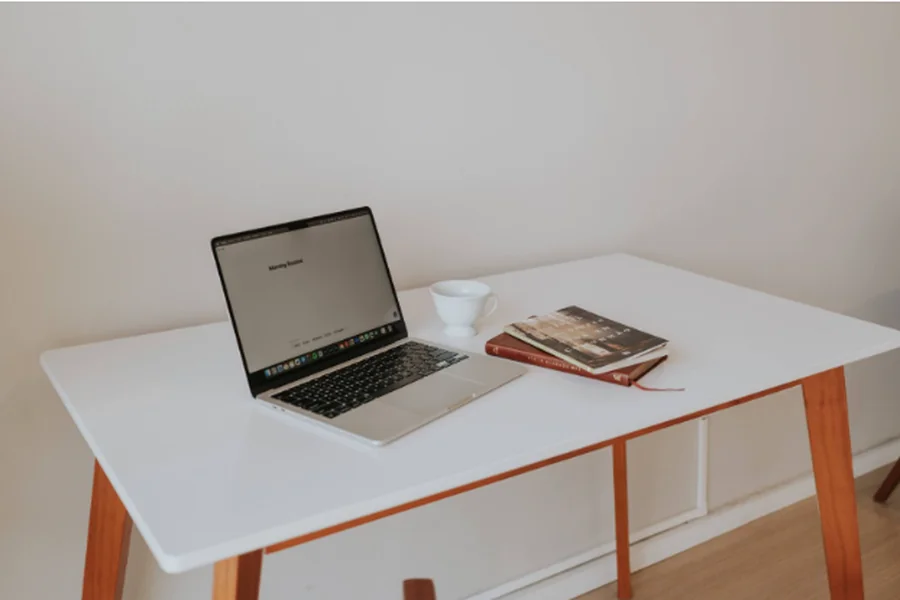
For depth, think about your screen. The usual advice is to place the monitor about an arm’s length away, roughly 50 to 100 centimeters, with the top of the screen at or just below eye level. That means a very shallow desk can leave you hunched forward. If you’re working on a laptop, consider a stand and a separate keyboard, since the low screen height is a common cause of discomfort.
Height matters too. If the desk is too high, raise your chair and rest your feet on a footrest. If it’s too low, you can prop up the legs. Better to find one that fits. There’s a thorough walkthrough of office ergonomics from Mayo Clinic that explains how all of this fits together.
Shape
A straight desk is the simplest and works nearly anywhere. An L-shaped one gives you more room if you use two screens or spread out paperwork. Corner desks are good for tight spots. And if you’re short on space, a wall-mounted or fold-down desk can be tucked away when you’re finished.
Leave room under the desk for your legs. Don’t use that space for storage, either. It sounds obvious, but a bin or a box under the desk is where most people end up crossing their ankles in a weird way.
Sitting, standing, or both
Sit-stand desks sound like the obvious fix, but it isn’t that simple. Researchers point out that standing for hours without a break can cause its own problems, like lower back pain. What matters most is changing position and moving through the day. A Harvard expert talks about the idea of sitting less and moving more, rather than just swapping one posture for another.
So a standard desk plus a timer to remind you to walk around can work just as well as an expensive adjustable one. If you do want a sit-stand model, get one that feels stable when it’s raised.
The surface and the extras
Matte surfaces are easier on the eyes than glossy ones, since shiny tops bounce light around. A smooth edge is kinder to your wrists. Check whether it has cable holes, or plan on a few clips, because trailing wires get annoying quickly.
Storage is personal. Drawers suit people with paperwork and stationery. Shelves above the desk suit people who like things within reach. If you’d rather have a clear surface, pick a desk with a slim drawer and keep the rest elsewhere.
Light matters more than people think. Put your screen so the brightest light source is beside it, not behind or in front. A small lamp helps if you work late.
And finally, sit at it before you buy it, if you can. Rest your hands on the surface. Pull the chair in. If something feels off in the first thirty seconds, it’ll feel worse by Friday.