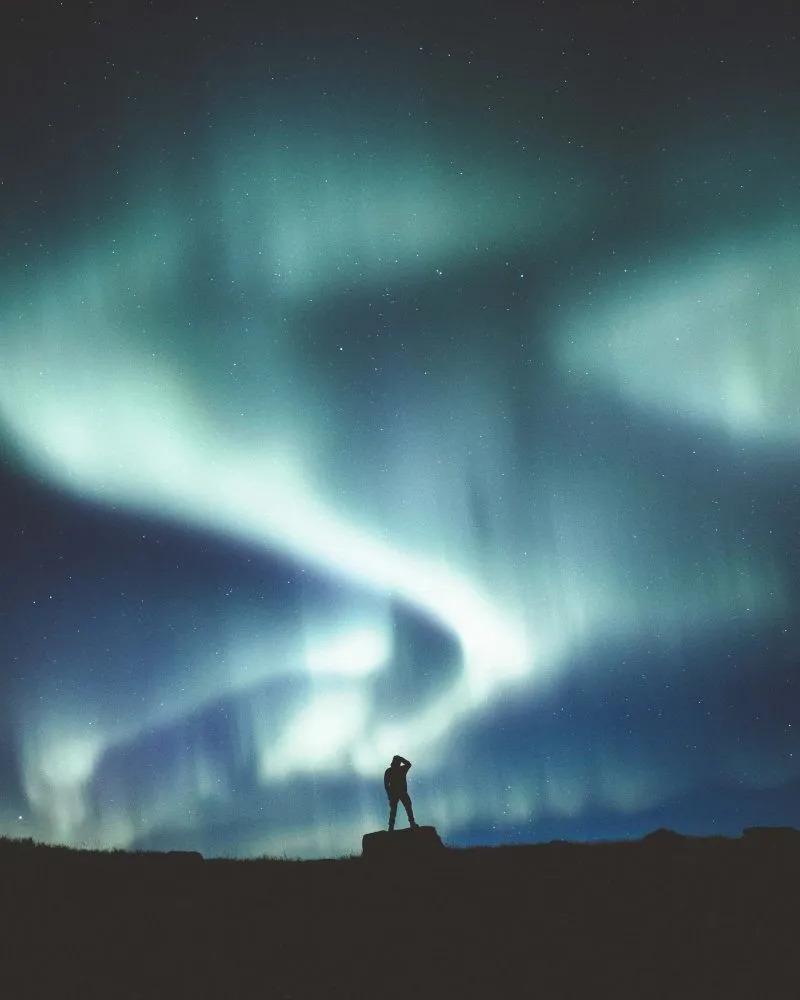
There is something almost unreal about watching the northern lights move across an Icelandic sky.
For many travellers, the Northern Lights are one of the main reasons to visit the country during the colder months. Yet seeing the aurora is not as simple as arriving in Iceland, stepping outside and looking up.
Cloud cover matters. Solar activity matters. Location matters. Timing matters.
Most importantly, patience matters.
That is why the best northern lights trips are rarely built around a single evening. A better approach is to create a journey that gives you several opportunities to see the aurora while also making the most of Iceland during the day.
Give Yourself More Than One Chance
The northern lights are a natural phenomenon, which means no tour operator can guarantee an appearance.
Even when solar activity is strong, cloud cover can hide everything. On another night, a relatively modest forecast may still produce a beautiful display if the skies are clear.
For that reason, one of the biggest mistakes travellers can make is scheduling a single aurora excursion and treating it as their only opportunity.
If possible, give yourself several nights.
That immediately improves your chances and removes some of the pressure from the experience.
Rather than worrying about whether the lights appear on the first night, you can enjoy the trip knowing there will be other opportunities.
Think Beyond Reykjavík
Reykjavík is a great base for the beginning or end of a trip, but the brightest parts of the city are not always ideal for aurora watching.
Dark skies make a significant difference.
Travelling into the countryside reduces light pollution and creates the possibility of seeing the northern lights against mountains, glaciers, lava fields or open valleys.
That setting is often just as important as the lights themselves.
A faint aurora above an empty Icelandic landscape can be far more memorable than a brighter display seen from a busy car park.
Travellers comparing Iceland northern lights tours should therefore consider where they will actually be spending their evenings, not simply whether an aurora excursion is included.
Build the Daytime Around the Season
A northern lights holiday should not be a trip where everything depends on what happens after dark.
Winter Iceland has plenty to offer during the daytime.
The South Coast is particularly dramatic, with waterfalls, glaciers and black sand beaches all transformed by winter conditions. Snow on the mountains and low seasonal light can make familiar locations feel completely different from summer.
Further inland, geothermal landscapes offer another side to Iceland, with steam rising from the ground even as temperatures drop.
Glacier activities are another major draw.
Depending on the conditions and time of year, winter visitors may have the opportunity to join guided glacier walks or explore natural ice caves.
These experiences mean the trip remains rewarding even if the aurora proves elusive.
Stay Somewhere Worth Returning To
Where you stay can have a big influence on a winter journey.
After several hours outside in cold weather, there is real value in returning somewhere comfortable rather than treating accommodation as simply a place to sleep.
Countryside hotels and lodges can also provide another advantage: dark skies.
If conditions are good, you may be able to step outside after dinner and see the aurora without travelling anywhere at all.
That can create a much more relaxed experience than setting off on a late-night drive every evening.
For travellers considering Luxury tours to Iceland, this is often where luxury becomes less about extravagance and more about comfort, privacy and thoughtful planning.
A well-located hotel, private transport and a flexible itinerary can make winter travel considerably easier.
Leave Room for the Weather
Winter in Iceland does not always follow your plans.
A clear morning can become windy by the afternoon. Snow may affect roads. Cloud cover can move quickly from one part of the country to another.
Rigid itineraries struggle in those conditions.
A more flexible approach allows the day to change when necessary.
If weather makes one area unsuitable, another may be perfectly accessible. If the aurora forecast improves unexpectedly, the evening can be adjusted.
That flexibility is especially useful when travelling with an experienced local guide who understands how Icelandic weather affects different regions.
Choose the Right Kind of Tour
Not all northern lights trips are the same.
Some are large coach excursions that leave Reykjavík for a few hours in the evening. Others are smaller group tours, private guided journeys or multi-day itineraries that incorporate aurora hunting alongside other winter experiences.
The right option depends on what you want from the trip.
If you simply want one opportunity to see the northern lights, an evening excursion may be enough.
If the aurora is one of the main reasons you are travelling to Iceland, a multi-day itinerary can be a better fit.
Private or small-group travel also gives guides more freedom to adapt to conditions and spend longer in promising locations.
Don't Forget the Practical Details
Northern lights watching often means standing outside at night, sometimes for much longer than expected.
Warm clothing is essential.
Layers work best, with a thermal base layer, insulating mid-layer and windproof outer layer. Warm gloves, a hat and waterproof footwear are equally important.
A hot drink can make a surprisingly big difference too.
If you plan to photograph the aurora, bring a tripod and learn the basic settings before the trip. Trying to work out long-exposure photography in the dark while wearing gloves is not ideal.
It is also worth remembering that the lights may look different to the naked eye than they do in photographs.
Cameras can capture more colour during longer exposures, while weaker displays may initially appear pale or grey before becoming stronger.
Don't Spend the Entire Evening Looking Through a Camera
It is easy to become obsessed with getting the perfect photograph.
Take a few, certainly.
But then put the camera down.
Seeing the aurora moving across the sky is an experience that is difficult to recreate afterwards, however good the photograph may be.
Some displays are subtle. Others fill enormous sections of the sky.
The most memorable moments are often the ones when you stop worrying about settings, composition and social media and simply watch.
Make the Journey About More Than One Moment
The northern lights may be the reason you book the trip, but they should not be the only reason the trip feels worthwhile.
A well-planned Iceland winter journey can include glaciers, waterfalls, geothermal bathing, dramatic coastlines and long evenings in quiet countryside locations.
Then, if the sky clears and the aurora appears, everything else suddenly becomes the backdrop.
That is what makes a northern lights trip special.
You cannot control the main event.
You can only put yourself in the right place, give yourself enough opportunities and make sure the journey is memorable whether the lights appear on the first night, the final night or somewhere in between.