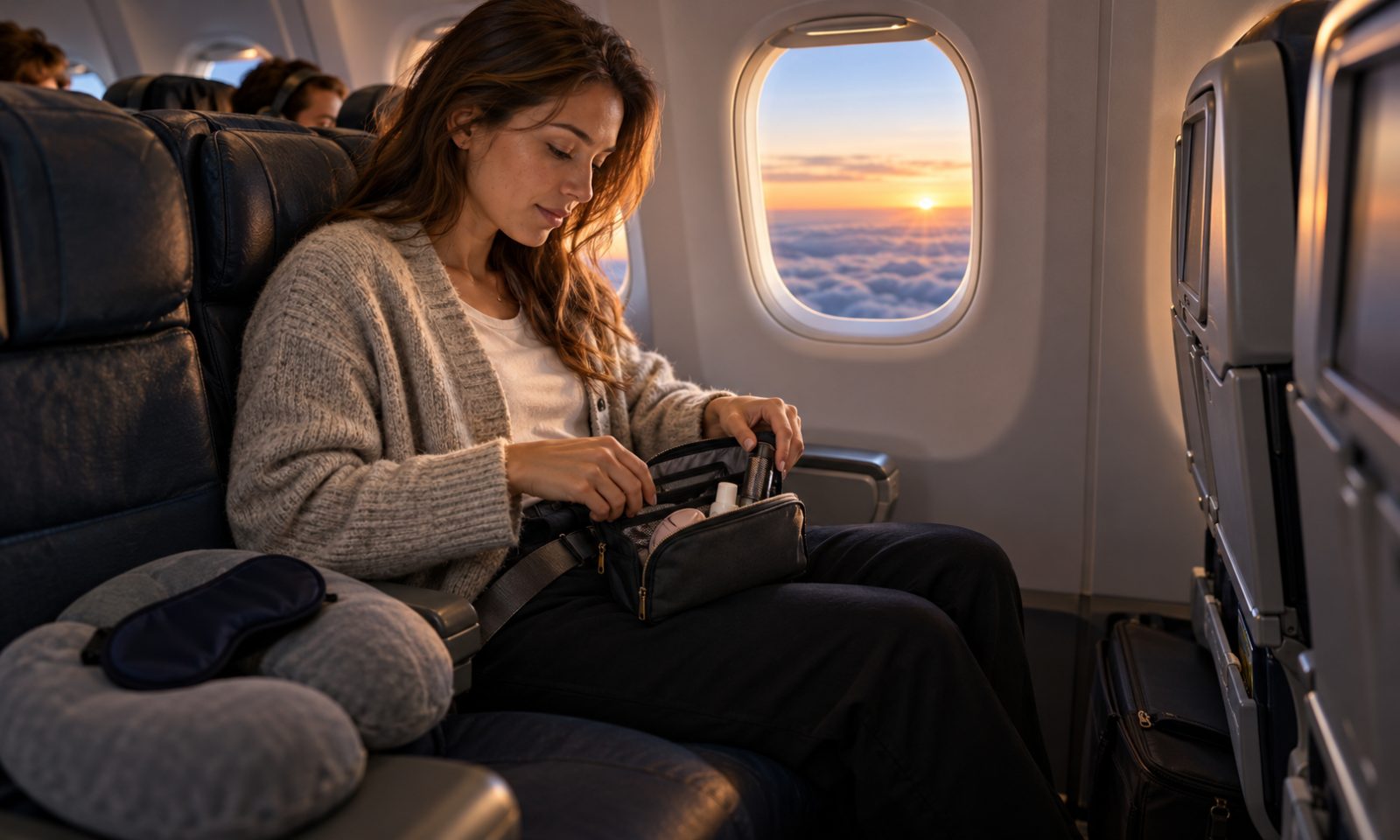
An overnight flight can leave you facing a full day before you have somewhere to rest. You might land at breakfast time, have a meeting before lunch, or arrive hours before hotel check-in. Preparation helps make that gap more manageable: keep arrival essentials accessible, settle the first few travel decisions before departure, and leave room to adjust your plans if you get little sleep.
Pack for the First Few Hours After Landing
Your arrival routine should not require unpacking at the airport. Think through what you will need between leaving the plane and reaching your accommodation.
Inside your carry-on luggage, keep a small pouch containing a toothbrush, travel-size toiletries, and any basic grooming items you use. Place a fresh shirt nearby if you are heading straight to work or an event. These items should be reachable without spreading clothes across a restroom counter.
The rest of your luggage can hold clothing and supplies for later in the trip. Packing those items separately from your arrival essentials means you can leave the main compartment closed until you reach your room. Keep documents, valuables, and medication you need with you when handing bags over for storage.
A separate pouch for used clothing is also useful. If you change after landing, you will have somewhere to put your travel shirt without mixing it with clean outfits.
Settle Your Arrival Logistics Before Departure
Small decisions become harder when you are tired and somewhere unfamiliar. A few arrangements made at home can save unnecessary searching after landing.
Check how you will reach your first destination. Save the hotel address, meeting location, transport instructions, and booking details on your phone so you can access them without relying on an airport connection. If someone is collecting you, agree on a specific meeting point and how you will contact each other.
Your calendar should account for the journey from the aircraft to your appointment. Allow time for arrival procedures, collecting bags if needed, transportation, and a quick refresh. A meeting scheduled shortly after touchdown leaves little flexibility if any stage takes longer than expected.
For an important commitment, have a backup plan. Keep the organizer’s contact details accessible and know which part of your schedule can move if your flight is delayed.
Make Your Seat Ready Before Trying to Rest
Once you are settled on board, having your essentials within reach can reduce the need to reopen your bag or get up repeatedly.
Before putting your bag away, take out your eye mask, earplugs or headphones, a light layer, and anything else you expect to use. Download entertainment beforehand and charge your devices before boarding. If you intend to rest soon after departure, finish any necessary messages while you still have the opportunity.
Clothing matters, too. A waistband that feels comfortable standing up may become restrictive after several hours seated. Choose an outfit you can sit in easily, with a layer you can add or remove.
Keep your expectations realistic. You may sleep only briefly or spend much of the flight awake. Build an arrival plan that still works after a poor night, rather than relying on uninterrupted sleep.
Have a Simple Refresh Routine
A short routine after landing can make the transition from overnight travel to daytime activities feel less rushed.
Find an appropriate place to brush your teeth, wash your face, tidy your hair, and change your shirt if needed. Have the relevant items ready before entering the restroom so you are not searching through compartments in a busy space.
Afterward, find somewhere to sit, eat, and review your plans. This gives you a chance to check messages, confirm your next journey, and notice anything that needs adjusting before leaving the airport.
Avoid adding unnecessary errands to this stage. If you need breakfast, transport, and a place to store your bags, handle those priorities before browsing shops or making extra stops.
Arrange Somewhere for Your Bags to Wait
An early arrival does not necessarily mean your room will be ready. Confirm your options with the accommodation before you travel.
Ask whether bags can be stored before check-in and whether early access to a room is available. If using a separate storage service, check its opening hours, collection arrangements, and location relative to your route.
Before leaving your bags, remove everything needed for the day and keep any collection receipt accessible. Set a reminder for pickup if your afternoon will be busy.
Keep the First Day Flexible
The most useful arrival schedule has a clear priority and some breathing room. Attend the essential meeting or appointment, but leave optional sightseeing and errands open to change. If you have several hours before check-in, choose an easy activity near your accommodation. A manageable first day gives you space to settle in without turning every hour after landing into another deadline.