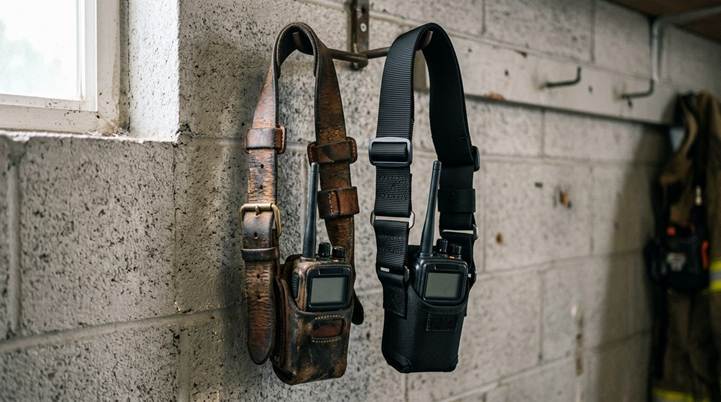
By a firefighting equipment industry contributor. The traditional leather radio strap is an iconic part of a firefighter's uniform. For decades, it has been a symbol of the job, worn in and softened over years of service. But that same porous leather absorbs a hidden cocktail of carcinogens and contaminants from every fireground. It holds onto soot, chemicals, and hazardous fluids, making it a persistent source of exposure long after the fire is out. This creates a serious conflict between tradition and modern safety protocols.
Your radio is your lifeline, and its failure is not an option. Communication is so critical that the National Fire Protection Association (NFPA) requires 99 percent radio coverage in a building's critical areas. If the gear carrying that vital tool is compromised or difficult to decontaminate, it undermines your safety. This has led to a necessary shift in the industry, where a modern professional firefighter radio strap is now often built from non-porous, synthetic materials designed for repeated, aggressive cleaning without degradation. The choice is no longer just about looks or feel; it's about your long-term health.
Quick answer: The best radio strap is one that balances durability with decontaminability. While leather offers a traditional feel, modern military-grade nylon and other synthetics provide superior resistance to contamination and are designed to be washed in an extractor, which is a critical step in reducing long-term cancer risk.
What's inside
· Why Is Material Choice So Important?
· What Key Features Define a High-Quality Radio Strap?
· How Do You Properly Size a Radio Strap?
· Frequently Asked Questions
· The Bottom Line: Your Strap Is Part of Your PPE System
Why Is Material Choice So Important?
Your radio strap's material directly impacts both your long-term health from toxic exposure and your immediate safety through equipment reliability on the fireground.
A broken strap means a lost radio, and a lost radio can be a fatal event. Communication is so vital that building codes enforce its integrity. According to the National Fire Protection Association (NFPA), buildings must provide adequate radio signal across 95 percent of general floor areas. That standard is even stricter for critical areas like exit stairs and fire pump rooms, where the NFPA requires 99 percent coverage. This system of safety depends on every link in the chain, including the strap holding your radio. A material that cracks, stretches, or fails under stress puts that entire system at risk.
The less obvious, but perhaps more dangerous, risk is chronic exposure to carcinogens. Leather is a porous material. During a fire, it acts like a sponge, absorbing a toxic mixture of soot, chemicals, and heavy metals from smoke and runoff. These particles get trapped deep in the leather's fibers. A simple surface wipe-down after a call leaves these contaminants behind, allowing them to off-gas in the truck cab or be absorbed through your skin. This turns a piece of trusted gear into a persistent source of exposure. The core problem is that the only proven method for removing these deep contaminants, washing in a gear extractor, is incompatible with leather. The high heat and harsh detergents that clean turnout gear will dry out, crack, and ultimately destroy a leather strap. This forces a dangerous choice: either risk the long-term health effects of a contaminated strap or constantly replace gear that cannot be properly cleaned. Modern synthetic materials, like military-grade nylon, solve this problem. They are non-porous and engineered specifically to endure repeated extractor washings, allowing your strap to be decontaminated as thoroughly as the rest of your PPE.
❝ When evaluating a synthetic strap, ask the manufacturer for their specific decontamination protocol. If they don't have one or just say "wipe it clean," that's a red flag. The material should be rated for a specific temperature and cleaning cycle in a commercial extractor, just like your primary turnout gear.
What Key Features Define a High-Quality Radio Strap?
A high-quality radio strap is defined by its hardware, construction, and compliance with manufacturing standards that ensure durability and safety under stress.
Look past the color and focus first on the hardware. The metal components, buckles, clasps, and D-rings, are the most common failure points. Are they made from steel or a cheaper, plated base metal that could corrode or snap? The clasps that attach to your radio case should have a robust spring mechanism that doesn't feel weak or flimsy. Check the keeper loops and mic attachment points. They should be securely fastened, not simply glued or attached with a single, weak rivet. Poor-quality hardware often has sharp edges or burrs from the casting process, which can chafe and eventually cut through the strap webbing over time.
Next, examine the construction of the strap itself. For synthetic straps, this means the webbing and the stitching. The webbing should be a tight, dense weave, often referred to as military-grade. Loose or thin webbing will stretch when wet and is more susceptible to fraying and abrasion. The stitching is just as critical. Look for double stitching or box stitching, especially at stress points where hardware is attached. The thread itself should be a heavy-duty synthetic, like nylon, that resists rot and chemical degradation. A single line of thin cotton-blend thread is a major red flag for a piece of life-safety equipment.
❝ Ask a potential vendor what specific grade of metal is used for their hardware and what type of thread is used in the stitching. If they can't answer with specifics, they may not be in control of their manufacturing process.
Finally, consider the sourcing and manufacturing standards. For gear made in the United States, a key indicator of quality control is Berry Compliance. This is a federal regulation requiring the Department of Defense to use domestically sourced and produced textiles and components. While not a fire service mandate, a manufacturer that is Berry Compliant, as defined in Department of Defense acquisition rules, demonstrates a commitment to a secure and high-quality supply chain. It ensures every fiber and buckle meets a consistent standard, rather than being sourced from the lowest bidder on the global market. This level of oversight is a strong proxy for the overall quality and reliability of the finished product.
How Do You Properly Size a Radio Strap?
Proper sizing ensures your radio is accessible and secure without creating a snag hazard or restricting your movement on the fireground.
An incorrectly sized strap introduces immediate risk. If it's too long, the radio will swing and bang against equipment, potentially damaging the unit or getting caught on a ladder, doorway, or debris. A dangling radio is also difficult to grab quickly in a low-visibility environment. Conversely, a strap that is too short will pull on your turnout coat, restrict your arm and shoulder movement, and place the microphone too high for clear communication. The goal is a fit that feels like a natural part of your gear, not an afterthought.
The correct way to measure requires you to be in your full turnout gear. Measuring over a simple station shirt will result in a strap that is far too short. Follow these steps for an accurate measurement:
1. Put on your turnout coat, fully fastened.
2. Use a flexible measuring tape, like one used for sewing.
3. Decide where you want the radio holder to sit on your hip. Place the end of the tape measure at that spot.
4. Run the tape diagonally up across your chest and over the opposite shoulder.
5. Continue the tape down your back, returning to the starting point on your hip. The number on the tape is your target length.
The bottom of the radio holder should rest comfortably on your hip, not dangle near your knee. The microphone clip should land on your upper chest, where you can easily speak into it without craning your neck or looking down.
❝ Don't just measure while standing still. After you get a baseline measurement, put on your SCBA. Practice crouching, reaching, and twisting. Does the strap bind against your regulator hose? Does the radio case get pinned when you bend at the waist? A truly functional fit accounts for your full range of fireground motion.
Look for a strap with at least four to six inches of adjustment. This allows you to fine-tune the fit for different underlayers, such as a sweatshirt in winter, and ensures the strap can adapt with you. A proper fit is a critical component of your equipment's safety and your own effectiveness.
Frequently Asked Questions
What makes a complete radio carrying system? A professional firefighter radio strap is the core component, but a full system includes two other key parts. You need a radio holder or case specifically designed for your radio model, and an anti-sway strap. The anti-sway strap is a short tether that connects the bottom of the radio holder to your belt or turnout pants, preventing it from swinging out when you move or climb.
Do major departments like the FDNY issue radio straps? While equipment policies vary and change over time, many firefighters in large, busy departments use radio straps, whether issued or personally owned. The primary reason is to keep hands free for tools and patient care while ensuring the radio is secure and accessible. Straps also protect the radio from being dropped or crushed, which is a significant advantage over carrying it in a coat pocket.
Besides material, what is the biggest difference between a basic and a premium strap? Beyond the core material, premium straps often feature enhanced safety and convenience details. This can include reflective stitching for better visibility in low light, integrated cord keepers to manage your mic cord, and more ergonomic, wider shoulder sections for better weight distribution. The quality of the hardware and the precision of the stitching are also significant differentiators that impact long-term reliability.
How much adjustment is enough for a radio strap? A good strap should offer at least four to six inches of adjustment, but more can be better. This range is not just for initial fitting but for adapting to changing conditions. You might wear a thin shirt in summer but a heavy fleece or multiple layers under your coat in winter, and the strap must accommodate both without being too tight or too loose.
Can I attach other tools to my radio strap? While some firefighters clip small flashlights or other lightweight tools to their straps, it is a practice to approach with caution. Every item you add increases the potential for snagging on debris or wiring in a hazardous environment. If you do attach other tools, ensure they are extremely secure and have a low profile to minimize this risk.
The Bottom Line: Your Strap Is Part of Your PPE System
Choosing a radio strap is not an aesthetic decision. It is a choice about a component of your Personal Protective Equipment. The central question is whether this piece of gear can be maintained to the same safety standard as your helmet, coat, and pants. A strap that cannot survive a gear extractor becomes a vector for contamination, undermining the very purpose of modern decontamination protocols designed to mitigate long-term health risks like cancer. The material is the foundation of this choice.
Once you have settled on a material that supports proper cleaning, the other details fall into place. The quality of the hardware, the integrity of the stitching, and a precise, adjustable fit are not minor features. They are the elements that determine whether the strap will perform reliably under stress or fail at a critical moment. Every component must be evaluated based on its contribution to safety and function on the fireground. The standard for a simple strap should be no less than the standard for the rest of your life-saving equipment.
About the author
This article is contributed by the team at Homeland Six, a Firefighter and Veteran-owned company specializing in personal protective equipment for first responders. Based in Florida, they design and manufacture extractor-washable, military-grade nylon radio straps and related gear entirely in the United States, meeting Berry Compliance standards. Their work is informed by direct fireground experience and focuses on solutions that enhance firefighter safety and mitigate long-term health risks associated with contaminated equipment.