Parents touring preschools in Walnut Creek often walk away with a general impression, friendly, clean, well-organized, without a clear sense of what separates a genuinely strong program from one that simply looks polished. A few specific markers make that distinction clearer.
Curriculum That Balances Structure and Exploration
Quality doesn’t mean rigid academics, and it doesn’t mean unstructured free time either.
What to Look For
A strong program shows a visible balance: planned, age-appropriate activities alongside real time for open-ended play and exploration. Children should have opportunities to work cooperatively on projects, engage in conversation, and pursue their own curiosity within a structure that still moves the day forward purposefully.
Materials and Space
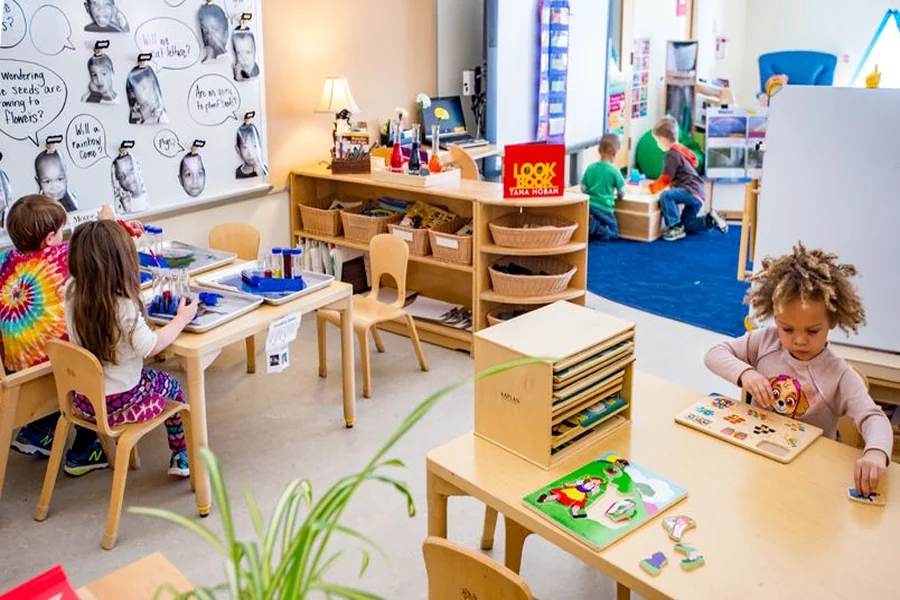
Enough toys, games, and materials that children aren’t waiting around or competing for the same few items is a simple but telling indicator. A classroom that’s clean, organized, and set up thoughtfully, rather than just decorated, tends to reflect broader program quality.
Staff Quality Is the Single Biggest Factor
Curriculum and materials matter, but the adults in the room ultimately determine the day-to-day experience.
Training and Consistency
Ask about specific staff training in early childhood development, not just general credentials, and ask how long current teachers have been with the program. Consistency in staffing generally reflects a well-managed program where educators want to stay.
Observed Interaction
During a tour, pay closer attention to how teachers actually interact with children than to what’s printed on a brochure. Warm, attentive, responsive engagement, redirecting a frustrated child calmly, getting down to a child’s eye level, asking open-ended questions during play, tells you more about program quality than almost any other single observation.
Communication and Transparency
A quality program treats parents as ongoing partners, not just customers dropped off at the door each morning.
- Regular updates on developmental progress, not just an annual conference
- Willingness to answer detailed questions about ratios, curriculum, and daily structure without hesitation
- Openness to an in-depth visit, rather than a rushed, scripted tour
Trusting What You See in Person
Every checklist has limits. The clearest way to evaluate a program is still to walk through the door, watch a classroom in session, and ask direct questions of the teachers who’ll actually be with your child every day. For families ready to take that next step, the most useful move is simply to schedule a tour now and bring these questions along.
Quality in early education isn’t always obvious from a website or a brochure. It shows up in the small, observable details of how a classroom actually runs day to day.
Red Flags Worth Noticing During a Tour
Along with the positive indicators above, a few warning signs are worth paying attention to during a visit.
- A staff member who seems rushed, distracted, or short with children during your visit, this is often magnified, not minimized, when a visitor is present
- Vague, generic answers to specific questions about curriculum, ratios, or daily structure
- A tour that avoids letting you see an actual classroom in session, versus an empty or staged space
- Noticeable disorganization: materials scattered without purpose, unclear signage, or an unclear daily schedule posted anywhere visible
Trusting a Combination of Data and Instinct
The concrete markers, ratios, turnover, curriculum specifics, give you an objective baseline for comparison across programs. But instinct matters too. Parents who’ve toured multiple schools often describe a clear sense of “this feels right” once they find the program that fits, a feeling that’s hard to fully quantify but shouldn’t be dismissed either.
Making the Final Decision
After gathering concrete details and trusting your own read on the room, the decision usually becomes clearer than it felt at the start of the search. Early education is one of the more consequential choices parents make in a child’s first few years, and taking the time to look closely, rather than settling for a surface impression, tends to pay off well into a child’s later school experience.